Key Takeaways for Sustainable Cooking
- Prioritize produce grown within the UK to reduce "food miles."
- Swap high-emission proteins (like beef) for legumes and local grains.
- Use cooking methods that minimize energy, such as one-pot meals and slow cooking.
- Shop at markets like Borough Market or local cooperatives to avoid excessive packaging.
Understanding the Low-Carbon Plate
What exactly makes a meal "low-carbon"? It comes down to the carbon footprint is the total amount of greenhouse gases, primarily carbon dioxide, emitted by an activity-in this case, the production and transport of your food . A steak from Argentina has a massive footprint because of the methane from the cow and the fuel used for the ship. A bunch of kale grown in an urban farm in Hackney has a tiny one.
To lower the impact, you need to look at the Sustainable Food System is a way of producing and consuming food that protects the environment and ensures social equity . In London, this means shifting away from the supermarket model and toward a system where the distance between the soil and your plate is as short as possible. Have you ever noticed how a tomato from a local garden actually smells like a tomato, while the supermarket version smells like nothing? That's the power of local sourcing.
Where to Source Local Ingredients in London
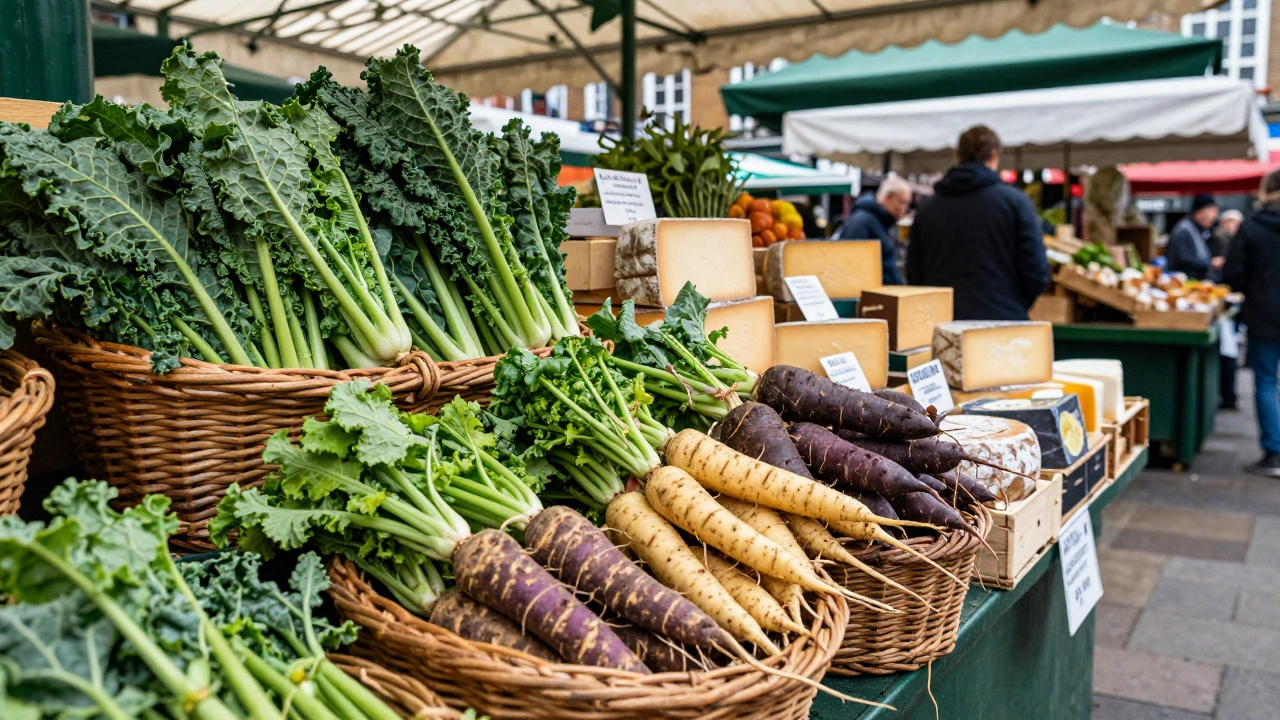
You can't cook a low-carbon meal if you're buying from a global supply chain. London is actually one of the best places in the world for this if you know where to look. Forget the giant chains and head to the Borough Market is a historic food market in Southwark, London, known for high-quality local and artisanal produce . It's a hub for small-scale farmers who bring in seasonal veg from the surrounding Home Counties.
If you want something more neighborhood-focused, look for Community Supported Agriculture (CSA) is a system where consumers buy shares in a local farm, receiving a regular box of whatever is currently in season . This removes the middleman and ensures the farmer gets a fair price. In areas like East London, urban farming initiatives are also popping up, turning old warehouses into hydroponic hubs that provide greens to local cafes and homes.
| Source | Carbon Impact | Price Point | Freshness |
|---|---|---|---|
| Supermarket (Imported) | High | Low to Medium | Variable |
| Borough Market (Local) | Low | Medium to High | Very High |
| CSA Box (Regional) | Very Low | Medium | Highest |
| Urban Farm (City) | Lowest | High | Immediate |
Seasonal Cooking Guide: Spring to Winter
The biggest mistake people make is trying to eat the same things all year. A low-carbon diet requires a flexible menu. If you're craving a specific vegetable in December that only grows in July, you're paying a huge carbon price for that craving. Instead, embrace the cycle of the English year.
In Spring, focus on Wild Garlic is a pungent, edible perennial plant that grows naturally in English woodlands during spring and asparagus. These are often foraged or grown in the UK, meaning almost zero transport emissions. For a quick low-carbon lunch, try a wild garlic pesto using local rapeseed oil instead of imported olive oil.
Summer is all about the abundance of berries, courgettes, and tomatoes. This is the time to preserve. When you pickle or jam your summer surplus, you're creating your own "low-carbon pantry" for the winter, avoiding the need to buy imported jars of preserves later on. Autumn brings root vegetables and apples. Think roasted parsnips and homemade apple crumble using fruit from a local orchard in Kent.
Winter is the toughest but most rewarding. Focus on brassicas-kale, cabbage, and sprouts. These hardy vegetables thrive in the cold and don't need greenhouses (which use energy for heating). A hearty winter stew made with Pulses is edible seeds of leguminous plants, such as lentils, chickpeas, and beans, which are low-emission protein sources and root veg is the gold standard for sustainable eating.
Low-Carbon Recipes for Londoners
Let's get practical. The goal here is to minimize the use of the oven (which is an energy hog) and maximize the use of local, plant-based ingredients. Here are three recipes designed for a London kitchen.
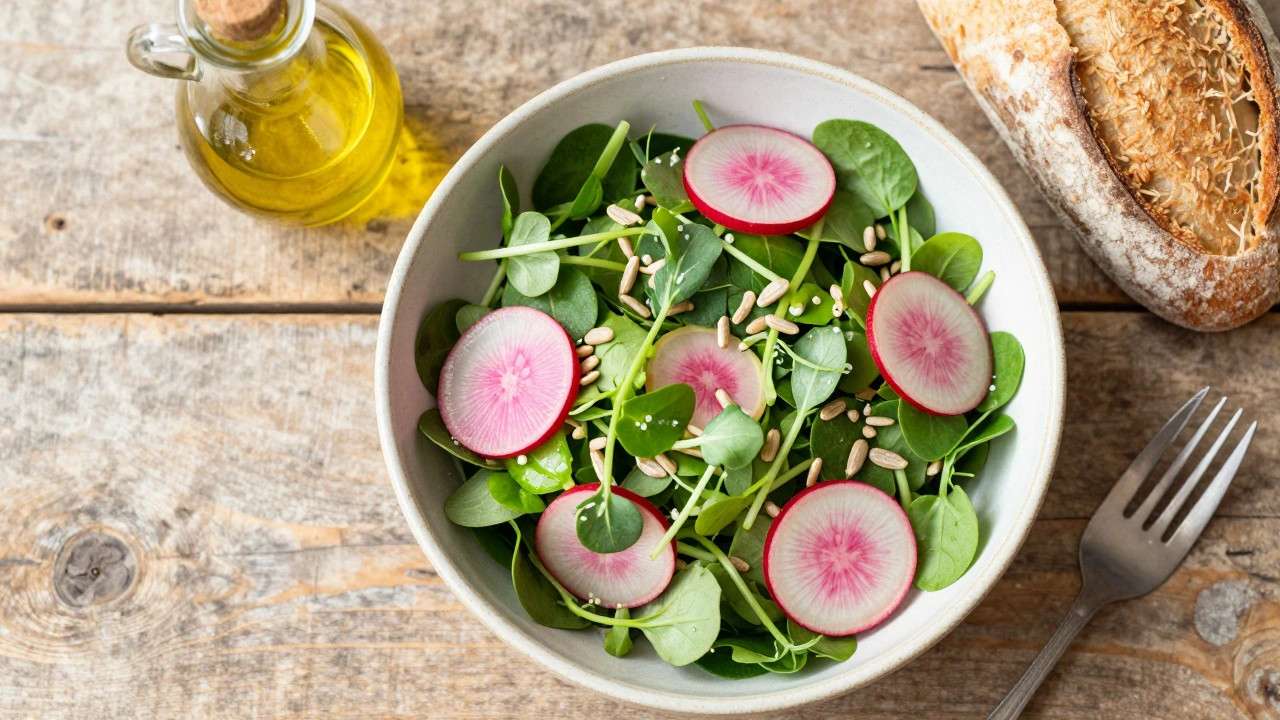
The "Hackney Hub" Spring Salad
This recipe uses ingredients you can find at any local East London market in April.
- Gather fresh watercress and pea shoots (locally grown).
- Add thinly sliced radishes and spring onions.
- Create a dressing using local honey, apple cider vinegar, and rapeseed oil.
- Toss together and top with toasted sunflower seeds.
Why this works: No cooking involved, so zero electricity. All ingredients are grown within a 50-mile radius of the city center.
The Kentish Autumn Roast (Vegan)
Instead of a high-emission roast beef, try a root vegetable centerpiece.
- Slice thick rounds of butternut squash and carrots.
- Toss them in a mix of thyme, rosemary, and rapeseed oil.
- Roast them on a single tray to maximize oven efficiency.
- Serve with a side of mashed peas and a gravy made from vegetable scrap reductions.
Pro Tip: Use a Pressure Cooker is a sealed pot that cooks food faster by increasing the internal pressure and temperature for your gravy to save energy and time.
The Winter Warming Pulse Stew
Perfect for those grey London January nights.
- Sauté onions, carrots, and celery in a large pot.
- Add dried brown lentils (source from a bulk store to avoid plastic).
- Pour in vegetable stock and a handful of chopped kale.
- Simmer on low heat for 40 minutes.
This meal relies on pulses, which have a fraction of the carbon footprint of meat and provide a complete protein source when paired with a slice of local sourdough bread.
Energy-Efficient Kitchen Habits
The ingredients are only half the battle. How you cook them matters just as much. Many of us leave the oven on too high or use the grill for things that could be steamed. If you want to truly commit to a low-carbon lifestyle, you need to audit your habits.
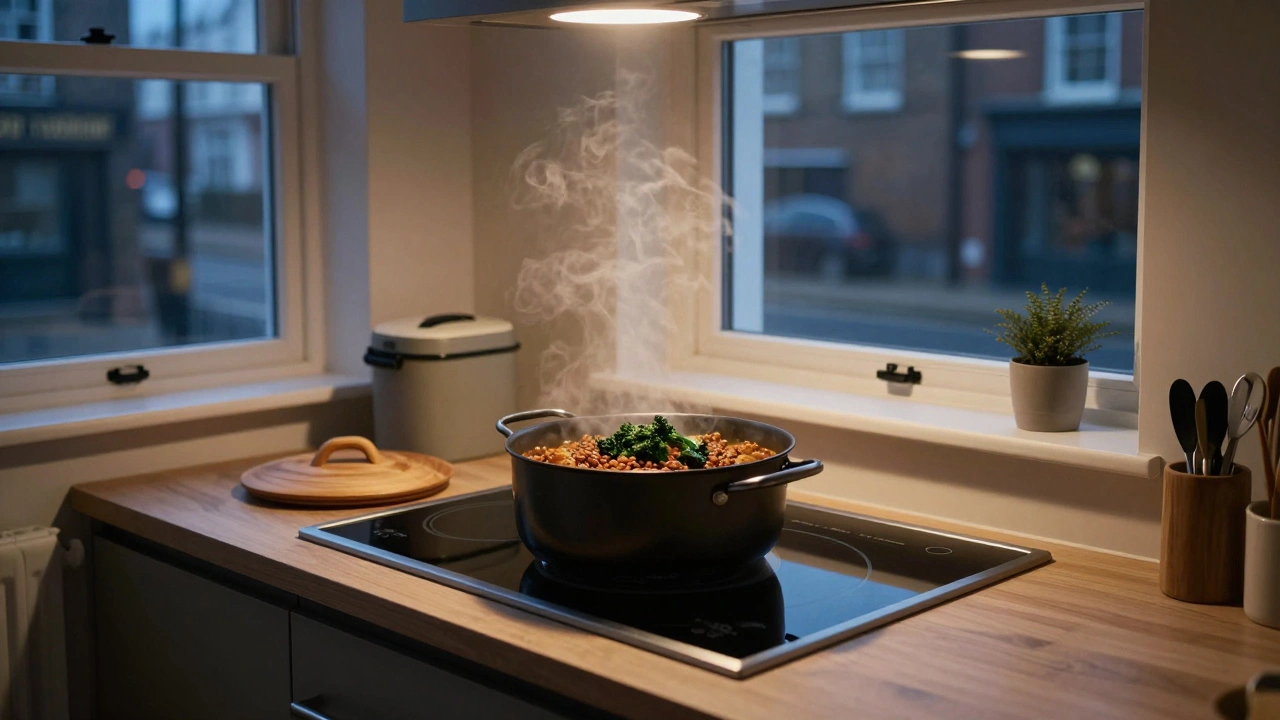
Start by using a lid on your pots. It sounds simple, but it traps heat and reduces cooking time by up to 20%. Another trick is the "residual heat" method. Turn off your hob or oven a few minutes before the food is actually done; the remaining heat will finish the job without drawing more power from the grid. If you have a larger budget, consider switching to an Induction Hob is a cooktop that uses magnetic currents to heat the pan directly, offering higher efficiency than gas or electric coils . They are significantly faster and waste far less heat into the surrounding air.
Also, think about your water. Boiling a full kettle just to fill a pot is a waste of energy. Use a measured amount of water or a steamer. And when it comes to the leftovers, don't just throw them away. Food waste in landfills produces methane, a greenhouse gas far more potent than CO2. Turn your scraps into a Compost is the process of recycling organic waste, such as food scraps, into a nutrient-rich soil amendment . Even in a small London flat, a Bokashi bin can help you process organic waste without the smell.
Is eating local always better for the planet?
Not always, but usually. The key is "carbon intensity." For example, some high-calorie crops grown in incredibly efficient greenhouses in Spain might actually have a lower carbon footprint than something grown inefficiently in a heated UK greenhouse. However, for the majority of seasonal veg, local is the winner because it cuts out thousands of miles of transport and refrigerated shipping.
How can I find a CSA in London?
The best way is to check local community boards or use online directories that map organic farms around the M25. Many CSAs have pick-up points at local cafes or community centers in London, making it easy to get your weekly box without needing a car.
What are the lowest-carbon protein sources?
Lentils, chickpeas, and beans are the gold standard. They aren't just low-emission; they actually fix nitrogen back into the soil, improving the land for other crops. If you aren't ready to go fully plant-based, look for "regenerative" farmed meat from local producers who use grazing techniques to sequester carbon in the ground.
Can I really cook low-carbon in a small apartment?
Absolutely. Focus on one-pot meals and a slow cooker or pressure cooker, which are often more efficient than a full-sized oven. Use a Bokashi bin for composting and buy from bulk stores to reduce the waste that ends up in landfills.
Why is rapeseed oil better than olive oil for a UK diet?
Mainly due to transport. Olive oil has to be shipped from the Mediterranean. Rapeseed is grown extensively across the UK. By choosing a local oil, you're supporting British farmers and cutting down the carbon emissions associated with long-distance shipping.
Next Steps for Your Green Kitchen
If you're feeling overwhelmed, don't try to change everything overnight. Start with one "Local Saturday." Spend the morning at a market, buy only things that were grown in the UK, and try one of the recipes above. Once you realize how much better a local carrot tastes compared to a supermarket one, you'll be hooked.
If you're a seasoned pro, try auditing your energy use with a smart meter to see exactly how much your oven is costing the planet. Or, start a seed-swap group with your neighbors to grow your own herbs on a windowsill. Every small change in a city of nine million people adds up to a massive impact.