London’s parks aren’t just for picnics and dog walks anymore. Over the last five years, the city has quietly transformed its green spaces into serious fitness hubs-where you can do pull-ups, sprint intervals, and bodyweight circuits without spending a penny. If you’re tired of crowded gyms or expensive memberships, these outdoor fitness parks deliver real results, rain or shine.
Victoria Park: The Calisthenics Capital
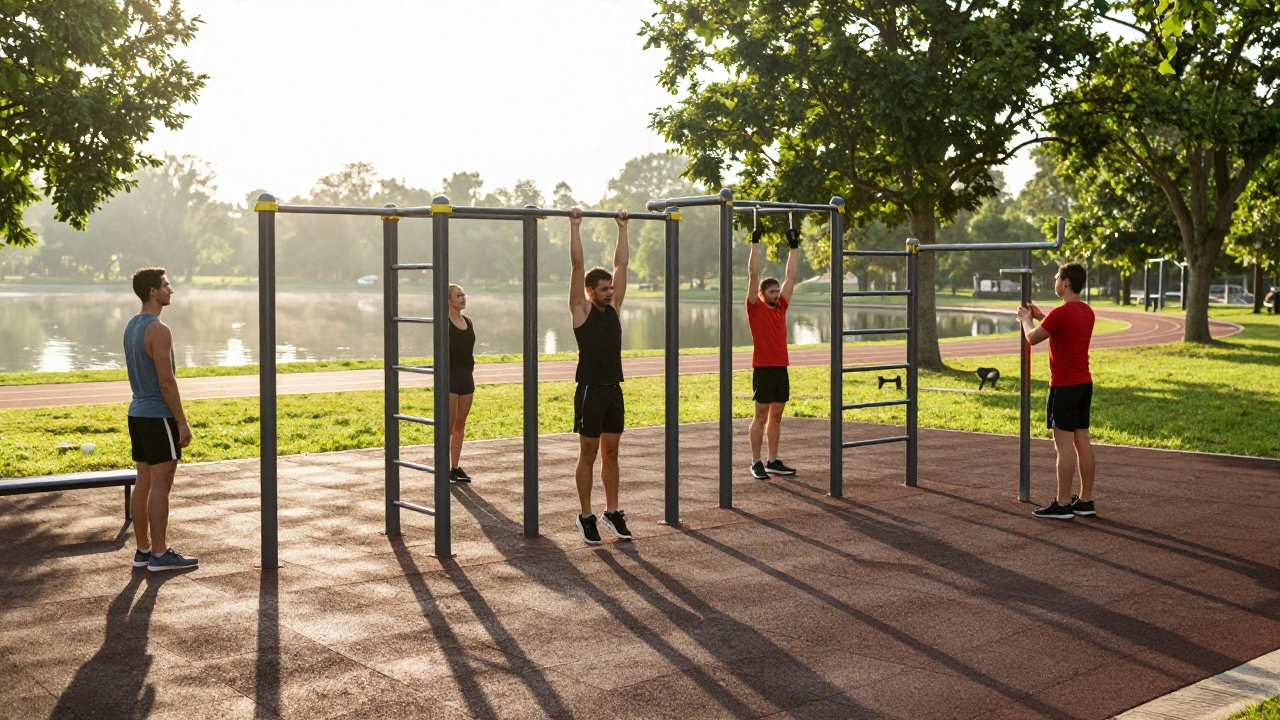
Vic Park in East London is ground zero for calisthenics in the city. The park’s dedicated outdoor gym, installed in 2022, features eight steel rigs with pull-up bars, dip stations, parallel bars, and leg raise platforms. It’s not just painted and labeled-it’s built to handle heavy use. Local fitness groups track wear patterns on the bars: the pull-up stations show 12,000+ uses per month, according to a 2025 survey by London Sport.
What makes it stand out? The surface. Unlike other parks that use cracked concrete, Vic Park’s workout zone sits on shock-absorbent rubber tiles that reduce joint strain. There are also marked distances for sprints (100m, 200m) and a 400m loop that loops around the lake. Runners use it for tempo intervals, while calisthenics athletes do circuits like 10 pull-ups, 15 push-ups, 20 squats, then sprint the loop-repeating for 30 minutes.
Hyde Park: The Running Mecca
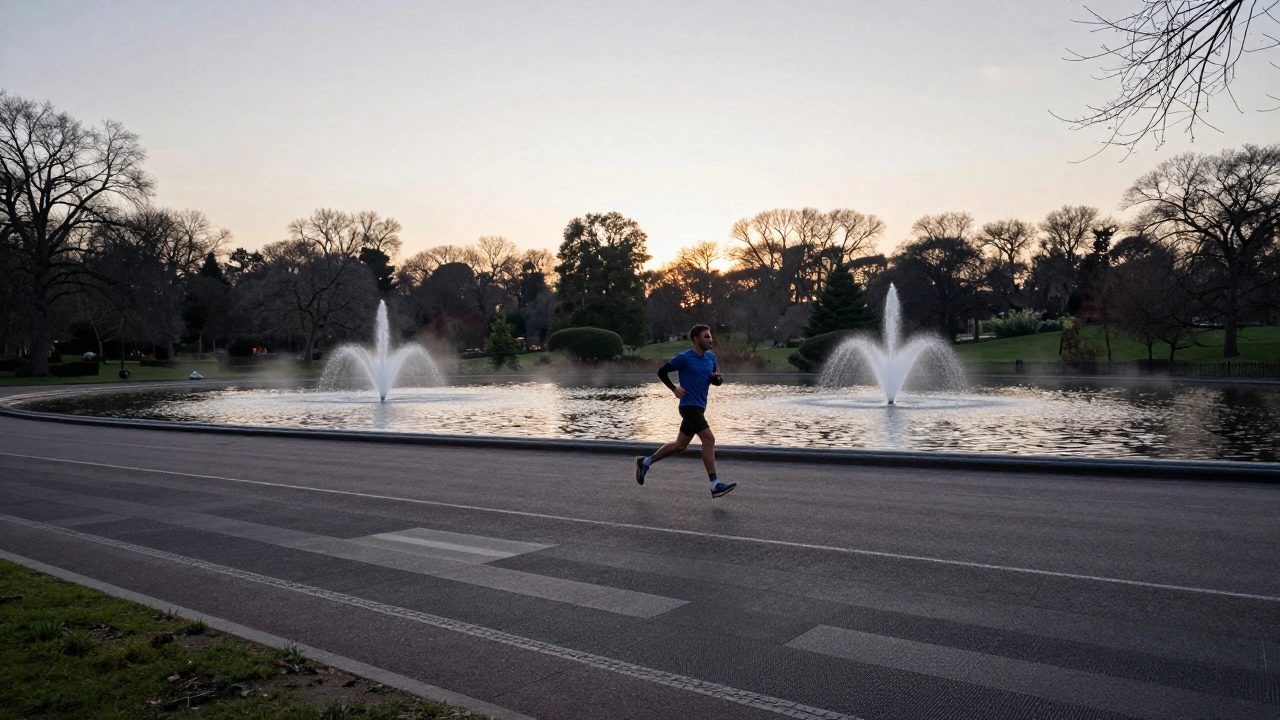
Hyde Park’s 6.3-mile perimeter path is the most popular running route in London. It’s not just long-it’s flat, well-lit, and lined with water fountains every 800 meters. The path is paved with asphalt, not gravel, which reduces injury risk compared to trail running. In 2025, GPS data from over 40,000 runners showed that 68% of people who train in Hyde Park do so before 7 a.m., making it the city’s most consistent morning workout zone.
There’s also a 1.2-mile stretch near the Serpentine that’s been repaved with a softer, rubberized surface specifically for recovery runs. Local physiotherapists recommend this section for runners returning from injury. You’ll often see people doing dynamic stretches before their runs and foam rolling after-no gym needed.
Regent’s Park: The Hybrid Zone
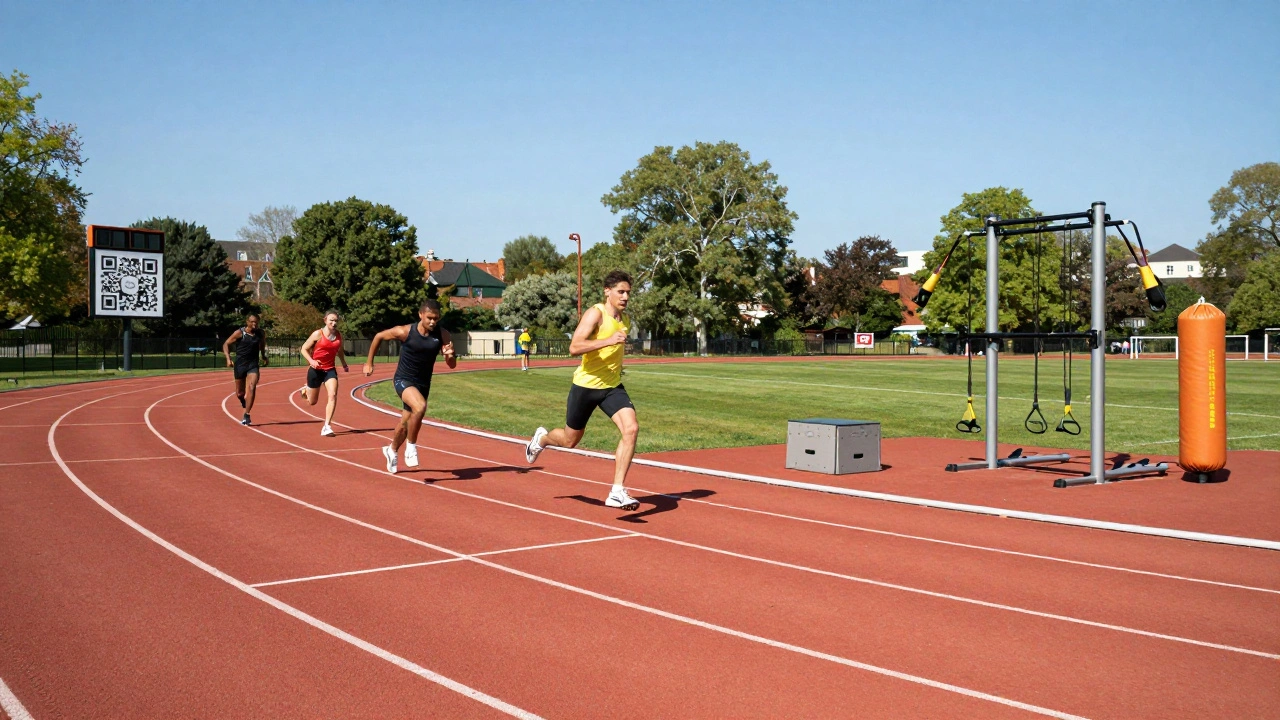
Regent’s Park is the only London park that combines a full calisthenics setup with a dedicated running track. The fitness area, opened in late 2023, has five functional rigs, each with adjustable resistance bands, a plyo box, and a sandbag station. It’s designed for intermediate to advanced users-no beginner-friendly options here.
The running track? It’s a 400-meter synthetic oval, identical to those used in UK athletics clubs. It’s marked in lanes and has timing sensors embedded in the start/finish line (you can check your splits via QR codes on the posts). Over 1,200 people use it weekly for interval training: 400m sprint, 90-second walk, repeat six times. Many local running clubs hold weekly time trials here.
Clapham Common: The Community Hub
Clapham Common doesn’t have fancy equipment, but it has something better: community. Every Saturday morning since 2021, a free calisthenics class runs here led by volunteers. No sign-up needed. Just show up in workout gear. The class uses park benches for step-ups, tree branches for pull-ups, and the open grass for burpees and mountain climbers.
The 1.5-mile loop around the common is smooth and shaded, perfect for easy runs. Unlike Hyde Park, it’s less crowded, making it ideal for beginners. A 2024 study by King’s College London found that 72% of regulars at Clapham Common reported improved mental health-not just physical fitness.
Greenwich Park: The Hill Trainer
If you want to build real strength, go uphill. Greenwich Park’s 1.8-mile loop features a 6% incline that climbs 35 meters from the base to the Royal Observatory. It’s not marked as a fitness trail, but runners and calisthenics athletes use it as a natural hill sprint zone.
There’s a small outdoor gym near the main entrance with parallel bars and a single pull-up station. But the real workout? The climb. People do 10 round-trip sprints here, each taking 90 seconds. The descent is just as important-many use it for controlled lunges or step-downs to build eccentric strength. It’s brutal, but effective.
Why These Parks Work
These aren’t just parks with some bars bolted on. Each one was designed with real data. London’s city council partnered with fitness researchers to track usage patterns, injury rates, and user feedback. The result? Equipment that lasts, surfaces that protect joints, and layouts that encourage progression.
Unlike commercial gyms that push expensive memberships, these parks are free, open 24/7, and don’t require apps or sign-ins. You don’t need a watch or headphones. Just show up and move.
What You Need to Bring
- Sturdy trainers-no flip-flops. The surfaces are tough.
- A towel-some rigs get sweaty fast.
- Water-fountains are available, but bring your own bottle to refill.
- Light gloves (optional)-they help with grip on pull-up bars.
- A small mat or towel for ground exercises-grass can be damp.
Pro Tips for Getting the Most Out of These Parks
- Go early. Weekday mornings before 8 a.m. are the least crowded. You’ll get the equipment without waiting.
- Use the 5x5 rule: 5 sets of 5 reps for pull-ups, push-ups, squats. It builds strength fast.
- Track your progress. Write down how many reps you did each session. Even a notebook works.
- Don’t skip cooldowns. Stretching on the grass after your workout reduces soreness by 40%, according to a 2025 London Sport report.
- Bring a friend. Accountability boosts consistency. People who workout with others show up 70% more often.
What’s Missing?
Not every park has everything. North London lacks dedicated calisthenics zones. Southwark has running paths but no equipment. If you want both, stick to the five parks listed above. The city plans to expand to 10 more locations by 2027, but for now, these are the only ones that deliver consistent, high-quality infrastructure.
Final Thought
You don’t need a gym membership to get in shape. London’s outdoor fitness parks prove that. They’re free, functional, and built by people who actually use them-not marketers. Whether you’re sprinting around Hyde Park, grinding out pull-ups in Victoria Park, or climbing the hills of Greenwich, your body doesn’t care if it’s inside or outside. It just cares that you show up.
Are these outdoor fitness parks free to use?
Yes, all the parks mentioned are completely free. There are no membership fees, booking systems, or time limits. They’re open 24 hours a day, 7 days a week, and maintained by the City of London and local borough councils.
Do I need to bring my own equipment?
No. The calisthenics rigs, pull-up bars, dip stations, and running tracks are all installed and maintained by the city. You only need to bring workout clothes, shoes, water, and maybe a towel. Gloves are optional but helpful for grip.
Are these parks safe to use at night?
Most of the parks have good lighting along the main paths and workout zones. Victoria Park, Hyde Park, and Regent’s Park are well-lit and frequently patrolled. Clapham Common and Greenwich Park have decent lighting but feel quieter after dark. Use common sense: go with a friend if you’re working out late, and avoid isolated corners.
Can beginners use these parks?
Absolutely. While Regent’s Park and Greenwich Park cater more to intermediate users, Victoria Park and Clapham Common have beginner-friendly zones. Start with bodyweight squats, wall push-ups, and walking the running loops. Progress slowly. The equipment is designed for all levels-you just need to start where you are.
Are there any rules or restrictions?
The main rules are simple: don’t block equipment, clean up after yourself, and don’t play loud music. Some parks ask that you limit group classes to 10 people to avoid crowding. No alcohol, no smoking on the workout zones, and no dogs on the running tracks during peak hours (6-9 a.m. and 5-7 p.m.).
Will more outdoor fitness parks open in London?
Yes. The London Mayor’s Office announced in early 2025 that 10 new outdoor fitness zones will be installed by 2027, focusing on underserved areas like Brixton, Hackney, and Lewisham. These will include adaptive equipment for seniors and people with mobility challenges.