Walking through London, you can almost hear the echo of Elizabethan verse drifting from stone walls and candlelit stages. Shakespeare didn’t just write plays-he built a world that still lives in the city’s oldest and most vibrant theatres. If you’re planning to see his work live, you don’t need to dig through history books. You just need to know where to go.
The Globe Theatre: Where Shakespeare Breathed
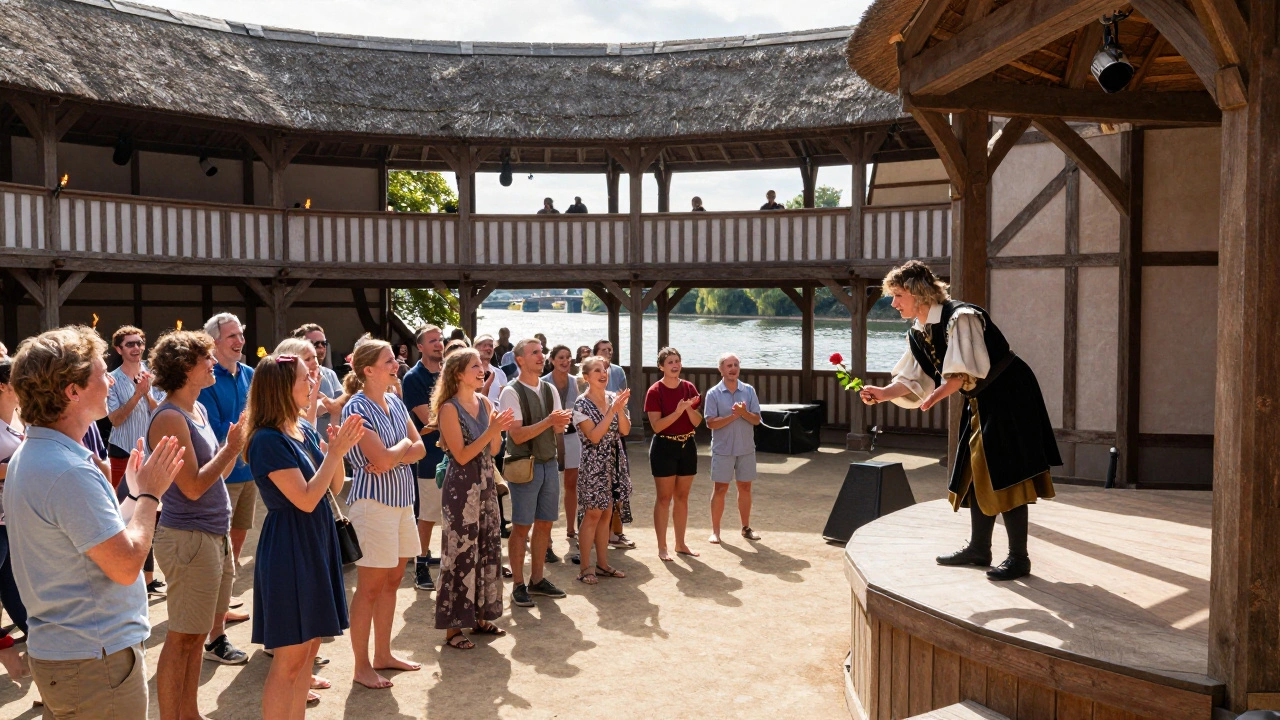
The Globe Theatre is a modern reconstruction of the original 1599 playhouse where Shakespeare’s company, the King’s Men, first performed Hamlet and Othello. Located on the south bank of the Thames, it opened in 1997 after decades of research into Elizabethan architecture.
Unlike modern theatres, the Globe has no roof over the central yard. You stand in the pit if you buy a cheap ticket-called "groundling" tickets-and feel the rain, the heat, or the chill right on your skin. The stage juts out into the audience, so actors don’t just speak to you-they walk past, sometimes even hand you a prop. There’s no electric lighting. Sunlight during the day, torches at night. It’s not a museum. It’s a living space.
Every summer, the Globe stages full productions of Shakespeare’s plays, often with gender-swapped casts or modern dress. In 2025, their production of Twelfth Night used a 1970s rock concert aesthetic. The audience didn’t just watch-they clapped along. Tickets start at £5 for standing, and you can book months in advance. Don’t wait. They sell out fast.
Other Shakespeare Venues in London
The Globe isn’t the only place in London where Shakespeare’s words come alive. Across the city, smaller theatres and historic spaces keep his work fresh.
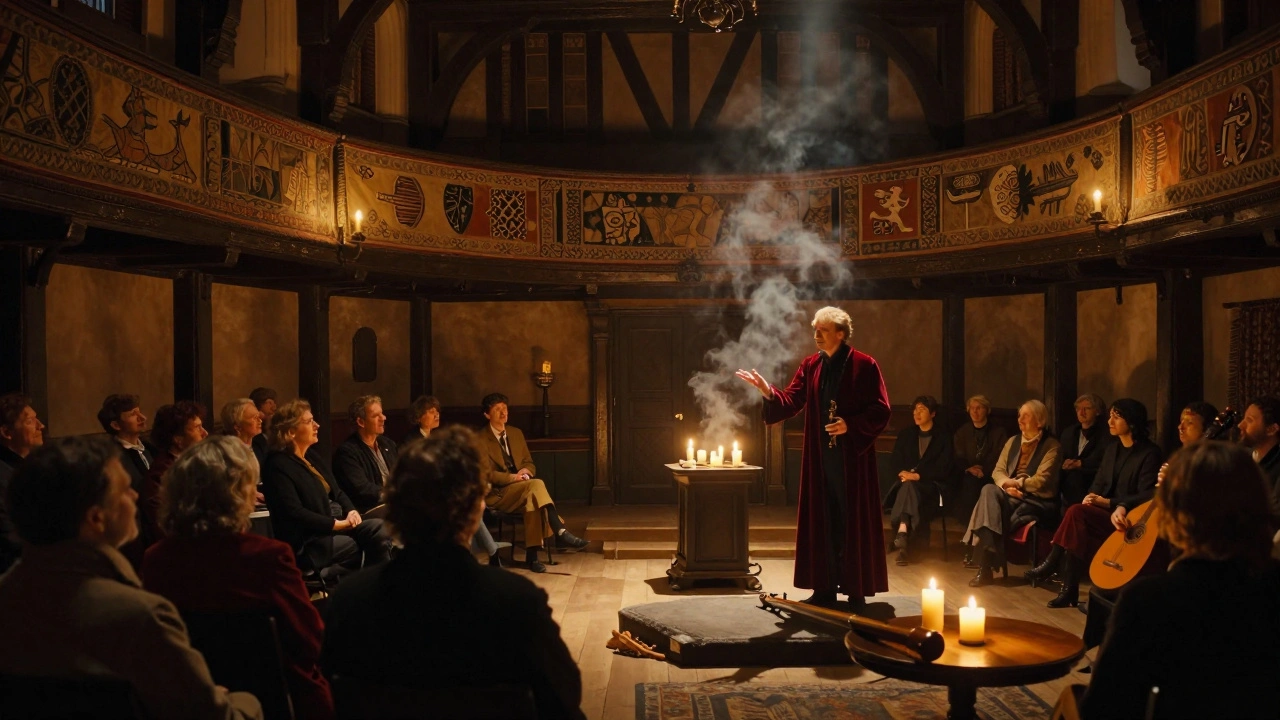
- The Sam Wanamaker Playhouse-just next door to the Globe-is an indoor, candlelit theatre built to mimic a Jacobean playhouse. It’s perfect for winter performances. The air smells like beeswax and woodsmoke. You’ll see Macbeth or The Merchant of Venice under flickering light, with live music played on period instruments. Tickets are pricier-around £30-but the intimacy is unmatched.
- Shakespeare’s Rose Theatre in Bankside opened in 2024. It’s a partial reconstruction of a 16th-century playhouse discovered during an archaeological dig. The stage is wooden, the seating is tiered, and the acoustics are so clear you can hear a whisper from the back row. They stage one Shakespeare play per season, with local actors trained in classical delivery.
- Richmond Theatre-a 10-minute train ride from central London-is a Victorian-era venue that hosts touring Shakespeare companies. It’s less touristy, more local. In 2025, their King Lear had a cast of 12 actors playing over 30 roles. No costume changes. Just quick switches, quick wit.
- Almeida Theatre in Islington is known for bold, modern interpretations. Their 2024 production of Coriolanus set the story in a war-torn city with live projections of social media feeds. It wasn’t Shakespeare as you remember it-but it was Shakespeare as you needed to feel it.
West End vs. Off-West End: What’s the Difference?
When people think of London theatre, they picture the West End. Big lights. Big names. Big prices. But Shakespeare isn’t just for the West End.
The West End-centered around Leicester Square and Covent Garden-has theatres like the London Palladium or the Lyceum that host long-running musicals. But they rarely do Shakespeare. When they do, it’s usually a star-studded revival: Benedict Cumberbatch as Hamlet, or Judi Dench as Lady Macbeth. Tickets can cost £150 or more.
Off-West End is where the real Shakespeare heartbeat lives. These are smaller venues-often converted warehouses, church halls, or basement theatres. They charge £15-£30. The actors are young. The directors are daring. The energy is raw. You’ll find Shakespeare at the Young Vic, the Donmar Warehouse, or the Barbican’s Pit.
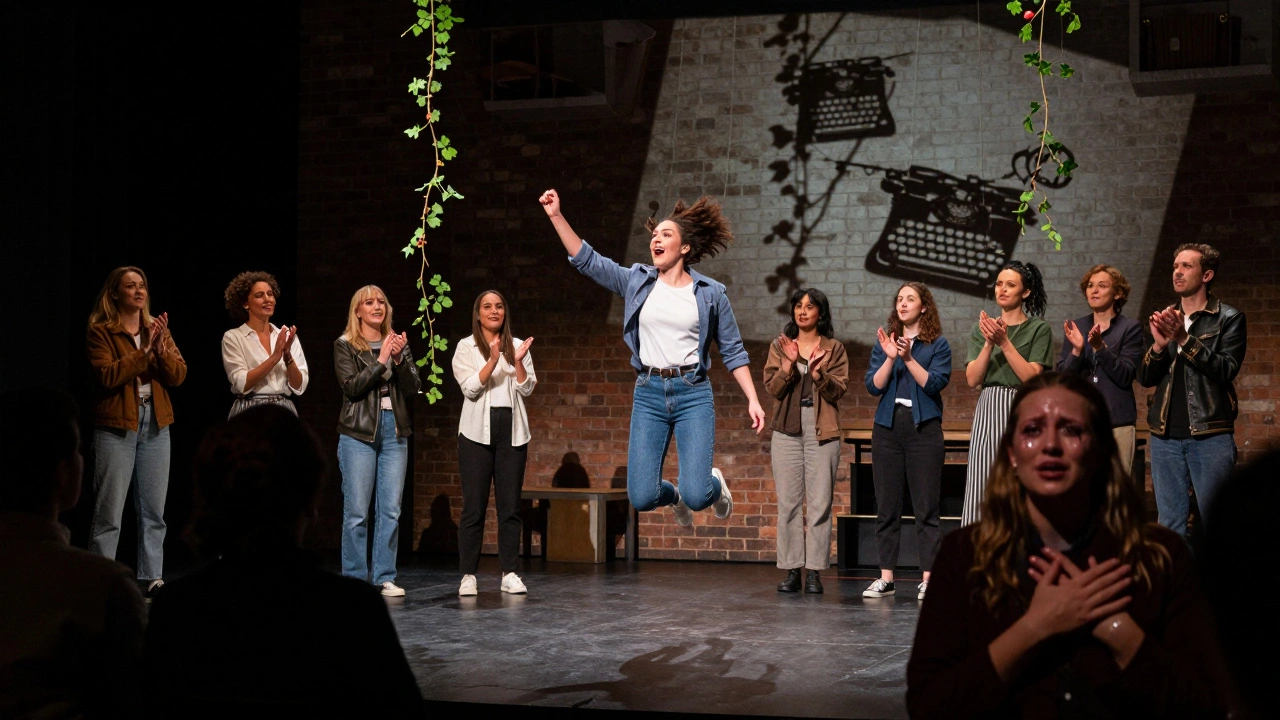
In 2025, the Donmar staged As You Like It with all-female cast and a set made of hanging vines and old typewriters. No one expected it. Everyone stayed silent at the end. Then they stood up and clapped for five minutes.
How to See Shakespeare Without Breaking the Bank
You don’t need to spend hundreds to feel Shakespeare’s power. Here’s how to see it affordably:
- Go for standing tickets at the Globe. £5 gets you in. You’ll be on your feet for two hours, but you’ll be right in the middle of the action.
- Check for pay-what-you-can nights. Many Off-West End theatres offer one night per week where you can pay what you can afford. The Young Vic does this every Wednesday.
- Use lottery systems. The Globe, Donmar, and Almeida all have digital lotteries. You enter online for a chance to buy £10 tickets. Winners are chosen 24 hours before the show.
- Visit during the week. Saturday nights are priciest. Tuesday and Wednesday performances are often half-price or have last-minute deals.
- Join theatre clubs. Universities and local groups offer discounted tickets to students, seniors, and low-income residents. Even if you’re not a student, ask.
What to Expect When You Go
Shakespeare isn’t performed like a movie. It’s a live, unpredictable event. Here’s what you’ll notice:
- No intermission-most shows run straight through. Bring a jacket. It gets cold.
- Language is fast. Don’t panic if you miss a line. The emotion carries it. Actors use gesture, tone, and silence to make meaning clear.
- There’s no fourth wall. Actors look at you. They talk to you. Sometimes they’ll ask you to pass a letter or hand them a rose.
- Clapping happens. Not just at the end. When a joke lands, when a sword clash echoes, when a character makes a bold choice-you’ll hear people cheer.
One visitor told me she cried during King John because the actor playing the title role dropped to his knees and whispered, "I am not a king. I am a man." No lights changed. No music swelled. Just a voice. And a room full of people holding their breath.
Planning Your Visit
If you’re visiting London and want to see Shakespeare:
- Book tickets at least 3 months ahead for the Globe. Summer fills up fast.
- Check the Shakespeare’s Globe website for free outdoor performances in July. They happen on the lawn outside the theatre-bring a blanket.
- Use the London Theatre Direct app to compare prices across venues. It shows real-time availability and discounts.
- Walk the South Bank after a show. The Thames is lit, the street musicians are playing, and you’ll hear snippets of Shakespeare lines from people still talking about the performance.
Shakespeare didn’t write for the elite. He wrote for the crowd. The groundlings. The ones who stood in the rain and laughed, cried, and shouted back. That’s still true today. You don’t need to understand every word. You just need to show up.
Can I bring food and drinks to the Globe Theatre?
Yes. The Globe allows soft drinks and snacks, but no glass bottles or alcohol. There are bars inside selling beer, wine, and hot drinks. You can also bring your own non-alcoholic drinks in plastic containers.
Are Shakespeare performances in modern English or original text?
Most performances use Shakespeare’s original language. But directors often cut lines, rearrange scenes, or add modern gestures to help clarity. You won’t hear modern slang, but you’ll understand the emotion. Some venues, like the Almeida, offer printed summaries on your seat.
Is the Globe Theatre open year-round?
The Globe Theatre is open for performances from April to October. The Sam Wanamaker Playhouse inside it runs year-round with indoor shows. You can tour the building any time of year-just book a guided tour online.
Do I need to know Shakespeare to enjoy the play?
No. The actors are trained to make the story clear through movement, expression, and timing. Many people see their first Shakespeare play without ever reading it. The best way to understand it is to watch it.
What’s the best Shakespeare play to see first?
Start with A Midsummer Night’s Dream or Twelfth Night. They’re funny, full of magic, and easy to follow. Avoid King Lear or Titus Andronicus on your first try-they’re powerful, but intense.