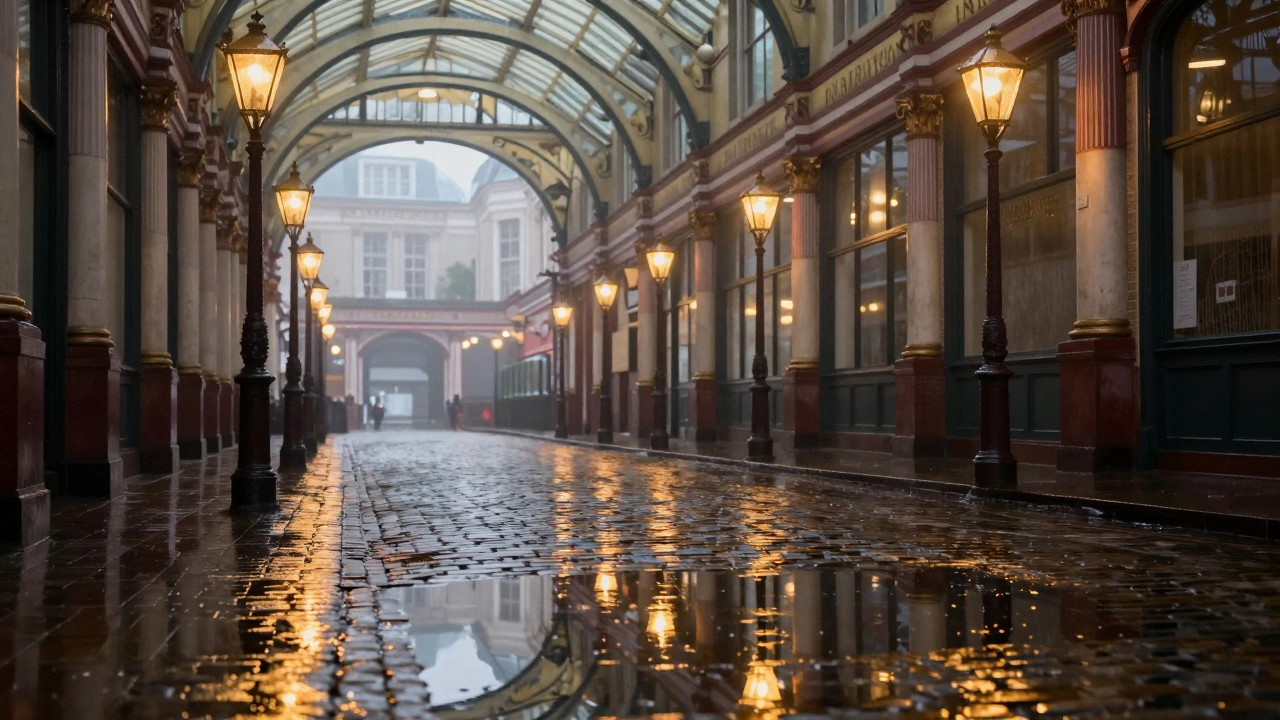
London doesn’t stop being beautiful when it rains-it gets more interesting. While most people rush for cover, photographers grab their cameras and head out. The city transforms: wet pavements turn into mirrors, neon signs bleed into puddles, and colorful umbrellas become moving brushstrokes across gray streets. This isn’t just about avoiding the weather. It’s about finding magic in the mundane.
Why Rain Makes London Better for Photos
London’s architecture was built for fog and drizzle. Brick facades glisten. Stone arches drip. Glass towers reflect the sky like liquid silver. Rain doesn’t ruin the view-it deepens it. The moisture pulls out colors you never noticed in sunlight. A red bus isn’t just red anymore. It’s a bold streak against wet black asphalt, mirrored perfectly in a puddle that stretches the whole width of the street.
Studies from the London College of Fashion show that rainy-day photos on Instagram get 37% more engagement than sunny-day shots in the city. Why? Because they feel real. They feel lived-in. People don’t scroll past them. They pause. They wonder where it was taken. They want to be there.
Where to Find the Best Puddles
Not every puddle is worth shooting. You need the right combination of surface, lighting, and reflection. Start at Leadenhall Market. The old Victorian glass roof lets in soft, diffused light. Raindrops hit the cobblestones, and the reflections of hanging lanterns stretch into glowing ribbons. Go early-before the lunch crowd. You’ll have the whole place to yourself.
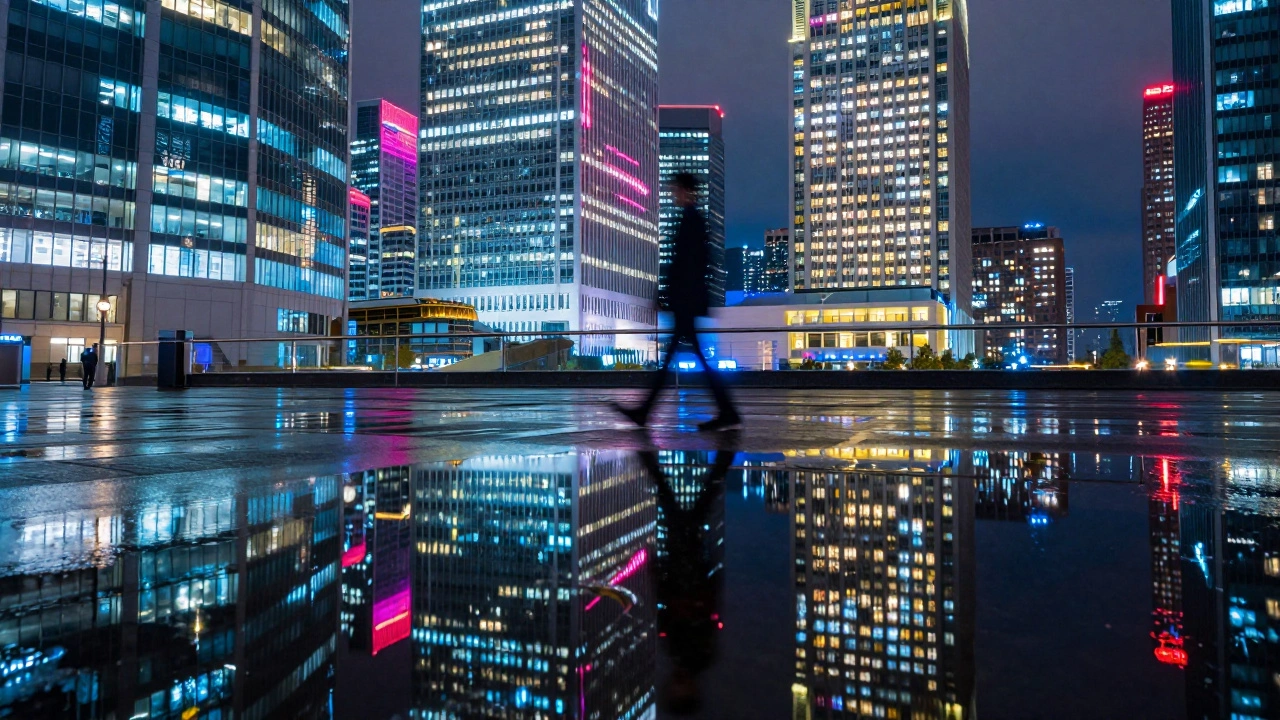
Head to Canary Wharf after dusk. The glass skyscrapers mirror the neon signs of bars and restaurants. Rain turns the plaza into a giant LED screen. A single puddle can reflect three different colors: electric blue from a café sign, hot pink from a billboard, and gold from a streetlamp. Wait for someone to walk through it. Their shadow breaks the reflection like a brushstroke.
Don’t overlook Camden Lock. The market’s covered walkways drip with string lights. Rain turns the water pooling on the ground into a mosaic of colored reflections. Shoot low. Get your lens close to the surface. You’ll capture the distorted shapes of people walking overhead, their umbrellas floating like jellyfish.
Umbrellas as Subjects, Not Obstacles
Umbrellas aren’t just protection-they’re composition tools. A single red umbrella in a sea of black creates instant contrast. A cluster of yellow ones moving in sync looks like a school of fish. Use them to lead the eye. Position your subject under one, then shoot from behind. The umbrella becomes a frame, softening the background into a blur of lights.
Try shooting from a low angle, looking up. The umbrella arches like a dome, and the rain streaks down its surface like glass beads. Use a fast shutter speed (1/500s or faster) to freeze the droplets. Or go slow (1/15s) and let them streak into motion trails. Both work. It depends on the mood you want.
Pro tip: Look for umbrellas with patterns. Polka dots, stripes, florals-they pop against London’s gray. Avoid plain black unless you’re going for minimalism. Color is your friend here.
Neon Reflections: The Secret Sauce
London’s neon isn’t just in Soho. It’s everywhere. In Shoreditch, in Brixton, even in quiet corners of Islington. After dark, the rain turns these signs into liquid light. A blue “Open” sign doesn’t just glow-it drips. It bleeds. It doubles.
Use a tripod. You’ll need long exposures (2-8 seconds) to capture the full glow without motion blur. Set your ISO low (100-200) to keep noise down. Use a narrow aperture (f/8-f/11) to keep the reflections sharp. Don’t shoot straight down. Tilt your camera slightly. Let the reflection stretch diagonally across the puddle. That’s where the magic happens.
Try Chinatown on a rainy Friday night. The red lanterns and gold lettering reflect in the wet pavement, creating a tunnel of light. Or Covent Garden after the shops close. The street performers are gone. The lights are still on. The puddles are still there. And the silence makes the colors feel louder.
Equipment That Actually Matters
You don’t need a fancy camera. A smartphone with manual mode works fine. But you do need protection. A simple rain sleeve costs £10 and keeps your gear dry. Keep a microfiber cloth in your pocket. Wipe your lens every 10 minutes. Condensation builds fast in cold, wet air.
Use a polarizing filter only if you’re shooting during daylight. At night, it kills your reflections. Skip it. Instead, bring a small umbrella for your camera. Or just hold it over your lens with your hand. You don’t need perfection. You need persistence.
Shoot in RAW. You’ll thank yourself later. Rainy light is tricky. Highlights blow out. Shadows crush. RAW files give you room to pull back detail in editing. Adjust the shadows, tone down the highlights, and boost the saturation just a touch. Don’t overdo it. The goal is realism with a little extra punch.
Timing and Weather: When to Go
Don’t wait for the rain to stop. Wait for it to start. The best time is the first 20 minutes after the rain begins. The streets are clean. The reflections are sharp. The air smells like wet concrete and coffee. After an hour, the puddles get dirty. The reflections turn muddy.
Check the forecast for light rain-not storms. Wind ruins reflections. Heavy rain blurs everything. Aim for drizzle with temps between 4°C and 10°C. That’s when the mist clings to the air just right. Early morning or late evening gives you the softest light. Golden hour doesn’t exist in winter. But blue hour does. And it’s perfect for neon.
Instagram-Worthy Shots You Can Actually Replicate
Here are three real shots that got thousands of likes from real London photographers:
- A lone black umbrella reflected in a puddle outside the British Museum, with the museum’s columns mirrored upside down behind it.
- Two people walking under a shared umbrella in Shoreditch, their shadows stretching long on the wet pavement, with a glowing green “Café” sign bleeding into the water.
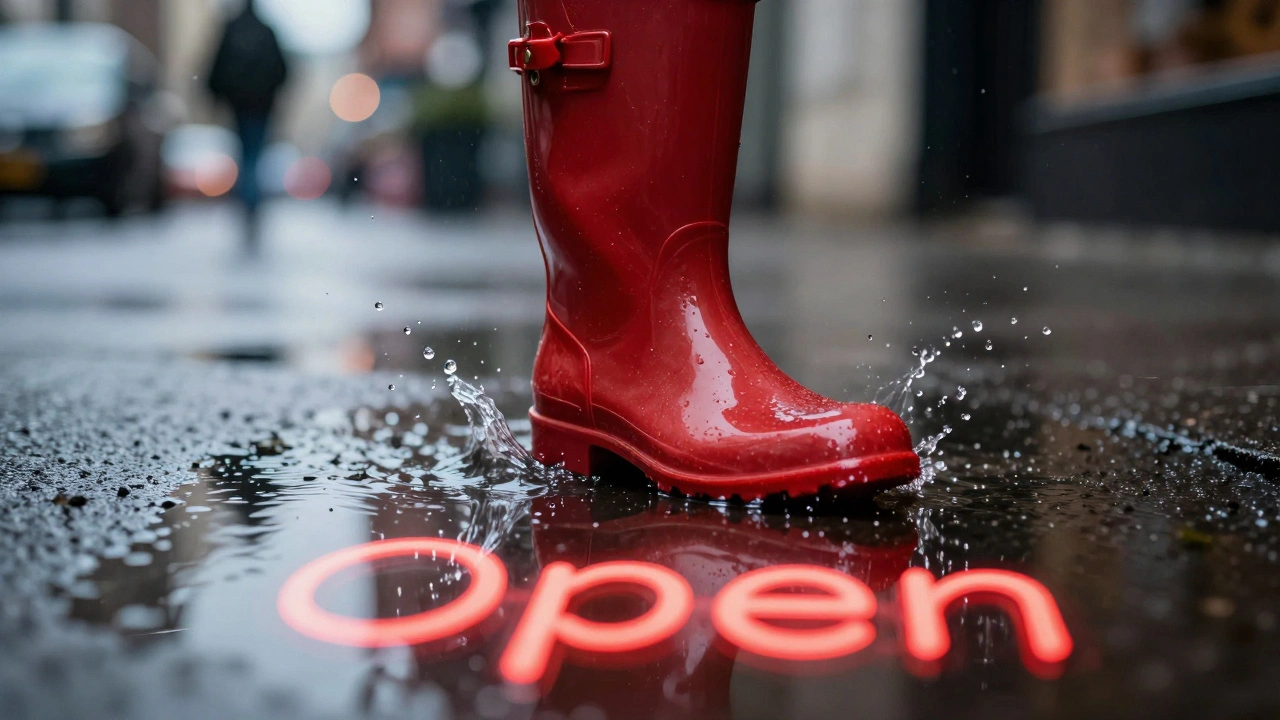
- A close-up of a red rain boot stepping into a puddle, the splash frozen mid-air, with the reflection of a neon “Open” sign shimmering below.
These aren’t staged. They’re caught. You can do the same. Walk slower. Look down. Wait. Then click.
What Not to Do
Don’t shoot straight into the rain. You’ll get blurry, overexposed blobs. Don’t use flash. It kills the atmosphere. Don’t crop out the puddle. The reflection is the point. Don’t post the same shot everyone else posts-the one with the double-decker bus and the red umbrella. Find your own corner.
And don’t expect perfect weather. Rainy day photography isn’t about waiting for the sun. It’s about showing up when everyone else hides.
What’s the best time of year for rainy day photography in London?
Late autumn through early spring (October to March) gives you the most consistent rain and the best lighting conditions. Winter days are shorter, so you get more blue hour and evening neon. Avoid summer-rain is rare, and when it does come, it’s usually heavy and short-lived.
Do I need a tripod for rainy day photos?
Not always. For puddles and umbrellas during daylight, handholding works fine. But for neon reflections at night, a tripod is essential. Even a small tabletop tripod or a beanbag on a windowsill helps. Without it, your long exposures will be blurry.
Can I use my phone for this?
Absolutely. Modern phones have manual modes (Pro or Manual settings). Use them. Lower the ISO, slow the shutter speed, and tap to focus on the reflection. Apps like ProCamera or Manual Camera give you more control. The key isn’t the gear-it’s knowing where to stand and when to press the button.
How do I avoid getting my camera wet?
Use a cheap rain sleeve-under £15 on Amazon. Or wrap your camera in a plastic bag with a hole cut for the lens. Keep a microfiber cloth handy to wipe off droplets. Never leave your gear in the rain. Even a little moisture can fog your lens or damage the electronics.
What’s the biggest mistake beginners make?
They wait for perfect weather. Rainy day photography isn’t about avoiding rain-it’s about using it. The best shots come when you’re cold, damp, and still standing there. If you’re not getting wet, you’re probably not getting the shot.