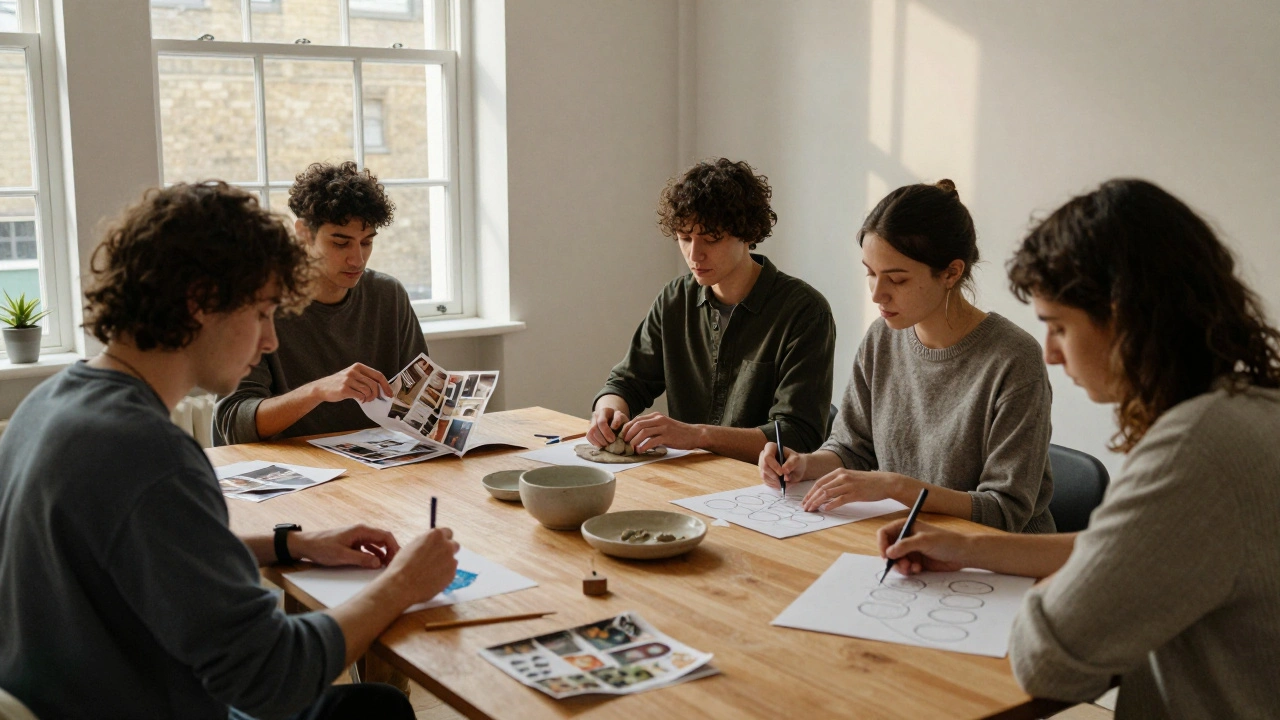
Walking into an art therapy workshop in London doesn’t mean you need to be good at drawing. It doesn’t even mean you have to know what a watercolor is. All you need is a willingness to make a mark - a scribble, a smear, a dot of paint on paper. That’s where the healing starts.
More than 12,000 people in London now attend regular art therapy sessions each year. These aren’t art classes. They’re quiet, structured spaces where people use paint, clay, collage, and ink to process emotions they can’t always put into words. The NHS has been referring patients to these workshops since 2020, and private centers have seen a 40% increase in attendance since 2023. Why? Because for many, making art is the only thing that helps them breathe again.
What Actually Happens in an Art Therapy Workshop?
There’s no right way to do it. One person might spend 45 minutes tearing up old magazines and gluing the pieces into a chaotic collage. Another might knead clay into a rough shape and cry while doing it. A third might just sit with a black pen and draw the same circle over and over until they feel calmer.
A trained art therapist is there - not to judge, not to teach technique, but to sit quietly and ask open questions: “What does that color mean to you?” or “If this shape could speak, what would it say?” The focus is always on the experience, not the outcome. The artwork becomes a mirror, not a masterpiece.
Workshops usually last 90 minutes and run weekly. Most groups have 6 to 10 people. Sessions are held in community centers, libraries, hospitals, and even converted church halls in areas like Camden, Peckham, and Brixton. You don’t need a referral to join a public group - though some centers offer sliding-scale fees if you’re on a low income.
How Art Therapy Helps Mental Health
Studies from the British Association of Art Therapists show that after 8 weeks of weekly art therapy, 73% of participants reported lower levels of anxiety. Depression scores dropped by an average of 40% in people with mild to moderate symptoms. These aren’t small changes. They’re measurable, repeatable shifts in how people feel day to day.
The science is simple: when you’re overwhelmed, your brain gets stuck in a loop of stress chemicals. Art-making activates the prefrontal cortex - the part that helps you think clearly - while quieting the amygdala, which triggers fear and panic. It’s like hitting a reset button without needing to say a word.
People with PTSD, autism, chronic illness, grief, or burnout often find art therapy more accessible than talking therapy. One woman in a workshop I spoke to said, “I’ve been to six therapists. Only when I started painting did I feel like I wasn’t broken.”
Who Can Benefit?
You don’t need to be diagnosed with anything to join. Art therapy isn’t just for people in crisis. It’s for anyone who feels stuck, numb, or tired.
- Parents who feel like they’ve lost themselves in caregiving - many find space to reconnect with their own emotions through clay or pastels.
- Young adults struggling with loneliness or identity - the non-verbal nature of art helps them explore feelings they can’t name.
- Retirees adjusting to loss or isolation - creating something new gives them a sense of purpose again.
- People with long-term illness - making art helps them express pain, fear, or hope when words feel too heavy.
- Anyone who’s ever said, “I’m just not creative” - that’s exactly who needs it most.
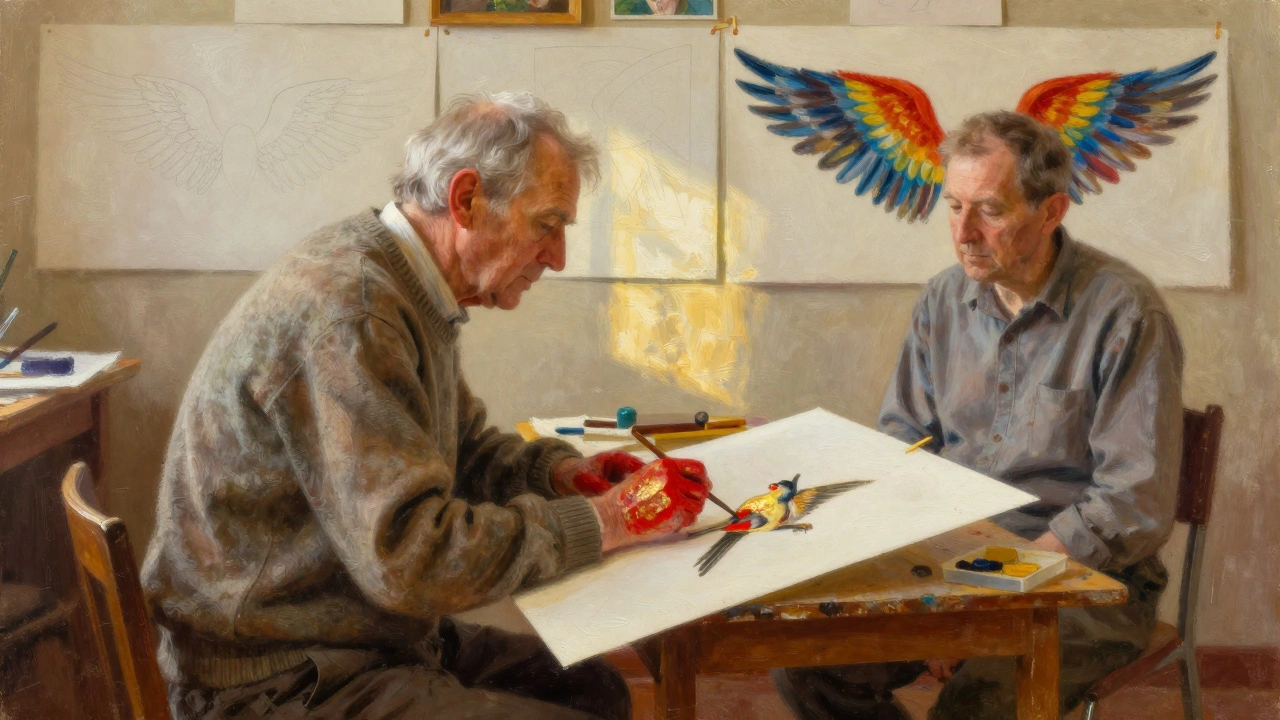
There’s no age limit. No skill requirement. No pressure to perform. One 82-year-old man in a workshop in Hackney started with just one line on paper. By week five, he was painting birds in flight. He told the group, “I didn’t know I still had wings.”
Where to Find Art Therapy Workshops in London
London has over 40 active art therapy programs. Here are a few trusted options:
- Art Therapy London (Camden) - Offers free weekly sessions funded by the NHS. No referral needed. Open to all.
- Therapy in Color (Peckham) - Focuses on BIPOC and LGBTQ+ communities. Sliding scale from £5 to £25 per session.
- St. Thomas’ Hospital Art Therapy - Runs groups for people with cancer, chronic pain, and neurological conditions.
- The Art Room (Brixton) - Specializes in youth and young adults aged 16-25. Free for under-25s.
- London Art Therapy Centre (Islington) - Offers both group and one-on-one sessions. Accepts private insurance.
You can search for workshops through the British Association of Art Therapists website or call Mind London for a list of local providers. Most offer a free taster session - no commitment, no pressure.
What to Bring (and What Not to Worry About)
All materials are provided. You don’t need to bring anything except yourself. No aprons. No sketchbooks. No prior experience.
Don’t worry about:
- Whether your art looks “good”
- What others think of your work
- Being “good” at art
- Having a reason to be there
What you should bring:
- Comfortable clothes - paint and clay can get messy
- Openness - even a little bit
- Patience - healing doesn’t happen in one session
One woman told me she came to her first session because her therapist said, “Try something new.” She left with her hands covered in blue paint, shaking, and crying. She came back the next week. And the next. Now, she leads a group for other women.
Why It Works When Talking Doesn’t
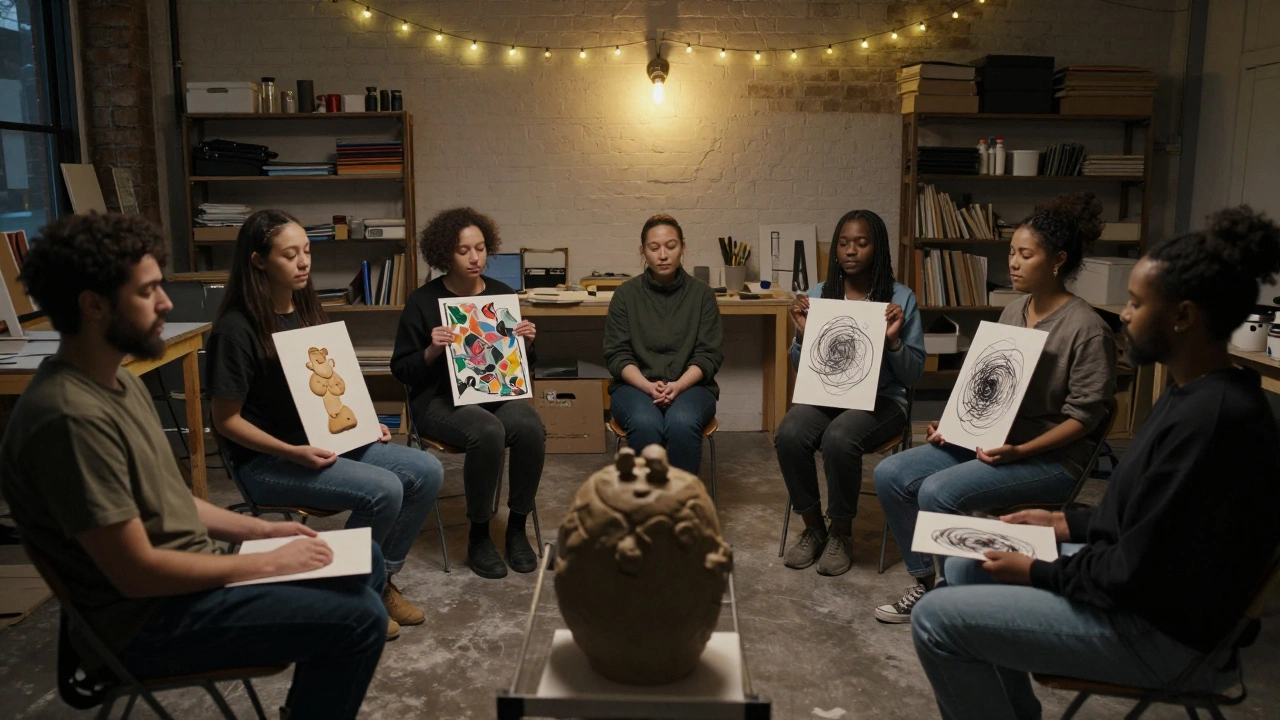
Words can feel like a cage. When trauma, grief, or anxiety is too deep, language often fails. Art doesn’t need translation. A dark swirl of charcoal can hold more truth than a paragraph of therapy notes.
Neuroscientists have found that the act of making art - even simple doodling - releases dopamine and lowers cortisol. It’s a form of mindfulness that doesn’t require sitting still. You’re moving, touching, choosing colors, layering textures. Your body remembers what your mind can’t say.
One man in a group for veterans said, “I can’t talk about what happened. But when I made that sculpture of a broken door, the therapist just nodded. She didn’t ask. She didn’t push. She just said, ‘It’s okay to be broken.’ That was the first time I felt heard.”
It’s Not Magic. It’s Practice.
Art therapy isn’t a quick fix. It’s not a cure. But it’s one of the few tools that helps people slowly, quietly, rebuild a sense of self after trauma, burnout, or loss.
It works because it’s human. You’re not being analyzed. You’re not being fixed. You’re being invited to create - and in that act, you’re reminded that you’re still alive, still capable, still worth something.
London’s art therapy workshops aren’t fancy. They’re in basements, in community rooms, behind quiet doors. But they’re changing lives. One brushstroke at a time.
Do I need to have art experience to join an art therapy workshop in London?
No. Art therapy is not about skill or talent. It’s about expression. Many people who attend have never painted before. The focus is on how making art makes you feel, not how it looks. Therapists are trained to guide you through the process, not to critique your work.
How much do art therapy workshops cost in London?
Costs vary. Many public workshops are free or operate on a sliding scale from £5 to £25 per session, based on income. NHS-funded programs are free for those referred by a healthcare provider. Private centers may charge £40-£70 per session, but some offer reduced rates for students, seniors, or those on benefits. Always ask about financial support - most are happy to help.
Can I join if I’m not from London?
Yes. Most workshops welcome anyone living in or near London. You don’t need to be a resident or have a London address. Many people travel from surrounding areas like Surrey, Kent, or Hertfordshire. Just check the location and transport options - most are near tube or bus stops.
Are art therapy sessions confidential?
Yes. Everything shared in the group - including your artwork - is confidential. Therapists follow strict ethical guidelines. No one will share what you create or say outside the session unless there’s a risk of serious harm to yourself or others. Your privacy is protected.
How long does it take to see results from art therapy?
There’s no set timeline. Some people feel calmer after one session. Others need 6-12 weeks to notice changes in mood, sleep, or anxiety. The key is consistency. Like exercise or meditation, the benefits build over time. Most workshops run in 8- to 12-week blocks, and many participants choose to continue beyond the first block.