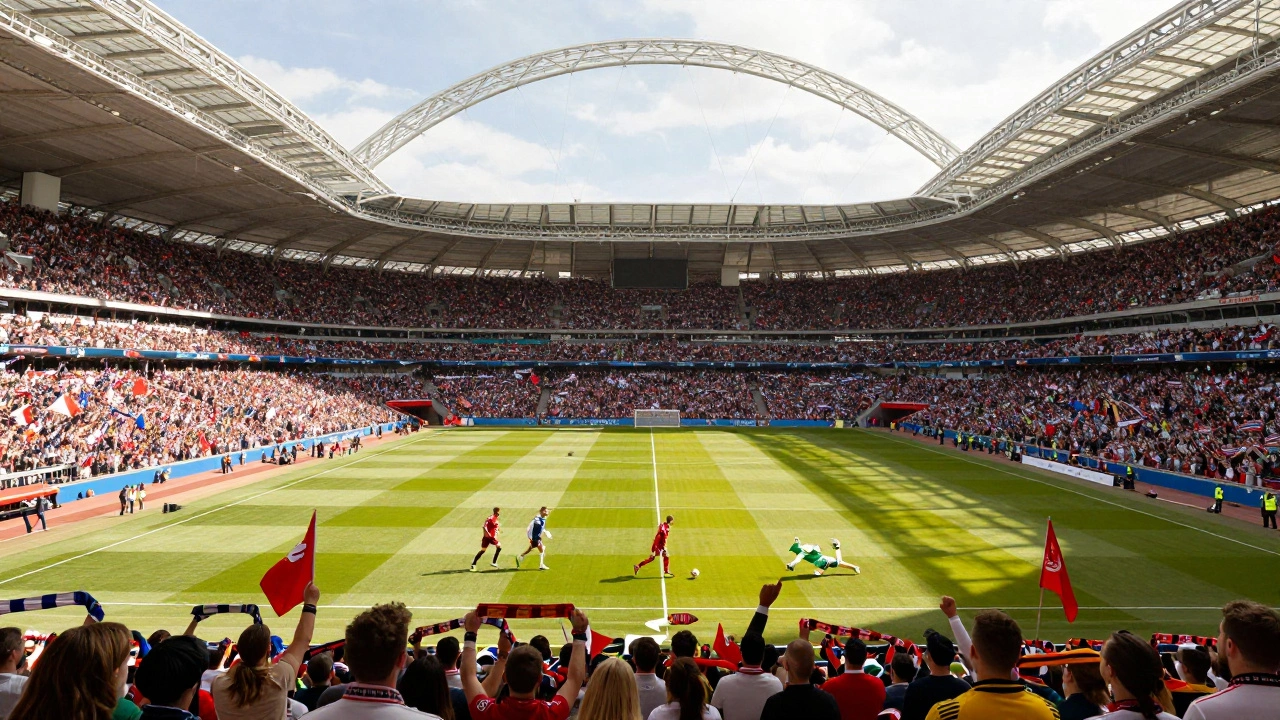
The FA Cup Final isn’t just another match. It’s the oldest football competition in the world, and every year, over 90,000 fans pack Wembley Stadium to watch two teams fight for a trophy older than most of them. Since 1872, this single game has carried more weight than most league titles. It doesn’t matter if you’re a top-flight club with a billion-dollar budget or a non-league side that plays on a muddy pitch 30 miles from home - if you reach the final, you’re playing for history.
How the FA Cup Works
The FA Cup starts in August with hundreds of teams, from Premier League giants to local amateur clubs. It’s a knockout tournament, so one bad day ends your season. There are no second chances. Teams from the National League down to village sides enter in the early rounds. They play home and away, sometimes in front of a few hundred people, hoping for a lucky draw that sends them to a bigger ground - and maybe, just maybe, a date with a Premier League team.
By the time the final rolls around in May, only two teams are left. The path to Wembley is brutal. Teams face relegation battles, injuries, and media pressure. But the final? That’s pure magic. A lower-league team beating a giant isn’t just an upset - it’s folklore. Think of Wigan Athletic beating Manchester City in 2013, or Coventry City lifting the trophy in 1987. Those moments live forever.
Why Wembley?
Wembley Stadium has hosted the FA Cup Final since 1923, except for a few years when the old stadium was torn down and rebuilt. The new Wembley, opened in 2007, holds 90,000 fans and has that iconic arch you see on every TV broadcast. It’s not just a stadium - it’s a shrine to English football. The pitch is perfect, the atmosphere is electric, and the trophy is handed out under that arch in front of a sea of clapping, singing fans.
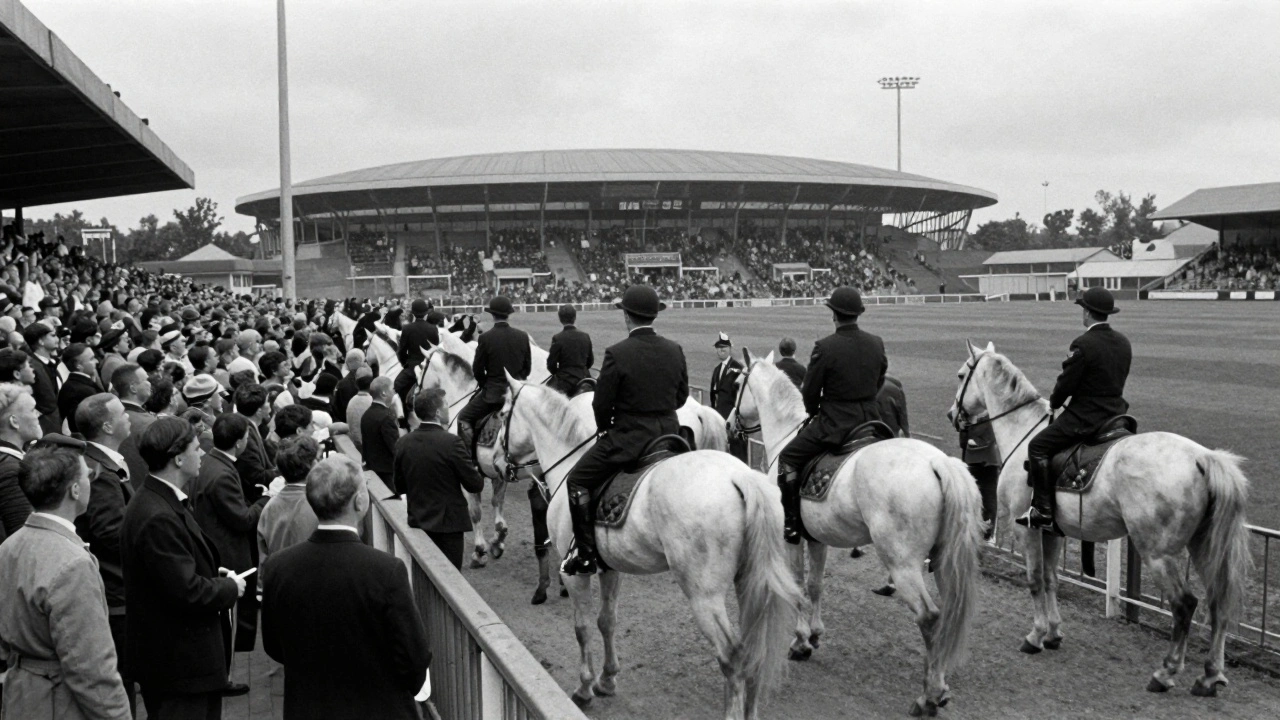
Before Wembley, finals were held at Crystal Palace, then Kennington Oval. But Wembley became the stage because it was built for this moment. The 1923 final, known as the “White Horse Final,” drew 200,000 people - more than the stadium could hold. Police on white horses had to clear the crowd. That’s the kind of history you don’t forget.
The Trophy and Its Legacy
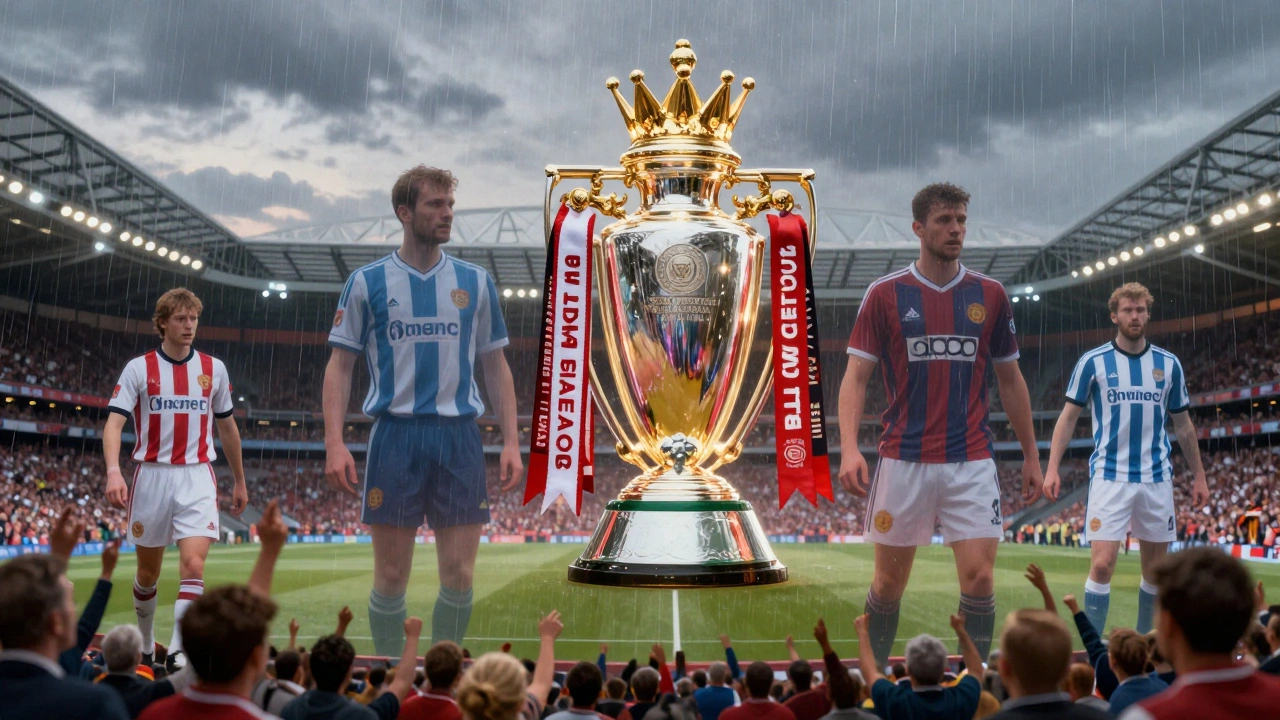
The FA Cup trophy itself is made of silver and stands 18 inches tall. It’s been redesigned twice - once in 1895 and again in 1911 - but the original design lives on in the replica that’s given to the winners. The original is kept at the National Football Museum in Manchester. The winning team gets a new one each year, and the names of every club that’s ever won it are engraved on the base.
Arsenal holds the record for most wins with 14. Manchester United is close behind with 12. But the real stories aren’t in the numbers. They’re in the underdogs. It’s the 1980 final where West Ham beat Arsenal 1-0, and Bobby Moore, the 1966 World Cup captain, lifted the trophy one last time. It’s the 1999 final when Manchester United won the double, and the 2022 final where Liverpool lost to Chelsea on penalties after a 0-0 draw.
What Makes the Final Different
League games are about consistency. The FA Cup is about one day. One moment. One penalty. One goal. One save. You don’t need to be the best team all season - you just need to be the best on that day.
Players talk about the final like it’s a dream. Many spend their whole careers waiting for this chance. A 22-year-old academy kid might start in front of 90,000 people, and if he scores, his name goes on the wall at Wembley forever. Coaches say it’s the only match where the crowd doesn’t care about tactics - they care about heart.
There’s no European qualification on the line. No TV rights deal depends on it. But every club, no matter how small, still treats it like their life depends on it. Why? Because this cup doesn’t care about money. It cares about passion.
The 2025 Final: What to Expect
The 2025 FA Cup Final will be held on Saturday, May 17, 2025, at Wembley Stadium. The two teams will be decided by the semi-finals in April. Right now, the favorites are Manchester City, Liverpool, and Arsenal - all with deep squads and strong runs in the competition. But don’t count out a surprise. Last year, Nottingham Forest, a club that hadn’t reached the final since 1991, made it to the semis. They lost, but they showed that this cup still gives hope to everyone.
Expect high stakes. Expect drama. Expect a late winner, a red card, or a goalkeeper making a miracle save. The FA Cup Final doesn’t need to be perfect. It just needs to be unforgettable.
How to Watch
The match is broadcast live on ITV in the UK and streamed globally through the FA’s official platforms. Kickoff is usually around 5:00 PM BST. If you’re in the UK, you can get tickets through the FA’s official website - but they’re hard to come by. Most go to the clubs, with only a few thousand available to the public. If you can’t get in, find a pub. Every pub in England turns into a mini-Wembley on final day.
Why It Still Matters in 2026
In a world of pay-per-view, global TV deals, and superclubs buying every star, the FA Cup is one of the last places where football feels pure. It’s not about who has the most money. It’s about who wants it more. A kid from a town of 20,000 people can become a national hero in 90 minutes. A manager can go from obscurity to legend with one win.
That’s why, every May, millions of people - from grandfathers who remember the 1960s to toddlers in their first football shirt - stop what they’re doing and watch. Because in football, nothing beats the FA Cup Final.
When is the FA Cup Final held each year?
The FA Cup Final is traditionally held on the third Saturday in May. In 2025, it will be on May 17. The date is set well in advance and rarely changes, even if the Premier League schedule gets busy. The final is always played at Wembley Stadium unless there’s a major event like the Olympics or a stadium renovation - which hasn’t happened since the early 2000s.
Which team has won the FA Cup the most times?
Arsenal has won the FA Cup 14 times, the most of any club. They won their first in 1930 and their most recent in 2020. Manchester United is second with 12 wins, followed by Chelsea and Tottenham Hotspur, both with 8. But the real history is in the clubs that won it once and never again - like Blackburn Rovers in 1995 or Sunderland in 1973.
Can a non-league team win the FA Cup?
Yes - and they have. The last non-league team to win the FA Cup was Tottenham Hotspur in 1901, when they were still in the Southern League. Since the Football League expanded in the 1890s, only teams in the top four divisions have reached the final. But lower-league teams still make deep runs. In 2021, Swansea City, then in the Championship, reached the final. In 2024, a League One club, Bolton Wanderers, made it to the semi-finals. The competition still gives every club a shot - even if the odds are 10,000 to 1.
How many teams enter the FA Cup each season?
Over 700 teams enter the FA Cup each season. It includes all clubs from the Premier League down to the 10th tier of English football, including teams from the Northern Premier League, Southern League, and even island clubs like Guernsey and Jersey. The competition starts with preliminary rounds in August, and only the top 32 teams reach the first round proper - where Premier League and Championship sides join the fray.
Who holds the record for most FA Cup goals in a final?
The record for most goals scored by a single player in an FA Cup Final is held by Cliff Bastin of Arsenal. He scored twice in the 1936 final against Sheffield United, but the record for most goals in a single final is held by Bert Turner of Charlton Athletic, who scored two goals in the 1946 final - the only time a player has netted twice in a final since the war. In total, 17 players have scored a hat-trick in an FA Cup Final, with the last being Ian Rush for Liverpool in 1986.