Walking through London, you don’t need a map to find its soul-you just need to follow the smell of sizzling bacon, buttery pastry, and malt vinegar. The city’s food scene is layered: global influences swirl in every neighborhood, but the true heartbeat? The classics. These are the dishes that have fed generations, survived wars, and still sit on menus today-not as nostalgia, but as living tradition.
Fish and Chips: More Than Just Fried Fish
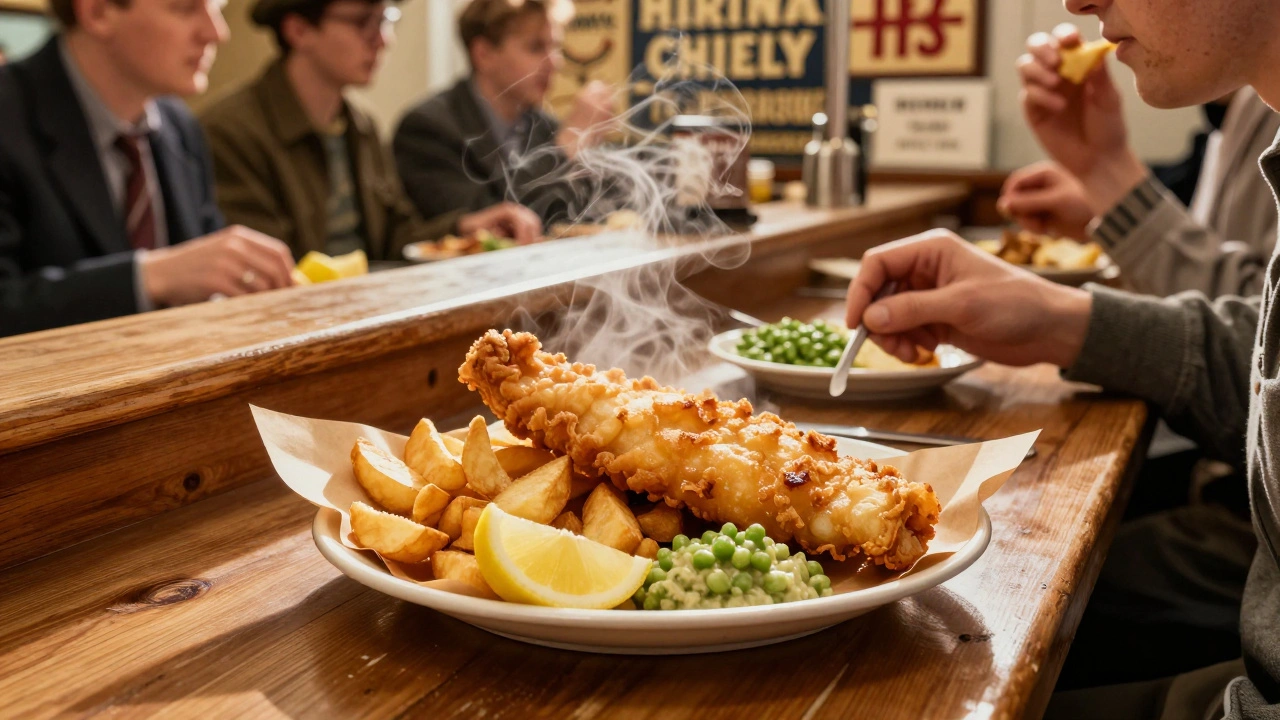
You can’t talk about British food without starting here. Fish and chips isn’t a meal; it’s a ritual. The best versions use cod or haddock, lightly battered in beer batter, fried until crisp but not greasy. The chips? Thick-cut, fluffy inside, golden outside. Don’t expect soggy fries. Real ones hold their shape.
Head to Mr. Fish a family-run chippy in Bethnal Green since 1952. They fry in beef dripping, which gives the batter a deeper flavor. Order it with mushy peas and a wedge of lemon. Eat it with your hands, paper wrapped, standing at the counter. No forks. No napkins. Just salt, vinegar, and the quiet hum of a working-class tradition.
Full English Breakfast: The Heavyweight Champion
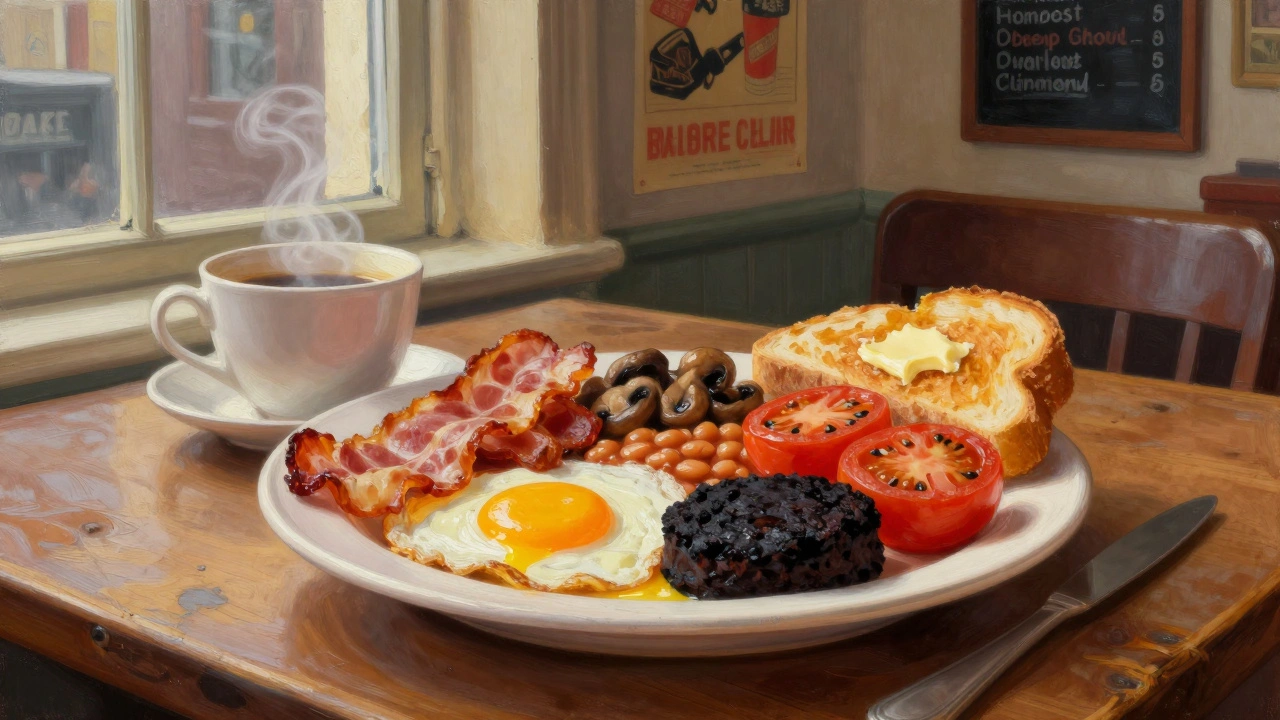
A full English isn’t breakfast. It’s a commitment. Bacon, sausages, baked beans, grilled tomatoes, mushrooms, fried bread, black pudding, and two eggs-usually fried or poached. It’s heavy. It’s messy. It’s glorious.
Most hotels serve a version, but the real deal? Look for independent cafés with a long history. The Breakfast Club in Shoreditch, known for its no-frills, no-nonsense approach uses pork sausages from a local butcher and free-range eggs. Their black pudding? Made in-house. Skip the toast. Go for the fried bread-crispy, buttery, perfect for soaking up runny yolks.
Order it with a cup of strong tea. No coffee. No juice. Tea is the only proper companion. And don’t rush. This meal takes at least 45 minutes to eat properly. If someone tries to serve you a "light" version? Walk out.
Pie and Mash: The East End’s Secret
Ask a Londoner where to find the most authentic British meal, and if they’re from the East End, they’ll say: pie and mash. It sounds simple-meat pie, mashed potatoes, and liquor. But "liquor" here isn’t alcohol. It’s parsley sauce, thin and green, poured over everything.
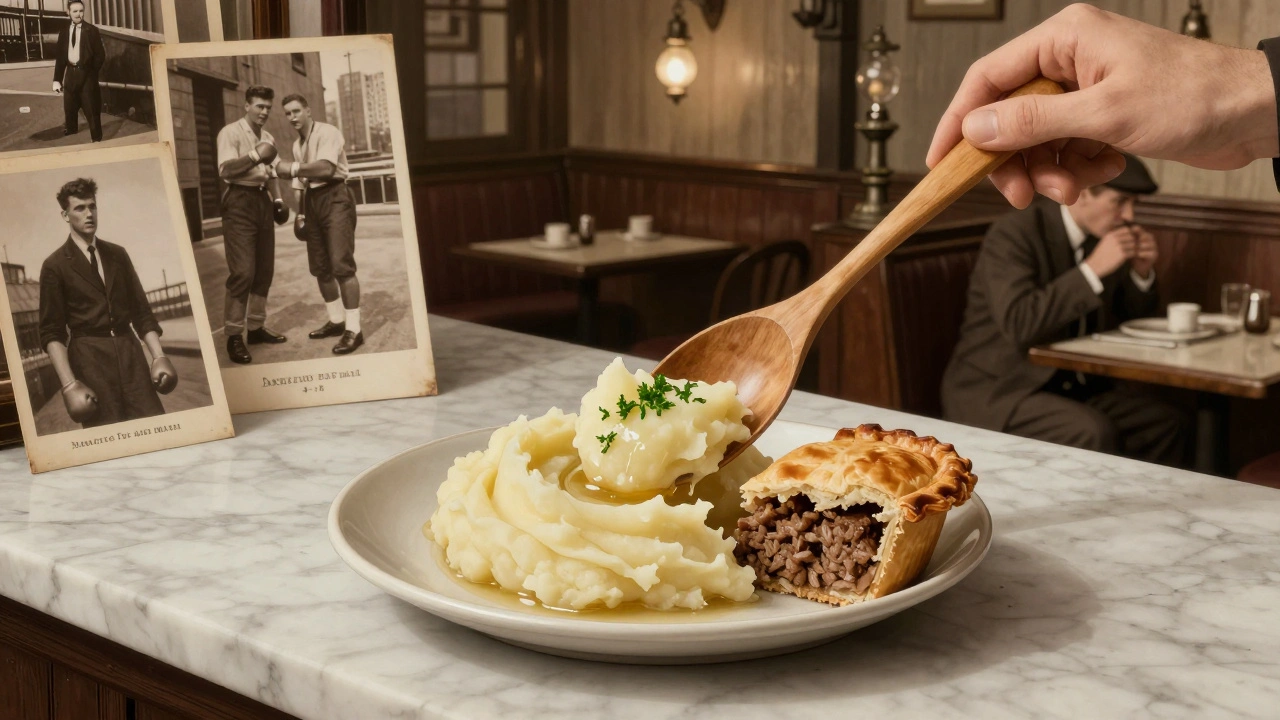
Manze’s on Ape Hall, established in 1902 is the last of its kind. The pies are filled with minced beef and gravy, encased in flaky pastry. The mash? Creamy, buttery, smooth as silk. The liquor? Made from parsley, water, and a hint of vinegar. Eat it with a wooden spoon. No knife needed.
Don’t be surprised if the place feels like a museum. Wooden booths, marble counters, old photos of boxers and dockworkers. This isn’t a restaurant. It’s a monument. People still come here for birthdays, after funerals, on Sundays. It’s the food of resilience.
Sunday Roast: The Weekly Ritual
Every Sunday, across London’s pubs and homes, the same thing happens. A joint of beef, lamb, or chicken is roasted until the edges are crisp, the center tender. Yorkshire puddings rise tall and golden. Gravy pools around the plate. Roast potatoes crackle under the fork. Vegetables-carrots, parsnips, broccoli-are boiled just enough to hold their shape.
The Harwood Arms in Fulham, a Michelin-starred pub with a Sunday roast that rivals fine dining uses heritage breeds of meat and hand-chopped potatoes fried in goose fat. But you don’t need a star to find great roast. Try The Churchill Arms in Kensington, famous for its floral decor and massive portions. Their roast beef comes with horseradish sauce so sharp it clears your sinuses.
It’s not fancy. It’s not Instagrammable. But it’s the closest thing to a British family dinner you’ll find in a city of millions.
Toad in the Hole: Comfort in a Dish
This one’s odd if you’ve never seen it. Sausages baked inside a Yorkshire pudding batter. Sounds strange? It’s delicious. The sausages bubble up through the golden crust, releasing fat that crisps the edges. The batter soaks it all up, turning into something like a savory popover.
Most places serve it with onion gravy and peas. But the best versions? They use high-quality pork sausages-like those from Peters’ of Chiswick-and bake the batter until it’s puffing and caramelized. The Duke of Cambridge in Islington does it right. Their gravy is made from the sausage drippings, thickened with a splash of ale. It’s rustic, hearty, and oddly comforting.
Ploughman’s Lunch: The Pub’s Quiet Hero
No one orders this for health reasons. It’s cheese, pickles, bread, and maybe a boiled egg. But it’s perfect for a slow afternoon. A chunk of mature Cheddar, a slice of pickled beetroot, a wedge of crusty sourdough, and a spoonful of Branston Pickle. That’s it.
The secret? The cheese must be real. Not processed. Not sliced thin. A wedge of Double Gloucester or Stilton, left at room temperature. The pickles? Homemade, not jarred. The Lamb & Flag in Covent Garden, one of London’s oldest pubs makes their own pickles. Their Cheddar comes from a farm in Somerset, aged over 18 months.
Pair it with a pint of bitter. Not lager. Not cider. Real ale. The kind that tastes like hops and earth.
What to Skip (And Why)
Not everything labeled "British" is worth your time. Avoid:
- "British" burgers with "bangers" on top-those are usually American-style with cheap sausages
- Pre-packaged "traditional" pies from supermarkets-they’re full of preservatives and lack soul
- Restaurants that serve "fish and chips" with tartar sauce as the only condiment-real ones use malt vinegar
- "Full English" with hash browns or avocado-those are modern twists, not tradition
True British food doesn’t need gimmicks. It needs time. Time to slow-cook. Time to ferment. Time to let flavors deepen. That’s what you’re tasting-not the dish, but the history behind it.
Where to Go Next
London’s food culture isn’t frozen in time. But the classics? They’re still alive. If you want to understand the city, don’t just eat here. Talk to the staff. Ask why they use beef dripping. Ask how long they’ve been making the liquor. Ask if their grandmother taught them.
Start with Mr. Fish. End with Manze’s. Stop in between at The Churchill Arms. You’ll leave full-not just from food, but from knowing you’ve tasted something older than most of the buildings around you.
What’s the most authentic British food in London?
There’s no single answer, but pie and mash from Manze’s is often called the most historically authentic. It’s been served the same way since 1902, with no modern changes. Fish and chips, the full English, and Sunday roast are also deeply rooted in British daily life, but pie and mash carries the strongest link to working-class London history.
Can you get traditional British food outside of London?
Absolutely. Manchester, Birmingham, and Leeds have just as strong traditions, sometimes even better. In fact, some of the best pies and sausages come from northern towns. But London has the highest concentration of historic spots still running-like Manze’s and Mr. Fish-that you won’t find elsewhere. The city preserves these places because they’re cultural landmarks.
Is it expensive to eat traditional British food in London?
Not at all. A full English breakfast costs £10-£14. Fish and chips runs £12-£16. Pie and mash? Usually under £10. Even Michelin-starred pubs like The Harwood Arms serve their roast for under £25. These aren’t tourist traps. They’re working-class meals that haven’t been inflated by fancy branding.
What’s the best time to try a Sunday roast?
Go between 12 p.m. and 2 p.m. Most pubs start serving at noon, and the roast is best fresh out of the oven. After 2 p.m., the potatoes lose their crispness, and the gravy gets thin. If you want the best texture, go early. And book ahead-these spots fill up fast.
Do British people still eat these foods every day?
Not daily, no. Most people have a full English on weekends, or a roast on Sundays. Fish and chips is a treat, often on Friday nights. Pie and mash is more of a special occasion or nostalgic meal. But they’re not gone. They’re just not daily bread anymore. Still, every British person knows how to make them. That’s the real legacy.