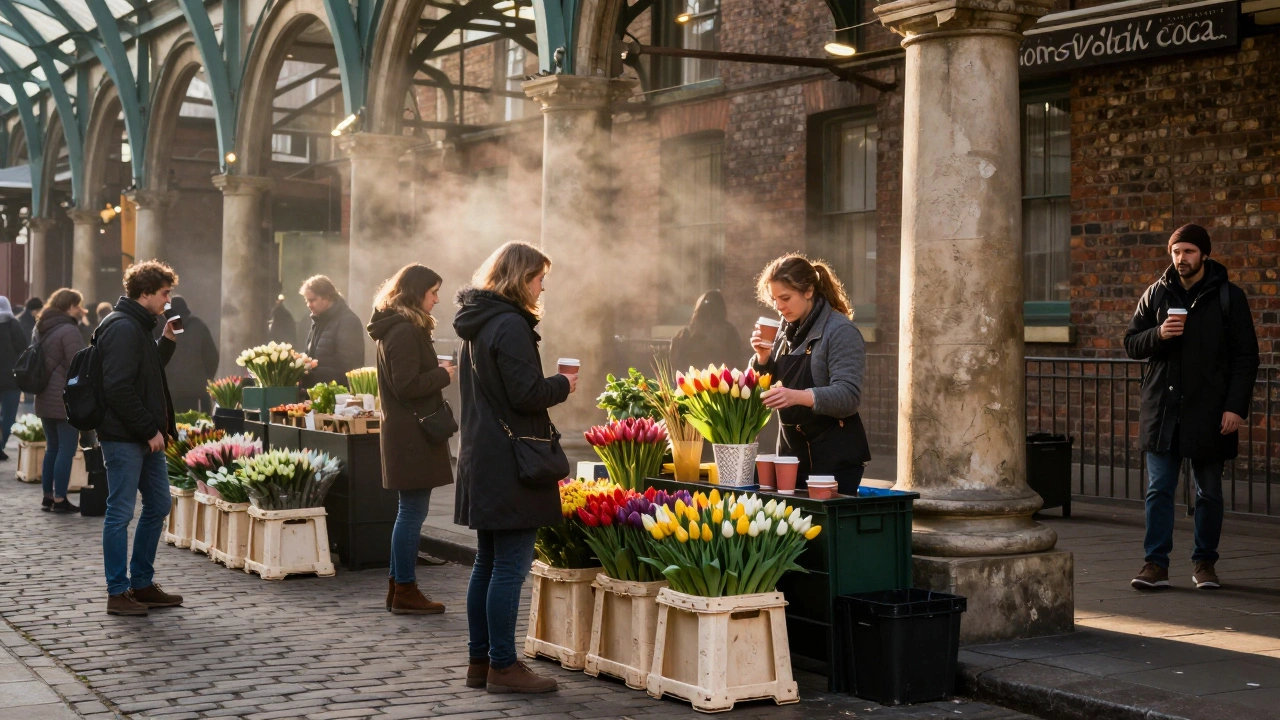
Walk through any of London’s oldest markets and you’ll feel the city’s pulse beating the same way it did 200 years ago. The smell of fresh bread, the clatter of metal baskets, the call of vendors hawking pies and pickled herring - these aren’t stage props for tourists. They’re living traditions, passed down through generations of traders who still show up before dawn to set up their stalls.
Covent Garden: From Fruit and Veg to Fashion and Folk
Covent Garden wasn’t always boutiques and street performers. In 1654, the 4th Earl of Bedford commissioned Inigo Jones to build a piazza for selling produce. By the 1800s, it was London’s busiest fruit and vegetable market, with carts rolling in from Kent and Essex. The market’s original brick arches still stand, now housing artisan cheese sellers, vintage book stalls, and handcrafted jewelry.
What makes Covent Garden special isn’t just its architecture - it’s the continuity. The same spot where a Victorian greengrocer once sold apples is now where a third-generation flower seller arranges tulips from the Netherlands. The market’s daily rhythm hasn’t changed: opening at 7 a.m., closing at 7 p.m., with the same mix of locals grabbing lunch and visitors snapping photos of the jugglers outside the Apple Market.
Borough Market: The Oldest Food Market in London
Borough Market dates back to at least 1014, making it older than the Tower of London. By the 1700s, it was the city’s main wholesale food market, supplying meat, fish, and grain to the entire Southwark district. Today, it’s a global food destination, but it hasn’t lost its soul.
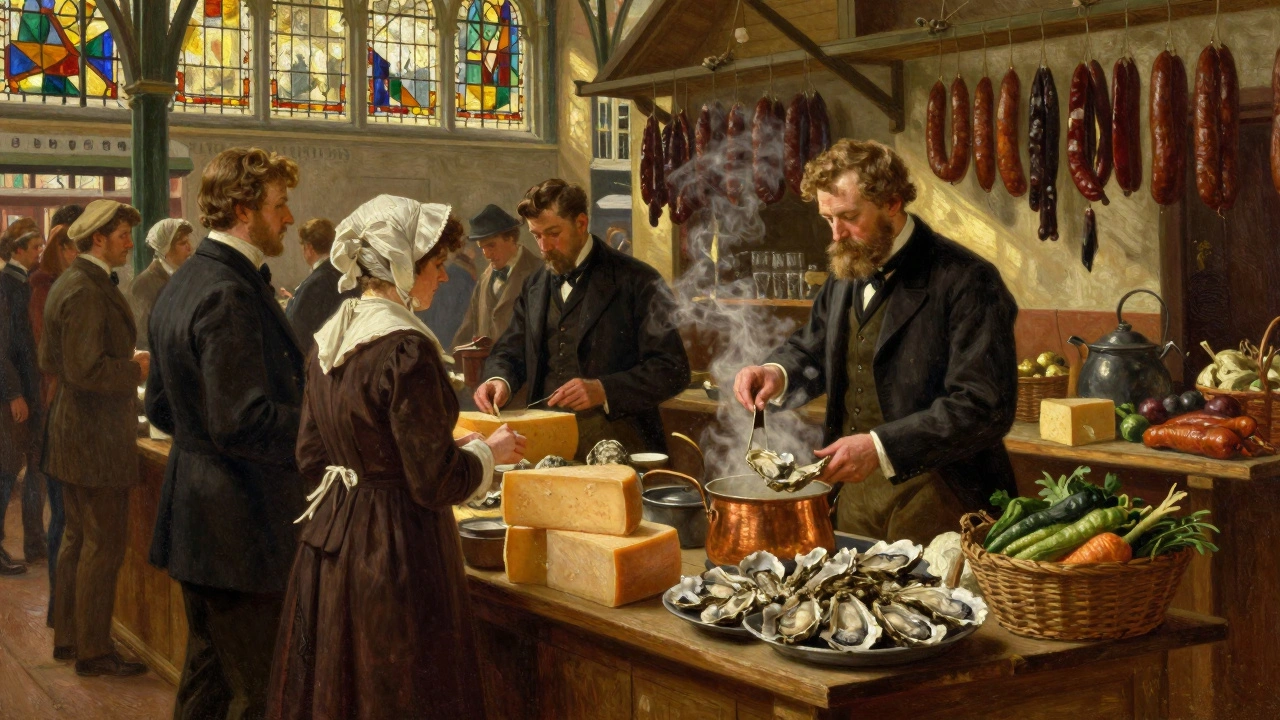
Walk past the stalls of Neal’s Yard Dairy, and you’ll find the same aged cheddars and Stilton that have been made the same way since the 1800s. The oyster sellers still shuck them fresh off the boat, just like they did when Charles Dickens shopped here. The stallholders don’t just sell food - they tell you where it came from, how it’s raised, and why it tastes different from what you’ll find in a supermarket.
It’s not just about quality. It’s about trust. A local baker who’s been here since 1989 still uses the same sourdough starter his grandfather brought from Italy. That’s not marketing. That’s heritage.
Leadenhall Market: Glass, Gold, and Victorian Grandeur
Leadenhall Market looks like it stepped out of a Harry Potter film - and for good reason. It was used as Diagon Alley in the first movie. But long before wizards, this was where Roman traders sold spices and metals. By the 1800s, it had become London’s center for precious metals, with goldsmiths and silversmiths lining the arcades.
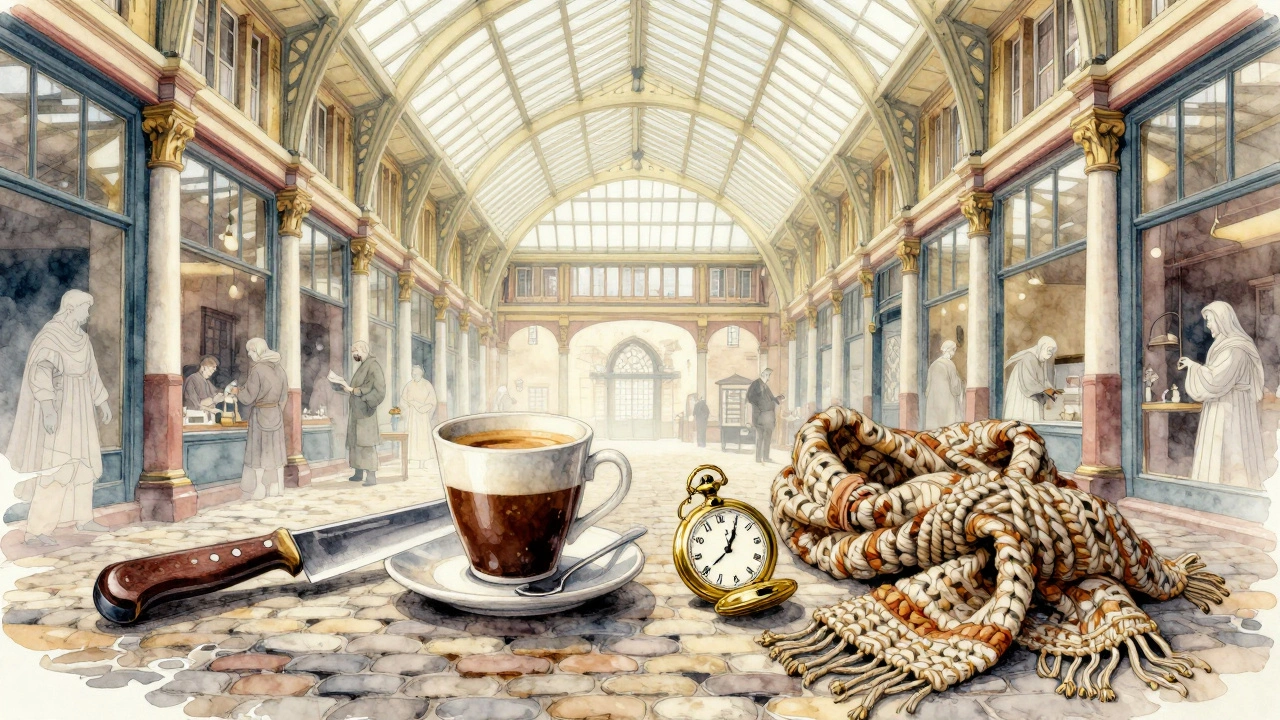
The market’s stained-glass roof and wrought-iron balconies were added in 1881, and they’ve been kept in perfect condition. Today, you’ll find a mix of old and new: a 120-year-old butcher still cuts his own steaks, while a modern coffee roaster uses beans from Ethiopia and Colombia. The same cobblestones that once echoed with horse hooves now echo with the clink of espresso cups.
What keeps Leadenhall alive isn’t nostalgia. It’s the fact that every business here has to pass a heritage test - you can’t just open a chain store. The market authority requires that each vendor has a story, a craft, or a recipe that’s been passed down.
Camden Market: When Tradition Meets Rebellion
Camden Market doesn’t look historic at first glance. Neon signs, punk bands, and tattoo parlors dominate the scene. But its roots go back to 1974, when local farmers started selling produce along the Regent’s Canal. By the 1980s, it became a hub for counter-culture traders - secondhand vinyl, handmade leather jackets, and hand-painted boots.
Today, it’s one of the most visited markets in Europe, with over 100,000 people coming each weekend. But beneath the glitter and graffiti, the same rules apply: vendors must be independent. You won’t find a single Starbucks or Zara here. Every stall is owned by someone who lives in London - many of them third-generation traders whose parents started here in the 90s.
The market’s survival isn’t about trends. It’s about identity. The stall selling handmade vegan sausages? Her mum sold pies here in 1987. The guy repairing vintage watches? His grandfather repaired pocket watches for the Royal Navy. Camden didn’t become a market by chasing tourists. It became one by staying true to its people.
Spitalfields Market: Weaving History into Fabric
Spitalfields was once the center of London’s silk weaving industry. In the 1700s, Huguenot refugees from France brought their looms and techniques to this part of East London. By 1800, half the city’s silk came from Spitalfields. The weavers’ houses still stand - narrow, brick-built terraces with windows designed to let in maximum light for their looms.
Today, the market sits in the same spot, but the looms are gone. In their place: designers selling hand-dyed scarves, upcycled denim, and ceramic jewelry made by local artists. The market’s main building, built in 1887, still has its original iron framework and glass roof. The only thing that’s changed is who’s using it.
What’s remarkable is how the market adapted without losing its character. A stall that sells hand-printed textiles uses the same block-printing method from the 1820s. The owner learned it from her grandmother, who learned it from her mother, who learned it from a Huguenot weaver’s daughter.
Why These Markets Still Matter
These markets aren’t museums. They’re working ecosystems. Each one has survived wars, fires, economic crashes, and waves of gentrification. Why? Because they serve a real need - not just for food or goods, but for connection.
People don’t go to Borough Market just to buy truffles. They go to talk to the man who grows them in Sussex. They don’t go to Spitalfields to buy a scarf. They go to hear the story of how the dye was made from indigo plants grown in Cornwall.
These places are the last holdouts of face-to-face commerce in a world dominated by algorithms and delivery apps. The vendors know your name. They remember if you liked the spicy chutney last week. They’ll give you extra bread if you look tired.
And that’s the real heritage. Not the bricks, not the signs, not even the recipes. It’s the human exchange - the trust, the memory, the quiet ritual of buying something because you know who made it.
What to Do When You Visit
- Go early - Markets like Borough and Covent Garden are packed by noon. Arrive before 10 a.m. for the best selection and quietest experience.
- Bring cash - Many stalls still don’t take cards, especially the older vendors. A £10 or £20 note goes further than you think.
- Ask questions - Don’t just point and pay. Ask where the cheese comes from, how the jam is made, why the fish is so fresh. Most traders love to tell you.
- Walk slowly - These markets aren’t meant to be rushed. Take a seat at a café, watch the crowd, listen to the chatter. That’s where the real history lives.
- Support local - Skip the branded souvenirs. Buy a jar of honey from a beekeeper in Kent, or a hand-knitted hat from a woman who learned to knit in Belfast.
What’s Lost When Markets Fade
London has lost dozens of markets over the last century. Billingsgate Fish Market moved out in 1982. Newgate Market vanished in the 1970s. Each closure took with it a piece of community knowledge - the way to cure bacon, the right time to pick blackberries, the secret to making a perfect pie crust.
When a market dies, it’s not just a building that’s gone. It’s the oral history, the local economy, the intergenerational bonds. That’s why saving these places isn’t about tourism. It’s about keeping London’s soul alive.
Are London’s historic markets open every day?
Most historic markets are open daily, but hours vary. Covent Garden is open Monday to Sunday from 10 a.m. to 7 p.m. Borough Market is closed on Mondays but open Tuesday to Sunday from 10 a.m. to 5 p.m. Camden Market is open every day from 10 a.m. to 6 p.m., with extended hours on weekends. Always check the official site before visiting - some stalls may close for holidays or private events.
Which market is best for food lovers?
Borough Market is the top choice for food lovers. It’s the only market in London with a dedicated cheese hall, oyster bar, and artisan bakery cluster. You’ll find over 100 food stalls, from truffle sellers to handmade pasta makers. Leadenhall Market also has excellent food options, especially for lunchtime sandwiches and pies. But Borough offers the widest range of ingredients you won’t find anywhere else in the city.
Can you find authentic British products at these markets?
Absolutely. At Covent Garden, you’ll find English cheddar from West Country dairies and honey from hives in Surrey. Spitalfields sells wool scarves knitted in Yorkshire. Borough Market carries Cornish pasties, Lincolnshire sausages, and Stilton cheese aged in Derbyshire. Even Camden has British-made leather goods and hand-forged knives from Sheffield. These aren’t imported replicas - they’re real products made by people who live and work in the UK.
Are these markets crowded with tourists?
Yes, especially on weekends and holidays. But that doesn’t mean they’re not worth visiting. The key is timing. Go on a weekday morning - you’ll get the best selection, fewer crowds, and more time to chat with vendors. Locals still shop here daily, so the market’s heartbeat hasn’t changed. Tourists might fill the paths, but the traders? They’re still doing the same work they’ve done for decades.
How do these markets stay affordable?
They stay affordable because most vendors operate on small margins and have low overhead. Many rent stalls for under £100 a week. They buy ingredients directly from farmers, make products by hand, and don’t pay for expensive branding. You’re paying for quality, not marketing. A £5 pie at Borough Market costs less than a £3 sandwich from a chain - and tastes 10 times better. The value isn’t in the price tag. It’s in the story behind it.