Walkie Talkie Building: London’s Iconic Skyscraper and Its Impact on City Life
When you think of London’s skyline, the Walkie Talkie building, a distinctive curved skyscraper at 20 Fenchurch Street that earned its nickname for its shape. Also known as 20 Fenchurch Street, it’s more than just a landmark—it’s a symbol of modern London’s ambition, controversy, and architectural daring. Completed in 2014, this 37-story tower was designed by architect Rafael Viñoly to stand out, and it did—sometimes in ways no one expected.
The building’s shape wasn’t just for looks. Its curved form was meant to maximize views and natural light, but it also created an unintended problem: a powerful solar reflection that melted cars, damaged storefronts, and even set carpets on fire. That incident turned it into a global talking point and forced a $1 million fix—a giant sunshade installed to deflect the heat. Today, it’s a case study in how architecture can have real-world consequences, for better or worse. Around it, the City of London has grown denser, with newer towers like The Gherkin and the Shard adding to a skyline that now feels more like a forest of glass than a historic city. The Walkie Talkie building didn’t just change the view—it changed how planners think about sunlight, wind, and public safety in urban design.
Inside, it’s a hub for finance, tech, and global business, with high-end offices and one of London’s most talked-about public spaces: the Sky Garden. Open to everyone for free, it’s a rare green oasis 160 feet above the street, with plants, seating, and 360-degree views of St Paul’s, the Tower of London, and the Thames. It’s the kind of space that makes you forget you’re in the middle of a financial district. People come for the view, but they stay for the quiet—no crowds, no noise, just the city stretching out below. That contrast is what makes the Walkie Talkie building so interesting: it’s a monument to corporate power, yet it gives back something public, something human.
It’s not just about the building itself. The Walkie Talkie building is part of a larger story about how London balances heritage with innovation. It sits near historic churches and centuries-old markets, yet it’s made of steel and glass that reflect the future. It’s been praised for its design and criticized for its cost, its impact on neighbors, and its role in widening inequality. But whether you love it or hate it, you can’t ignore it. And that’s exactly why you’ll find so many posts here about its influence—from how it changed office culture in the City to how it inspired new rules for tall buildings across the UK.
Below, you’ll find articles that dig into the real life around the Walkie Talkie building: the people who work there, the events it hosts, the nearby spots you might not know about, and how it fits into broader trends like sustainable architecture, urban wellness, and the future of London’s commercial heart. This isn’t just a building—it’s a lens. And through it, you’ll see how London keeps changing, one bold design at a time.
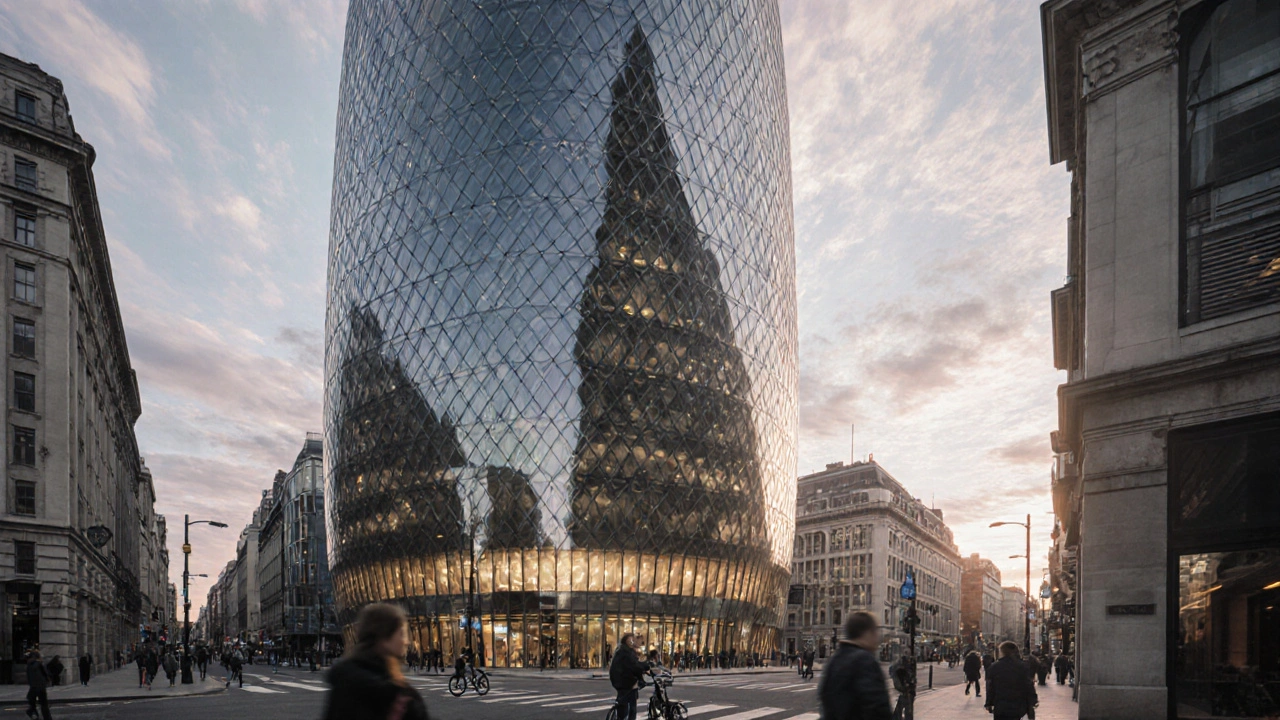
City of London Architecture: Best Modern Skyscrapers for Instagram Photos
Discover the best modern skyscrapers in the City of London for Instagram photos, including the Gherkin, Walkie Talkie, and Cheesegrater. Learn when to go, where to stand, and how to capture stunning reflections.
READ MORE