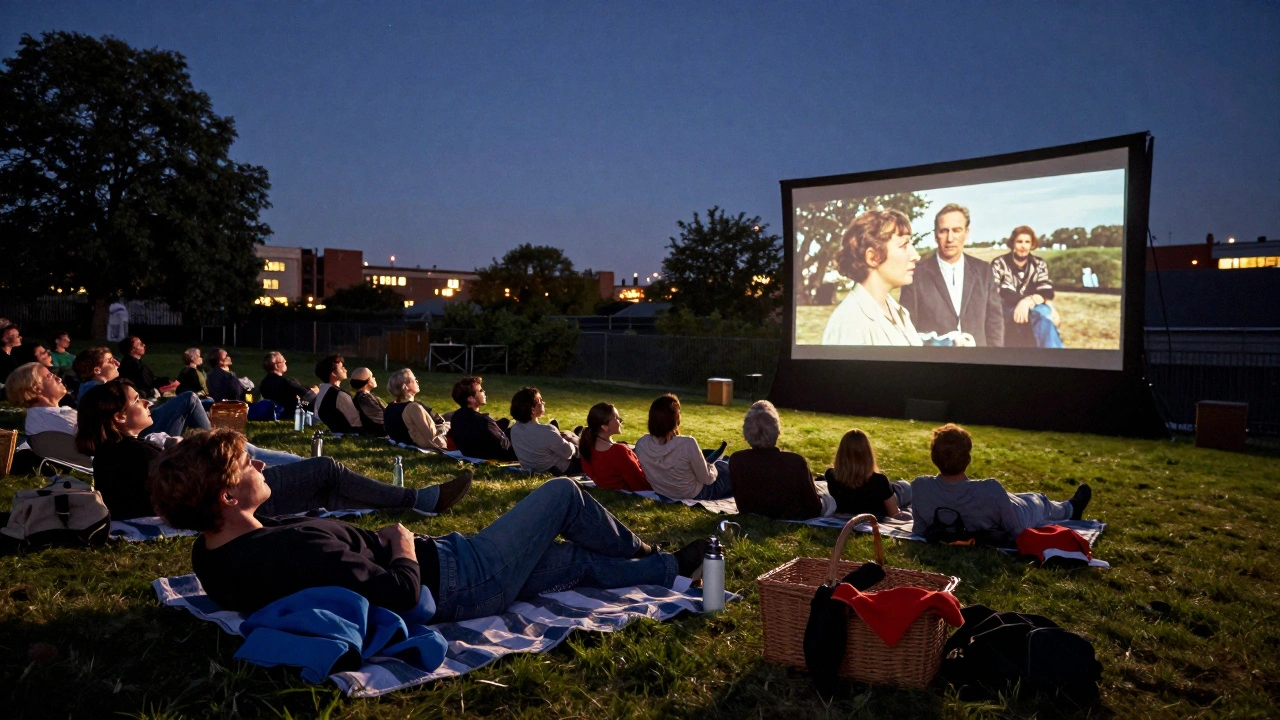
There’s something magical about watching a movie under the stars in London. No rush to get home, no crowded theaters, just the hum of a projector, the rustle of blankets, and the distant sound of the city fading into the background. Every summer, from June through August, London’s parks and rooftops turn into open-air cinemas, showing films from around the world - not just Hollywood blockbusters, but Italian neorealist classics, Japanese anime, French New Wave gems, and Nigerian dramas. These aren’t just movie nights. They’re cultural gatherings where strangers become neighbors over popcorn and shared silence.
Where to Find International Film Nights in London
The most famous open-air cinema in London is Screen on the Green in Islington. It’s been running since 1998 and draws crowds of over 10,000 people each season. But it’s not the only one. Regent’s Park Open Air Theatre combines live performances with film screenings, often showing foreign-language films with English subtitles. Then there’s Sky Garden, where you can watch a Brazilian film while overlooking the Thames - if you manage to get a free ticket, which are usually released online a week in advance.
Smaller venues like Wimbledon Village Screen and Camden Market Film Nights focus on niche genres. One summer, you might catch a restored 1960s Iranian film followed by a Q&A with a film student from Tehran. Another night, it could be a Haitian documentary about diaspora identity, projected onto the side of a warehouse in Peckham.
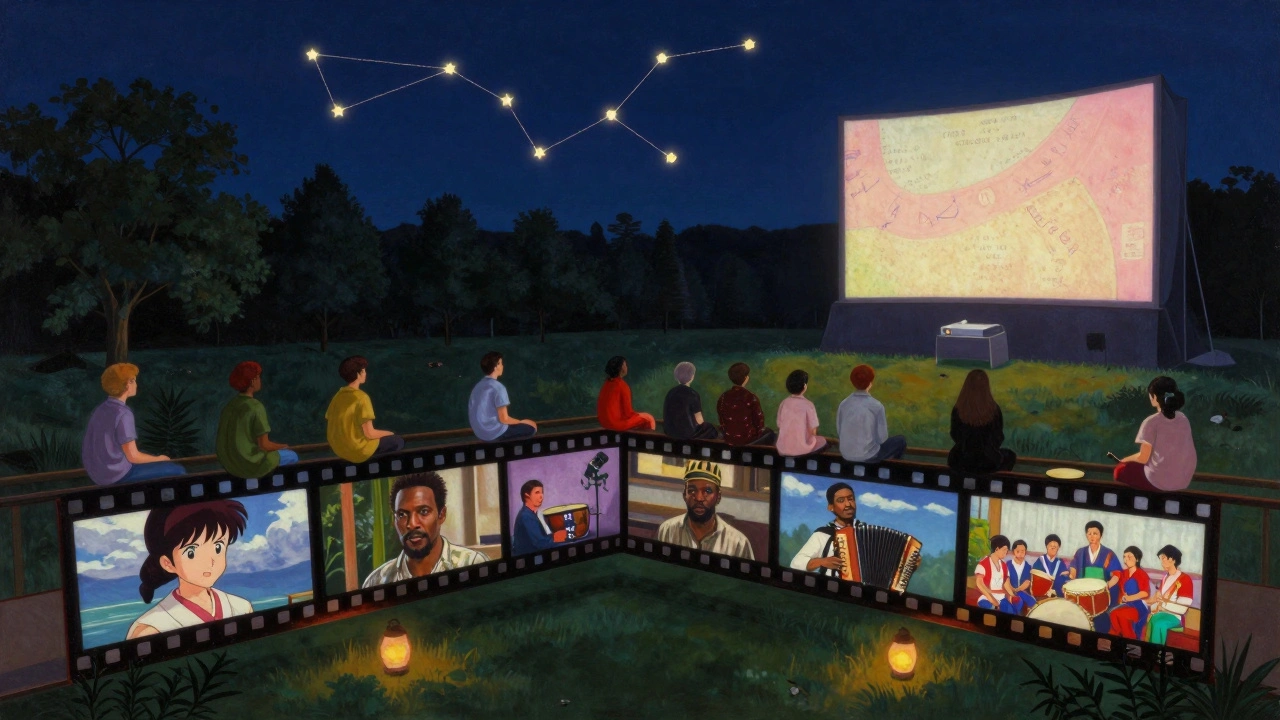
These events don’t just show films. They curate experiences. At Barbican Open Air Cinema, they pair each screening with live music from local artists who play inspired by the film’s country of origin. After a screening of Parasite, a Korean drumming group performed on the lawn. After Amélie, a French accordionist played near the refreshment stalls.
What Makes These Nights Cultural, Not Just Entertainment
These aren’t your average outdoor movie nights. What sets them apart is intention. Organizers don’t pick films because they’re popular. They pick them because they tell stories that don’t usually reach British screens. A 2024 survey by the London Film Society found that 68% of attendees had never seen the film before - and 82% said they learned something new about the culture behind it.
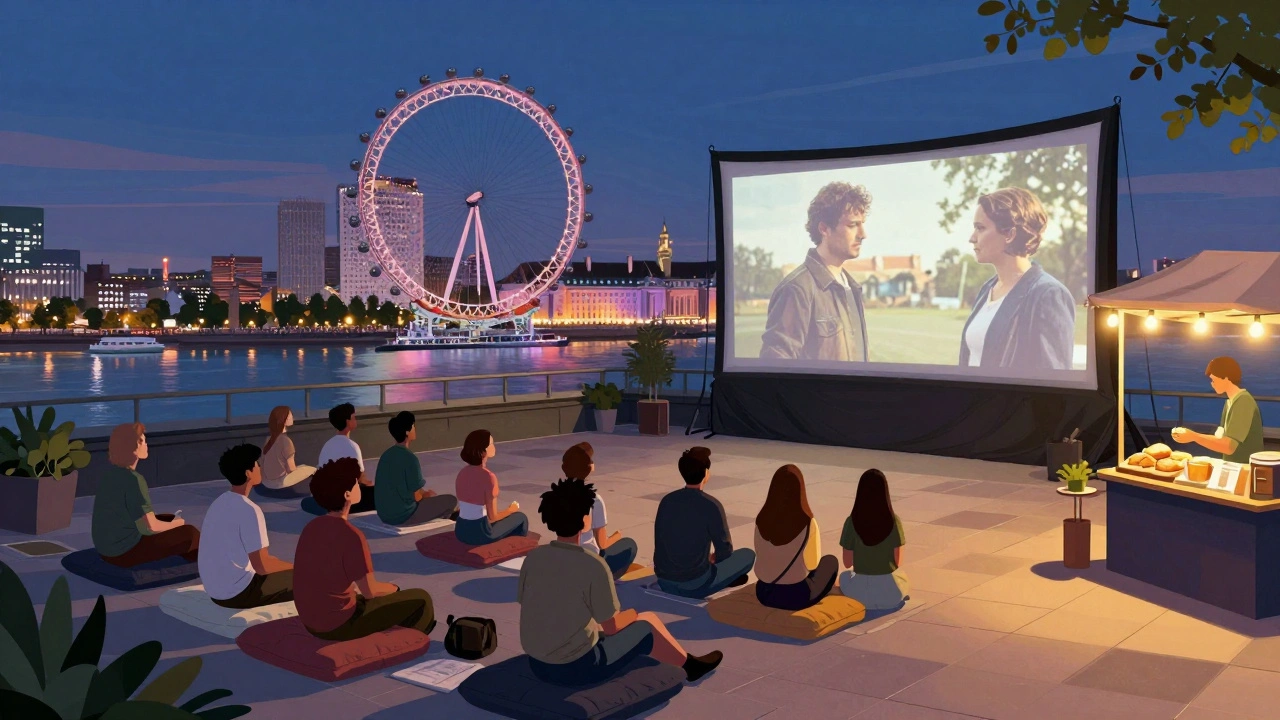
Many screenings come with free printed booklets - short essays on the film’s historical context, interviews with the director, and maps showing where it was shot. At the Southbank Centre’s International Film Nights, you can grab a free tea or coffee from a pop-up stall run by a refugee community group from Syria, and chat with them while waiting for the film to start.
This isn’t tourism. It’s cultural exchange. People come not just to watch, but to listen. To understand. To sit quietly next to someone who speaks a different language and still feel connected by a story.
How to Plan Your Visit
These events are free or low-cost - usually £5 to £12 - but tickets vanish fast. Most use online booking systems. Here’s how to make sure you don’t miss out:
- Sign up for newsletters from Screen on the Green, Barbican, and Southbank Centre - they send out schedules by mid-April.
- Check Time Out London and Londonist in May - they publish full summer lineups.
- Arrive 45 minutes early. The best spots - near the screen, with a clear view - go quickly.
- Bring a blanket, a cushion, and warm clothes. Even in August, London nights get chilly after sunset.
- Try the food stalls. Many feature authentic dishes from the film’s country - think empanadas from Argentina, bao buns from Taiwan, or tagine from Morocco.
Some venues allow you to bring your own food and drink. Others don’t - always check the rules. No one brings alcohol unless it’s sold on-site. Security is tight, but friendly. No large bags. No drones. Just you, your blanket, and the movie.
Why This Matters in Today’s London
In a city where 40% of residents were born outside the UK, these film nights are more than entertainment. They’re quiet acts of belonging. A Somali family watches a film from Mogadishu and sees their hometown streets on screen. A Polish student finds a film made by her grandmother’s village. A teenager from Peckham watches a Senegalese coming-of-age story and realizes it mirrors her own life.
These events don’t shout about diversity. They don’t need to. They just show the world - one film at a time - and let people find their own connection.
London doesn’t need to build new museums or host grand parades to celebrate its global identity. It already has. It’s happening under the stars, in parks, on rooftops, in quiet corners of the city where strangers sit shoulder to shoulder and watch a story unfold - not in English, but in a language they don’t know, and still understand.
What’s on in 2025
The 2025 lineup is already shaping up to be one of the most diverse yet. Expect:
- A restored 1972 Bengali film by Satyajit Ray, shown with live sitar accompaniment
- A Mexican horror film from the 1980s, part of a series on Latin American genre cinema
- A documentary from the Democratic Republic of Congo about women reclaiming land after war
- A Japanese animated short film festival, curated by a Tokyo film school
- A special double feature: City of God (Brazil) followed by Slumdog Millionaire (UK), with a panel on urban storytelling
Most screenings start at 8:30 PM. Doors open at 7 PM. Some venues offer pre-film workshops - like a 30-minute talk on the history of Iranian cinema, or a beginner’s guide to reading subtitles.
What to Bring (and What to Leave at Home)
You don’t need much. But what you bring makes the difference between a good night and a great one.
- Bring: A thick blanket (cotton won’t cut it), a small cushion or folding chair, a light jacket, a reusable water bottle, snacks (if allowed), and a small flashlight (for finding your way back to your spot).
- Leave at home: Loud speakers, glass bottles, pets (unless it’s a service animal), and expectations of comfort. These aren’t luxury events. They’re community events - imperfect, messy, and real.
And don’t worry if you don’t understand every word. Some of the most powerful moments happen when you don’t. You feel the laughter. You see the tears. You feel the silence after the final scene. That’s when you know - this isn’t just a movie. It’s a bridge.
Are open-air cinema events in London free?
Most are not free, but they’re very affordable - usually between £5 and £12. Some venues, like community-run screenings in Hackney or Lewisham, are donation-based. Free tickets are occasionally given out for special events, but they’re rare and always booked online in advance.
Can I bring my own food and drinks?
It depends on the venue. Screen on the Green and Barbican allow outside food and non-alcoholic drinks. Regent’s Park and Sky Garden require you to buy from their stalls. Always check the event page before you go. Alcohol is almost never allowed unless sold on-site.
What happens if it rains?
Most screenings go ahead in light rain - umbrellas are allowed as long as they don’t block views. Heavy rain or thunderstorms usually lead to cancellation. Most venues send out text or email alerts by 4 PM on the day of the screening. If it’s cancelled, you’ll get a full refund or a voucher for another night.
Do I need to understand the language to enjoy these films?
No. All international films are shown with English subtitles. Many viewers don’t speak the original language at all. The emotion, music, visuals, and pacing carry the story. In fact, some say watching a film without understanding the dialogue makes you pay closer attention to the visuals - and that’s often where the real meaning lives.
Are these events family-friendly?
Some are, some aren’t. Many screenings are rated 15 or 18 due to content. But there are family-friendly nights too - especially in parks like Clapham Common and Victoria Park. Look for events labeled "Family Film Night" or check the age rating on the event page. Kids under 12 often get in free with a paying adult.
How do I find out about upcoming screenings?
Subscribe to newsletters from Screen on the Green, Barbican, Southbank Centre, and Time Out London. Follow @OpenAirCinemaLondon on Instagram - they post weekly updates. Local councils also list events on their websites. The best time to look is April and May - that’s when the full summer schedule drops.
If you’ve never watched a film under the stars in London, you haven’t really experienced the city’s soul. It’s not about the screen. It’s about the space between people. The quiet. The shared breath before the credits roll. That’s where culture lives - not in museums, but in the dark, under the sky, with strangers who become friends for just one night.