Stencil Art in London: Street Culture, Murals, and Public Expression
When you see a sharp, bold image on a London wall—maybe a face with eyes wide open, or a protest slogan stamped in black—it’s likely stencil art, a form of street art made by spraying paint through a cut-out design to create repeatable, precise images. Also known as stencil graffiti, it’s one of the most direct ways to turn public space into a canvas for truth, anger, or beauty. Unlike freehand graffiti, stencil art is planned, repeatable, and often political. It doesn’t rely on speed or chaos. It relies on clarity. And in London, it’s been doing that since the 1980s, long before Instagram made street art popular.
Stencils don’t need a whole wall. A single image on a bus stop, a bridge, or the side of a shuttered shop can stop someone in their tracks. You’ll find them in Peckham, where artists layer stories of migration and identity. In Shoreditch, they’re mixed with commercial murals—but the real ones still carry bite. In Camden, stencils of forgotten activists sit beside portraits of local kids. This isn’t decoration. It’s documentation. And it’s tied to other forms of public expression like street art London, a broad category including murals, wheatpaste posters, and installations that reclaim urban space. The London Mural Festival, an annual event turning entire neighborhoods into open-air galleries with community-driven artwork has become a major platform, but stencils? They’re quieter. They show up overnight. They don’t ask for permission.
What makes London’s stencil scene different? It’s the mix of history and urgency. Banksy started here, but he’s not the whole story. Local artists use stencils to honor victims of police violence, celebrate Caribbean carnival culture, or highlight the cost of housing crises. You’ll see stencils of Windrush elders, climate activists, and even local cats with protest signs. The technique is simple—cardboard, spray paint, a steady hand—but the meaning isn’t. It’s art made by people who don’t get to speak in boardrooms or on TV. And it’s everywhere you look if you know where to see it.
Behind every stencil is a story of risk, skill, and timing. Artists plan for minutes, not hours. They work under streetlights, with friends keeping watch. They reuse stencils across neighborhoods, building a visual language that connects one block to another. This isn’t just about looks. It’s about visibility. It’s about saying, We’re here, without saying a word.
What you’ll find below is a curated look at how stencil art lives in London today—not just as decoration, but as dialogue. You’ll see how it connects to public murals, how it’s shaped by community events, and how artists are using it to speak back to power. Some pieces are famous. Most aren’t. But all of them matter.
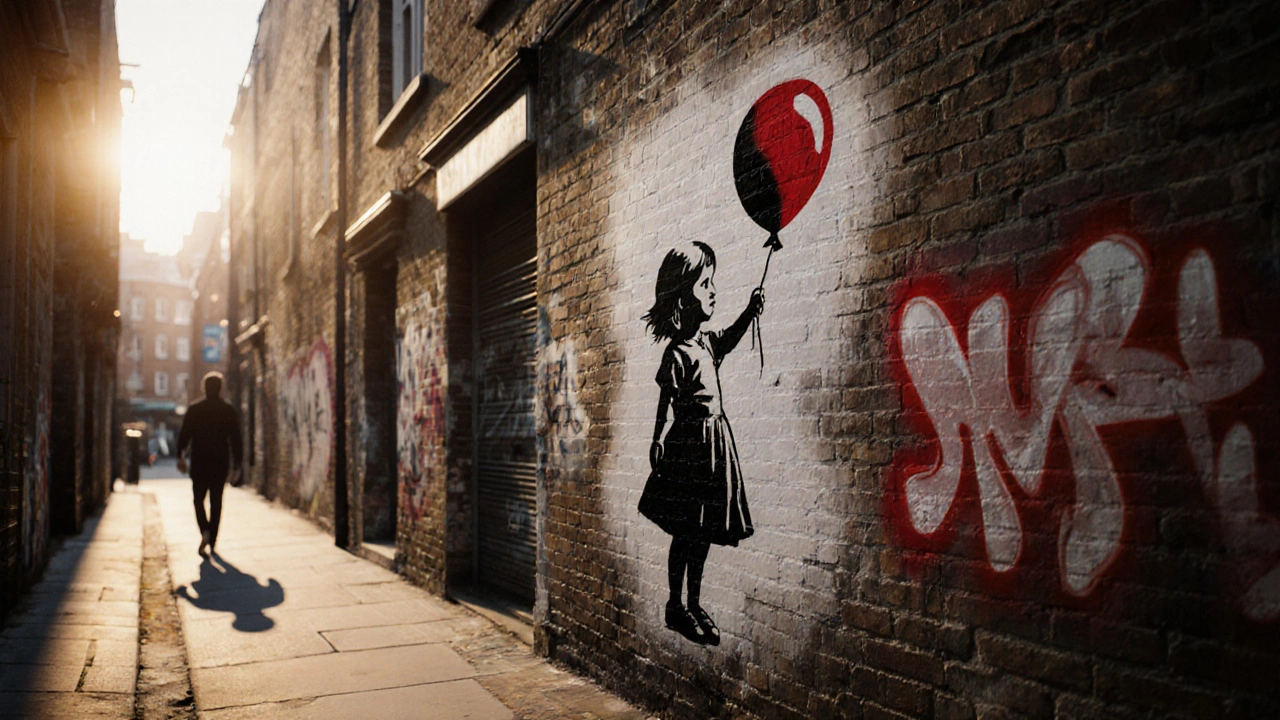
Stencil vs Freehand: Street Art Styles to Spot in London
Discover how stencil and freehand street art differ in London, where to spot each style, and what makes them powerful. Learn to tell them apart and understand the artists behind the walls.
READ MORE