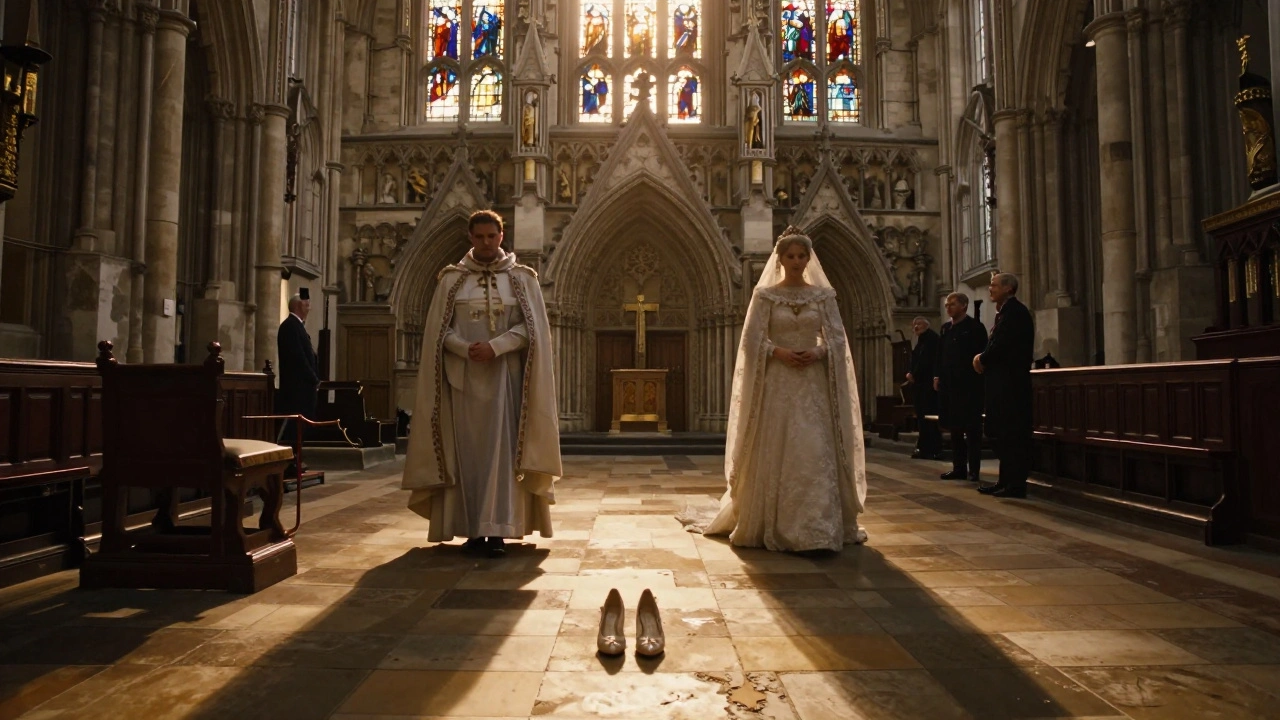
When you think of royal weddings in London, you don’t just picture white dresses and tiaras. You think of stone cathedrals echoing with organ music, palace gates lined with cheering crowds, and history breathing through every cobblestone. These aren’t just celebrations-they’re living chapters in Britain’s story, written in lace, gold leaf, and centuries of tradition.
Westminster Abbey: The Crown’s Sacred Stage
More than half of British royal weddings since 1100 have taken place at Westminster Abbey. It’s not just beautiful-it’s the only place that carries the weight of legitimacy. When Queen Elizabeth II married Prince Philip in 1947, the abbey was still recovering from wartime damage. Workers patched stained glass with cardboard and reused candles from previous ceremonies. Yet over 2,000 guests filled the pews, and millions tuned in by radio. That wedding set the template for modern royal broadcasts.
Prince William and Catherine Middleton chose the same aisle in 2011. Their procession passed under the same 13th-century arches where Henry VII and his queen were buried. The Abbey doesn’t just host weddings-it holds the bones of kings and queens who shaped the nation. The Coronation Chair sits just steps from where brides walk. You can’t separate the ceremony from the history here. It’s not a venue. It’s a witness.
Buckingham Palace: The Homecoming
After the vows, the carriage rides, and the church bells, the royal family returns to Buckingham Palace. But few realize the palace wasn’t always a royal residence. It began as a townhouse for the Duke of Buckingham in 1703. George III bought it in 1761 for his wife, Queen Charlotte, calling it "The Queen’s House." It became official royal quarters under Queen Victoria in 1837.
On the day of Prince Harry and Meghan Markle’s wedding in 2018, the palace balcony became the world’s most watched stage. The crowd below stretched from The Mall to St. James’s Park. But behind the curtains, the palace had been preparing for weeks. The State Rooms were cleaned with vinegar and beeswax-no chemicals near the 18th-century furniture. The balcony itself was reinforced because of the weight of the royal family and their guests. Even the flags were custom-made: the Royal Standard flew at full mast, not half-mast, because a wedding is a celebration, not a mourning.
St. George’s Chapel, Windsor: The Quiet Choice
Not all royal weddings need the spotlight of central London. St. George’s Chapel at Windsor Castle has quietly hosted some of the most intimate royal unions. Prince Andrew and Sarah Ferguson tied the knot here in 1986. Prince Edward and Sophie Rhys-Jones followed in 1999. And in 2018, Prince Harry and Meghan Markle held their evening reception here after the main ceremony.
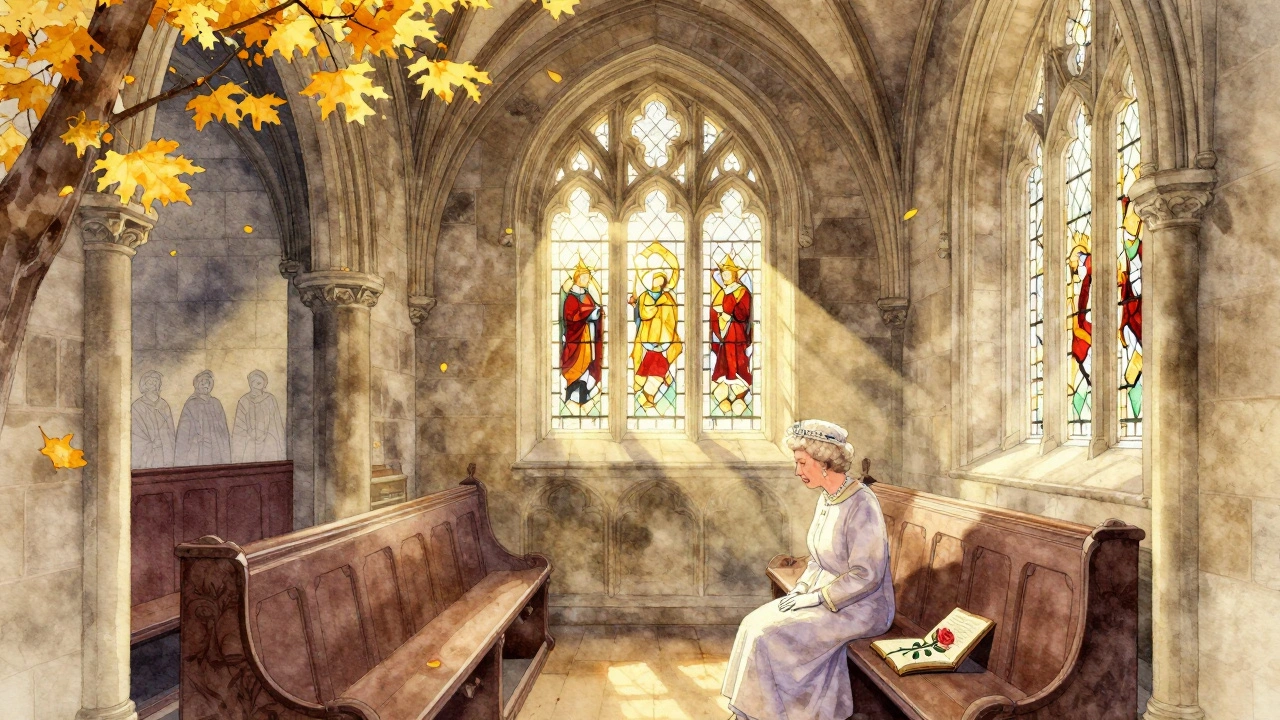
Why Windsor? It’s personal. The chapel is part of the castle where the royal family spends weekends. It’s where Queen Elizabeth II’s parents are buried. Where she herself was christened. It’s less about grandeur and more about belonging. The chapel’s Gothic arches hold the quiet dignity of a family gathering. No press helicopters. No barricades on the lawn. Just stone, stained glass, and the sound of a single choir singing.
The Procession Routes: Where the People Meet the Crown
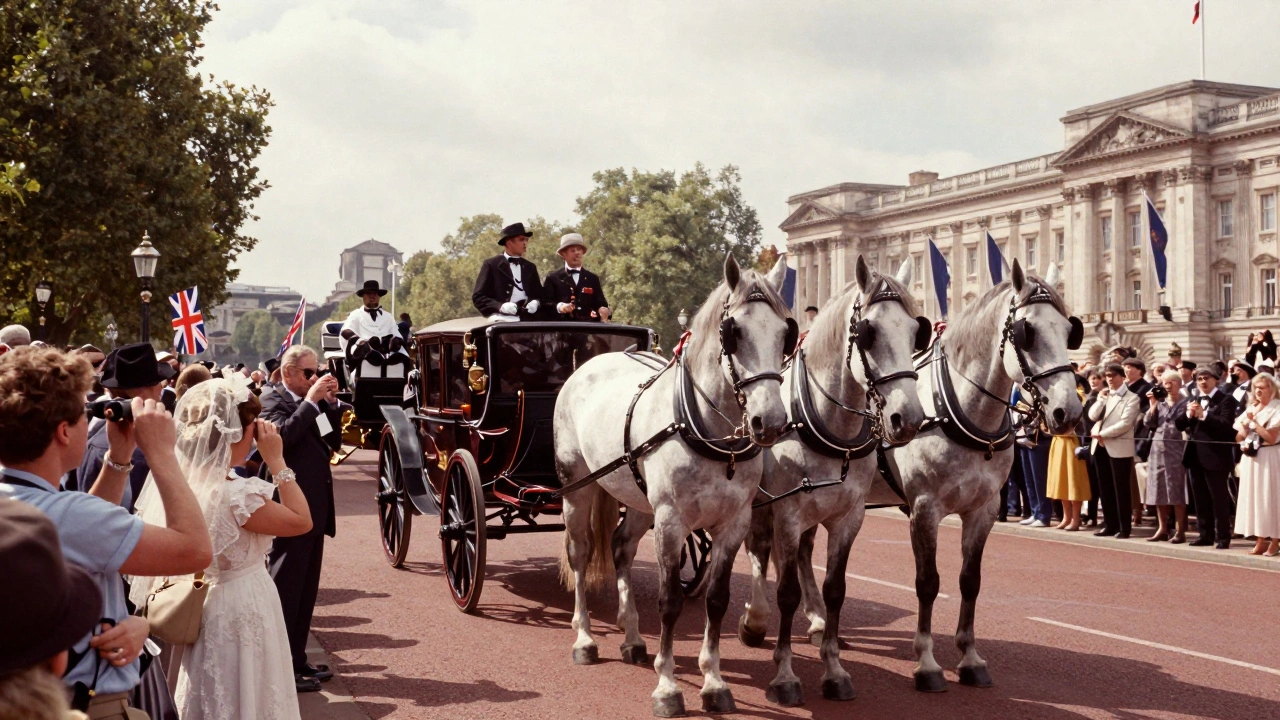
The real magic of a royal wedding isn’t inside the chapel-it’s along the streets. The route from Buckingham Palace to Westminster Abbey in 2011 stretched 2.5 miles. Over a million people lined the sidewalks. Police estimates put the crowd at 2,500 per meter at peak points. People camped out overnight with blankets, sandwiches, and binoculars. One woman brought her grandmother’s wedding veil to wear on the day. A man held a sign that read, "I voted for her in 1953. I’m here again."
The route changes slightly each time, but the landmarks stay the same: Constitution Hill, Green Park, Hyde Park Corner, and down The Mall. The carriages-usually the 1902 State Landau-are pulled by six Windsor Grey horses, each trained for years. Their hooves click on the same stones used by Queen Victoria’s procession in 1840. The crowds don’t just watch. They remember. They connect. One bride told me in 2018, "I was five when Diana married Charles. Now I’m here with my daughter. That’s the real tradition."
What the Cameras Don’t Show
Behind the glitter, there’s work. A royal wedding takes 18 months to plan. The Queen’s wedding in 1947 required ration coupons for fabric-she used 2,000 of them for her dress. In 2011, Catherine Middleton’s dress designer, Sarah Burton, worked in secret with a team of 20 seamstresses. The lace took 450 hours to hand-embroider. The veil? 16 feet long, made of tulle, and stitched with flowers representing the UK, Canada, Australia, and New Zealand.
Security is another hidden layer. In 2018, over 5,000 police officers were deployed. Drones were banned within 10 miles. The route was scanned with ground-penetrating radar. Even the flowers were vetted-no plants from outside the UK, to prevent invasive species. And the cake? Three tiers, 500 pounds, made by Fiona Cairns. The top tier was frozen and kept for the couple’s first anniversary.
Why These Weddings Still Matter
Some say royal weddings are outdated. But they’re not about monarchy-they’re about continuity. In a world of fast news and fleeting trends, these events are anchors. They remind us that families, even royal ones, celebrate birthdays, fall in love, and say "I do" the same way you and I do. The difference? They do it with centuries of ritual behind them.
When Princess Anne married Mark Phillips in 1973, she rode a horse down The Mall. No carriage. No fanfare. Just her, the horse, and the crowd. It was the first royal wedding broadcast live on TV. People cried. Not because they loved the royals-but because they saw something real: love, in all its messy, beautiful, ordinary glory.
Today, as the monarchy evolves, so do the weddings. Meghan Markle walked part of the way alone. Prince Harry wore his military uniform, not a top hat. The music included gospel choirs and African drums. These aren’t departures from tradition. They’re its expansion.
Visiting the Sites Today
You don’t need a ticket to walk The Mall. You don’t need an invitation to stand where the crowds stood in 1981 or 2011. Westminster Abbey offers daily tours-you can touch the same floor tiles where Diana walked. Buckingham Palace opens its State Rooms in summer. You can stand on the balcony where the royals waved, and look down at the same spot where a woman once held up a sign that said, "I was here for Charles. Now I’m here for George."
At St. George’s Chapel, you can sit in the pew where Queen Elizabeth II sat on her last public appearance. The chapel still holds services. You can hear the same choir that sang at Harry and Meghan’s reception. The stones remember. The air still hums.
Which royal wedding was the most watched in London history?
The 1981 wedding of Prince Charles and Lady Diana Spencer was the most-watched royal wedding ever, with an estimated 750 million viewers worldwide. The event was broadcast in 74 countries and drew over a million spectators to the streets of London. It remains the benchmark for global royal events.
Can the public visit Westminster Abbey for royal wedding sites?
Yes. Westminster Abbey is open to visitors daily, except on Sundays and religious holidays. You can walk the same aisle where royal couples have married since 1100, see the Coronation Chair, and visit the Poets’ Corner where many royal figures are commemorated. Guided tours highlight the exact locations of royal weddings, including the altar where Prince William and Kate Middleton exchanged vows.
Why is St. George’s Chapel used for royal weddings?
St. George’s Chapel is part of Windsor Castle, the royal family’s private residence. It’s deeply personal-Queen Elizabeth II was christened, married, and buried there. It’s quieter, more intimate, and holds generations of family history. Unlike Westminster Abbey, it doesn’t host public events year-round, making it ideal for smaller, private ceremonies like Prince Edward’s 1999 wedding.
Are royal wedding dresses still made by British designers?
Yes. Since the 1947 wedding of Queen Elizabeth II, British designers have created every royal wedding dress. Sarah Burton (Alexander McQueen) designed Kate Middleton’s dress in 2011. Givenchy created Princess Diana’s in 1981. Meghan Markle’s dress was by Clare Waight Keller of Givenchy. The tradition continues because the dresses symbolize national craftsmanship, from hand-embroidered lace to silk woven in Essex.
Do royal weddings still use the same carriages today?
Yes. The 1902 State Landau is still used for major weddings, including those of Prince William and Prince Harry. It’s one of seven royal carriages maintained by the Royal Mews. Each carriage requires 120 hours of maintenance after every use. The horses are Windsor Greys, trained from age two to handle crowds, noise, and long processions. Their harnesses are made of leather from a single tannery in Yorkshire that’s supplied the Crown for over 150 years.
If you want to feel the pulse of British heritage, don’t just visit the landmarks-stand where the crowds stood. Listen for the echo of church bells. Look at the same stone arches that held centuries of promises. These aren’t just tourist spots. They’re living memory. And every time a royal couple walks down that aisle, they’re not just marrying each other-they’re tying themselves to a story older than the nation itself.