London Theatre Seating Guide: Best Seats, Hidden Gems, and Where to Sit
When you buy a ticket for a London theatre seating, the physical layout and sightlines in London’s theatres that determine how well you see and hear the performance. Also known as West End seating, it’s not just about price—it’s about where the story comes alive for you. Too many people pick the cheapest seat and end up staring at a pillar, the back of someone’s head, or a stage that feels miles away. The truth? The best seat in the house isn’t always the front row, and the most expensive seat isn’t always the best.
Knowing how theatre view angles, the optimal sightlines from different seating sections that affect how clearly you see the stage and actors work can save you money and ruin-proof your night. In the Royal Opera House or the Lyceum, the front stalls give you up-close detail but can feel too intimate—like you’re on stage yourself. The middle stalls, rows E to H, often strike the perfect balance: clear sightlines, good acoustics, and no neck strain. The dress circle? That’s where you get the full picture. You see the whole set, the choreography, and the lighting design as the director intended. And if you’re going to a musical, don’t skip the upper circle—it’s often the best spot for hearing the orchestra blend with the voices.
Then there’s London theatre accessibility, the accommodations for disabled patrons including wheelchair spaces, audio description, and companion seating in London’s major theatres. Every major West End theatre now offers accessible seating, but not all are equal. Some have wheelchair spots that face the stage at an angle. Others have companion seats that are too far away. Always ask for a detailed seating map when booking. Many theatres, like the National Theatre and the Young Vic, even let you preview seats online with photos and sightline diagrams. And don’t assume the back row is the only option—some of the best accessible seats are in the middle of the stalls, with no step up and unobstructed views.
Don’t overlook the smaller venues. In fringe theatres like the Donmar Warehouse or the Arcola, the seating is tighter, but the intimacy is worth it. Here, the side seats aren’t bad—they’re immersive. You’re right in the actor’s space. And if you’re watching a play with lots of movement, like a physical theatre piece, sitting a little off-center can give you a better view of the whole stage. Some theatres even offer free seat previews before shows—just ask at the box office.
What about sound? In older theatres like the Adelphi or the Shaftesbury, the acoustics are natural—no mics needed. But in newer ones, like the Lyric Hammersmith, sound can be uneven. The front rows might be too loud; the back too muffled. The sweet spot? Usually two-thirds of the way back, dead center. If you’re sensitive to noise, avoid the front row of the circle—it can echo. And if you’re bringing kids, the side stalls are quieter, less distracting, and often cheaper.
There’s no one-size-fits-all seat, but there’s a smart way to choose. Look at the theatre’s seating chart. Avoid the extreme sides unless it’s a small stage. Skip the very back unless you’re okay with small print. And if you’re seeing the same show twice? Try different sections. You’ll notice things you missed before—the way light hits a prop, the subtle shift in an actor’s expression, the quiet moment between lines that only the right seat lets you catch.
Below, you’ll find real guides from people who’ve sat in every row—from the top gallery to the front stalls. They’ve seen the shows, checked the views, and figured out where the magic happens. Whether you’re after a bargain, a view, or a moment you’ll never forget, you’ll find your perfect seat here.
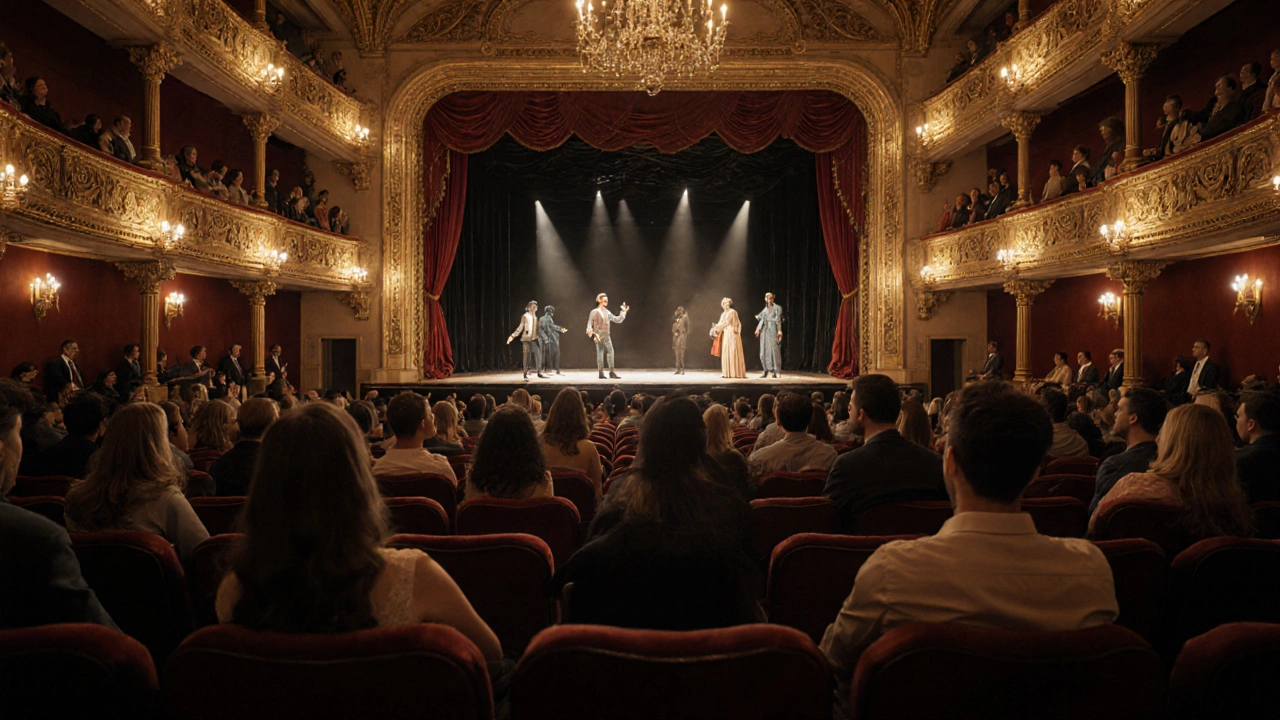
Best Seats in Popular London Theatres: Sightlines and Value
Discover the best seats in London's West End theatres without overspending. Learn where to sit for clear sightlines, great sound, and real value - from stalls to Royal Circle.
READ MORE