London’s streets are alive with color, stories, and surprises - and many of them are perfect for kids. Forget museums for a day and take your family on a walking tour where the art isn’t behind glass, but on walls, alleyways, and even bus stops. Street art in London isn’t just for adults. It’s full of playful characters, giant animals, funny faces, and hidden details that spark curiosity in children. You don’t need an art degree to enjoy it. Just comfy shoes, a camera, and a sense of wonder.
Where to Start: East London’s Street Art Heartland
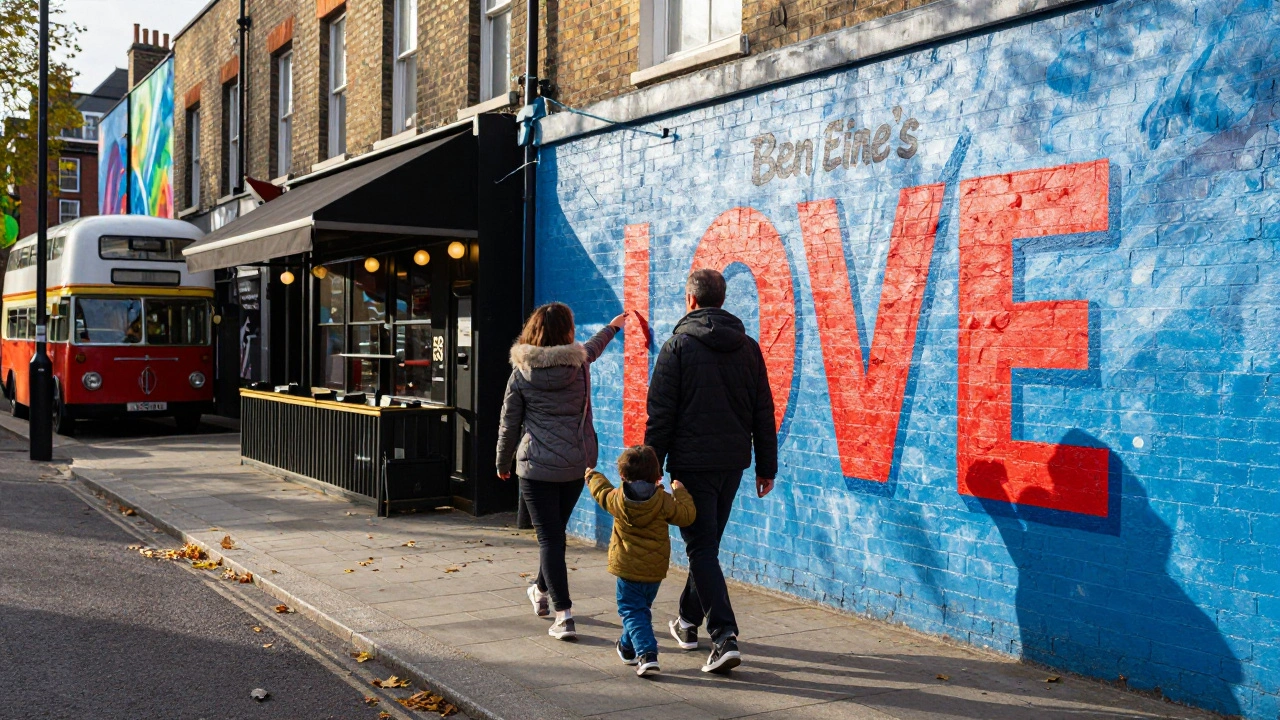
The best place to begin is Shoreditch and Hoxton. This is where London’s street art scene exploded in the early 2000s, and it’s still the most family-friendly zone. Start at Brick Lane is a bustling street in East London known for its street art, vintage shops, and curry houses. The walls here change often - what’s painted today might be gone in a week. Look for Ben Eine’s bold, colorful lettering. His word murals like "LOVE" and "PEACE" are easy for kids to spot and even easier to copy on paper.
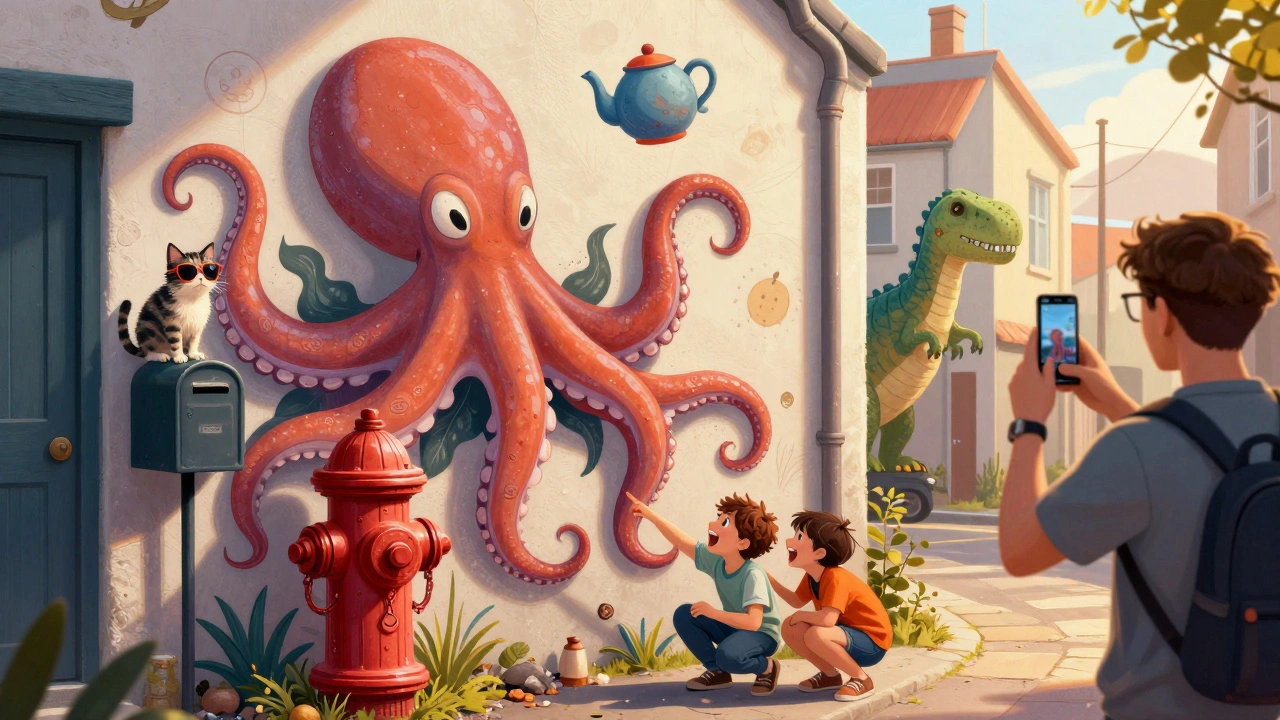
Turn down Hanbury Street and you’ll find St. John’s Lane, a narrow alley packed with layered murals. Kids love the giant octopus by Robbie B. H. and the smiling cat with sunglasses by Benjamin A. Vier. Point out the tiny details - a hidden dinosaur, a floating teapot, a tiny astronaut riding a bicycle. These are the moments that stick.
Camden’s Whimsical Walls
If your kids love fantasy and monsters, head to Camden Market is a vibrant, eclectic neighborhood in North London known for its markets, alternative fashion, and street art. The side streets around Camden Lock are covered in murals that feel like they jumped out of a storybook. Look for Stik’s stick-figure people - simple, emotional, and oddly moving. One mural shows a stick-figure child holding hands with a stick-figure adult. It’s quiet, but powerful. Kids often ask why they’re holding hands. That’s your opening to talk about connection.
Don’t miss the alley behind the Camden Lock pub. There’s a massive mural of a giant red fox with a crown, painted by JonOne. Kids love to guess what the fox is doing. Is it a king? A thief? A wizard? There’s no right answer. Let them make up stories. It’s art that invites imagination.
Notting Hill’s Hidden Gems
Notting Hill is known for its pastel houses, but its alleyways hide some of London’s most surprising street art. Start at Portobello Road and wander into the side streets like Wallingford Street and Elgin Crescent. Here, you’ll find Shepard Fairey’s iconic "Obey" faces, but also quieter pieces - a mural of a girl blowing bubbles that turn into butterflies, or a wall covered in handprints from local school kids.
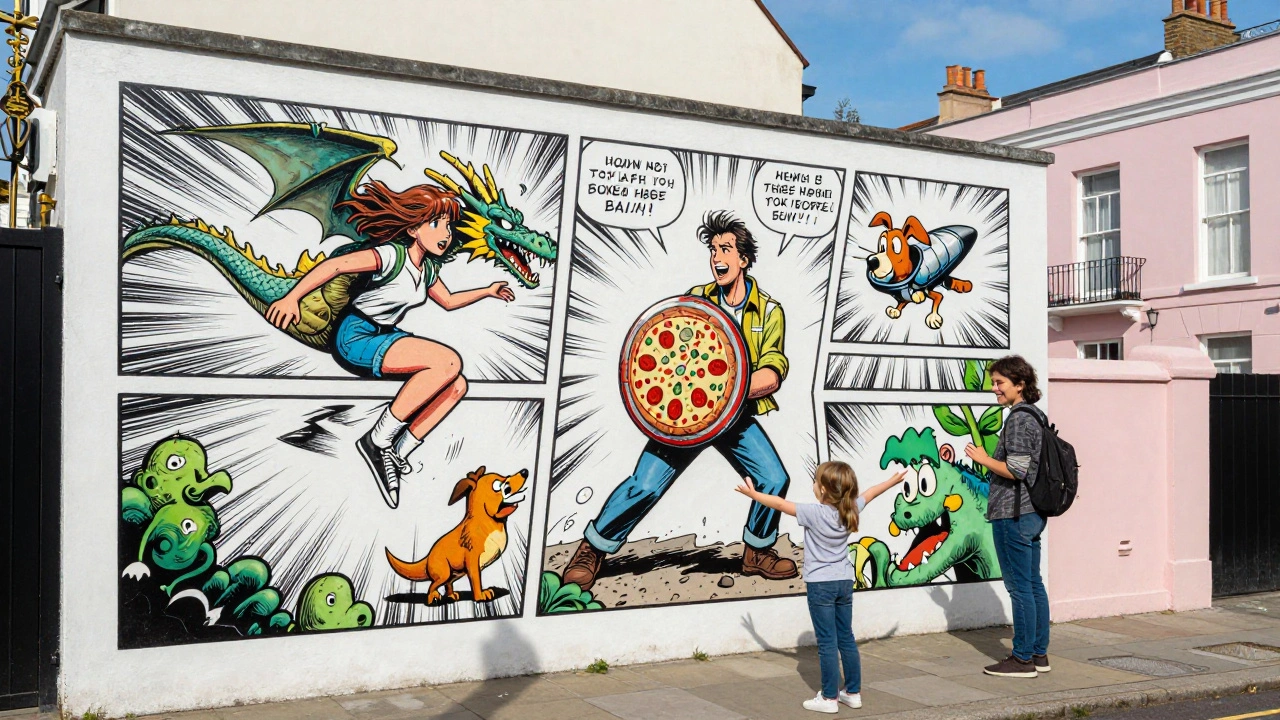
One of the best spots is a tiny alley near the Notting Hill Gate tube station. A full wall is painted like a giant comic book panel, with speech bubbles and action lines. Kids will immediately start narrating the scene: "She’s jumping over the dragon!" or "That guy’s got a pizza for a shield!" It’s interactive without being a game. Just pure visual storytelling.
Why Street Art Works for Kids
Unlike museums, street art doesn’t say "don’t touch." It doesn’t whisper. It shouts - in color, scale, and emotion. It’s free. It’s everywhere. And it changes. That’s why it’s perfect for children.
Studies show that kids who engage with public art show higher levels of curiosity and creativity. A 2023 study by the UCL Institute of Education found that children who walked through street art trails with their parents asked 40% more questions about their surroundings than those who visited traditional galleries. Why? Because street art doesn’t come with a label. It doesn’t say "This is important." It says, "Look. What do you see?"
Let your child pick their favorite mural. Ask them: "If you could add something to this picture, what would it be?" They might say a rainbow dragon, a robot dog, or a flying teapot. That’s not just fun - it’s art-making in action.
What to Bring
- Comfortable walking shoes - you’ll cover 3-5 miles on uneven pavement
- A small sketchbook and crayons - kids love to draw what they see
- A bottle of water and a snack - there are cafes, but they’re not always close
- A phone with camera access - no need for a fancy camera. Just zoom in on details
- A map or app - try the Street Art London app (free, no ads) for GPS-tagged murals
Best Times to Go
Weekend mornings are ideal. The light is soft, the crowds are thinner, and the art looks sharper. Avoid midday in summer - some walls get hot enough to burn bare arms. Winter? Bring a coat. The art is still there, and the cold makes the colors pop even more.
Spring and autumn are the sweet spots. The trees are in bloom or turning gold, and the murals look even more vivid against the changing backdrop.
What to Skip
Not every mural is kid-friendly. Avoid areas like Wapping or Peckham Rye after dark - they’re great for adults, but not suited for young kids. Stick to the main tourist-friendly zones unless you’re very familiar with the area.
Also, skip the "must-see" lists. Some blogs push you to see 10 murals in one day. That’s exhausting. Pick one neighborhood. Walk slowly. Let your child lead. If they stop to stare at a tiny bird on a wall, stop too. That’s the moment you’ll remember.
Make It a Memory
At the end of the day, sit on a bench with your child and flip through the photos you took. Ask: "Which one made you smile?" "Which one made you think?" "Which one would you want to live in?"
There’s no wrong answer. The goal isn’t to become an art expert. It’s to show kids that beauty doesn’t need permission. It doesn’t need a ticket. It’s out there - waiting for someone to look up.
Is street art in London safe for young children?
Yes, absolutely. The most popular street art areas like Shoreditch, Camden, and Notting Hill are busy, well-lit, and patrolled. Stick to daytime hours and main streets. Avoid alleyways after dark. Most murals are on public walls, not private property, so there’s no risk of trespassing. Always keep an eye on kids near traffic, but the art itself is perfectly safe.
Are there any guided family tours for street art in London?
Yes. Several companies offer family-friendly street art walks. "Art for Little Feet" runs 90-minute tours designed for kids aged 4-12. They include scavenger hunts, coloring sheets, and storytelling. Tickets cost £12 per child, with adults free. Book online - tours fill up fast on weekends. There’s also a free self-guided trail map available at the London Tourist Information Center near Covent Garden.
Can kids touch or draw on the street art?
Never touch the murals. Even if they look old, many are protected by clear sealant, and touching them can damage the paint. Some walls have been repainted multiple times - they’re part of London’s living history. Instead, bring a sketchbook and let kids draw their own versions. Many artists encourage this. Some even leave blank panels for kids to paint during special events.
What if my child doesn’t like art?
That’s okay. Street art isn’t about liking art - it’s about noticing things. Maybe they’ll love the giant dog on the wall. Or the rainbow graffiti on the bus stop. Or the hidden smiley face in a drainpipe. It doesn’t have to be "art" to be fun. Focus on the surprises. Ask them to find three hidden things. Turn it into a game. Most kids will get hooked just by playing.
Where can we get food after the tour?
Shoreditch has great family spots like The Breakfast Club (open 8am-3pm) with pancakes and smoothies. In Camden, try The Camden Lock Market food stalls - they have vegan hot dogs, ice cream, and juice boxes. Notting Hill has The Little Kitchen, which serves mini sandwiches and fruit pots. All are within 5 minutes of the main art zones.
Next Steps
Plan your next trip around a theme. Try "Animals on Walls" one weekend. Or "Faces with Emotions" the next. Keep a scrapbook. Add photos, drawings, and notes. In a few years, your child might look back and realize - this was the day they learned to see the world differently.