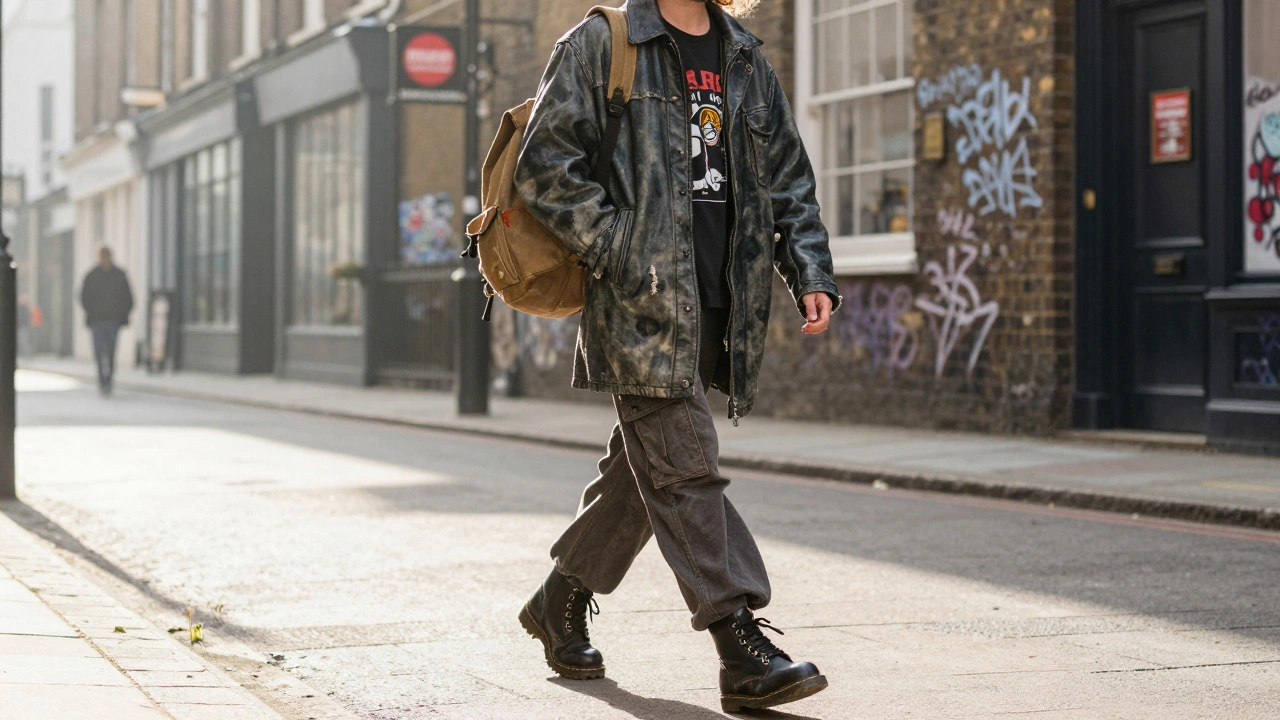
Walk down Shoreditch High Street on a Saturday morning and you’ll see it - a quiet revolution in how people dress. It’s not just about looking cool. It’s about history meeting grit, thrift store finds welded together with fresh-off-the-street sneakers. This isn’t fashion theory. It’s the real, lived-in style of East London, and if you want to pull it off, you need to understand the rules - and break them smartly.
What Makes Shoreditch Style Different?
Shoreditch doesn’t follow trends. It invents them. While other cities chase seasonal drops from luxury brands, Shoreditch’s vibe comes from layers: a 1980s leather jacket over a faded band tee, cargo pants with a tailored wool coat, chunky boots paired with a vintage NBA jersey. The magic? It looks effortless, but it’s not random. Every piece has a story, and every combination is intentional.
Unlike minimalist Scandinavian styles or high-fashion runway looks, Shoreditch style thrives on contrast. It’s the tension between old and new, rough and refined. You’ll spot someone wearing a 1972 Puma track jacket with a modern, oversized hoodie underneath - both stained, both loved. No one’s trying to look expensive. They’re trying to look real.
Start With the Foundation: Vintage Pieces That Work
You can’t fake vintage. You have to find it. And in Shoreditch, the best spots aren’t the touristy boutiques on Redchurch Street - they’re the tucked-away stalls at Brick Lane Market on Sundays, or the back rooms of Camden Market’s a sprawling complex of independent stalls and vintage sellers in North London, or the basement of Beyond Retro a London-based vintage clothing retailer with locations in Shoreditch and Camden on Kingsland Road.
Here’s what actually works:
- 1990s denim jackets - look for raw edges, faded washes, and patches. Avoid anything too clean or branded.
- 1970s wool coats - double-breasted, oversized, or belted. They add instant structure to streetwear silhouettes.
- 1980s workwear - Carhartt, Dickies, or Levi’s work shirts. They’re durable, boxy, and look great unbuttoned over a tee.
- Vintage sportswear - think 1980s Adidas tracksuits, early Nike windbreakers, or Reebok basketball jerseys. The logos should be worn, not shiny.
- Leather gloves - not fashion gloves. Think mechanic-style, fingerless, from the 1960s. They’re rare, but when you find them, they elevate any look.
Don’t chase size. Shoreditch style loves volume. A jacket two sizes too big? Perfect. A pair of pants pooled at the ankle? Even better. The goal isn’t to fit - it’s to inhabit.
Streetwear: The Counterpoint
Streetwear isn’t just hoodies and logos. In Shoreditch, it’s about silhouette, texture, and subtle branding. You’ll rarely see someone wearing a full Supreme drop. Instead, you’ll see a Uniqlo a Japanese retailer known for minimalist, affordable basics hoodie layered under a vintage bomber, or ASOS Design a fast-fashion brand popular in the UK for affordable streetwear-inspired pieces cargo pants with a single pocket stitched with a patch from a 1994 London punk gig.
The key? Balance. If your top is loud - a bright red 1987 Adidas track top - keep your bottom simple: black joggers, no stripes. If your pants are cargo-heavy, go minimal on top: a plain white tee, rolled sleeves.
Footwear matters more than you think. Dr. Martens a British footwear brand known for durable, chunky boots with yellow stitching 1460s are the default. Not because they’re trendy - but because they last. Pair them with a faded denim skirt or a tailored wool suit and you’ve got the Shoreditch paradox: tough, but thoughtful.

Color Rules: No Rules, But Here’s What Works
Forget color theory. Shoreditch doesn’t care if your mustard yellow vest clashes with your navy overcoat. What it cares about is texture and tone.
Stick to three color families:
- Neutrals - charcoal, olive, beige, cream. These are your anchors.
- Earth tones - rust, burnt sienna, moss green. They make vintage pieces sing.
- One pop - a single bright item. A neon green beanie. A red leather belt. A yellow sneaker. Just one.
Never wear more than one bright color. And never match your top and bottom in the same shade. Shoreditch style is about tension - not harmony.
Accessories: The Secret Sauce
Accessories aren’t optional. They’re the punctuation in your outfit.
- Chain necklaces - thin, silver, slightly bent. Not chunky. Not branded. Just worn.
- Bandanas - tied around the neck, not the head. Knot it loose. Let it hang.
- Vintage belts - buckles from the 1970s, leather that’s cracked but still strong.
- Backpacks - canvas, not nylon. Look for one with patches sewn on by hand. A Herschel a North American brand known for minimalist backpacks popular in streetwear circles is fine if it’s covered in graffiti.
- Sunglasses - Wayfarers, but the kind with scratched lenses. No brand name visible.
One rule: if it’s new, it should look old. If it’s old, it should look lived-in. No plastic tags. No shiny hardware. No clean edges.
What Not to Do
Shoreditch style has rules - even if they’re unspoken.
- Don’t wear matching sets. Not even if it’s from a "vintage" brand. Real vintage doesn’t come in coordinated pairs.
- Don’t buy "vintage-inspired" new clothes. If it says "retro" on the tag, it’s not vintage. It’s marketing.
- Don’t wear sneakers that look brand new. Scuff them. Wear them for a week before you wear them out. Shoreditch style is about time, not money.
- Don’t over-accessorize. One necklace. One belt. One bag. More than that looks like a costume.
- Don’t copy influencers. If you’re trying to look like someone on Instagram, you’re already missing the point.

Where to Shop in Shoreditch
Forget the big chains. Here’s where locals go:
- Reclaimed Vintage a small shop on Shoreditch High Street known for curated 1970s-1990s menswear - They sort by decade, not gender. You’ll find a 1985 wool coat next to a 1992 baseball cap.
- Depot a Shoreditch staple offering vintage denim, workwear, and accessories since 2003 - They don’t have online stock. You have to go. And you’ll leave with something you didn’t know you needed.
- Secondhand by the Pound a no-frills market stall on Brick Lane where you pay by weight for mixed vintage - £3 per bag. You’ll find 80% trash. But 20%? Gold.
- Street Market Sundays the open-air market on Brick Lane every Sunday, where local traders sell curated vintage and handmade pieces - Go early. Arrive before 10 a.m. and you’ll get first pick.
The Mindset: It’s Not About Looking Cool - It’s About Feeling Right
Shoreditch style isn’t a trend. It’s a response. To fast fashion. To homogenized branding. To the idea that clothes should be bought, not chosen.
People here don’t dress to impress. They dress to feel alive. A 1978 leather jacket might cost £120. But it’s the only one in the city with a tear on the left sleeve - the kind that happened during a 1982 punk gig at The Roxy. That’s not fashion. That’s history.
When you find a piece that fits - not your body, but your story - you’ll know. It’ll feel heavy. Not because it’s thick. But because it carries something you can’t name.
That’s the Shoreditch secret. You don’t wear vintage and streetwear. You wear time.
Can I mix vintage and streetwear if I’m not in London?
Absolutely. Shoreditch style isn’t about location - it’s about intention. You can build this look anywhere. The key is sourcing real vintage pieces, even if it’s from online thrift stores or local flea markets. Focus on texture, layering, and contrast. You don’t need to be in East London to feel its energy - you just need to understand the attitude behind it.
How do I find authentic vintage clothes without spending a fortune?
Start with markets. Brick Lane, Camden, and even smaller local markets often have stalls selling vintage by the bag for £5-£15. Look for items with natural wear - faded seams, slightly loose buttons, uneven stitching. Avoid anything labeled "vintage style" or "retro design" - those are new. Stick to brands like Levi’s, Carhartt, Adidas, or early Nike. If it has a tag from the 1980s or earlier, it’s likely real. And don’t be afraid to buy something too big - you can tailor it later.
Is Shoreditch style only for men?
No. Women in Shoreditch wear the same mix: oversized wool coats over cropped hoodies, vintage band tees with high-waisted cargo pants, and Dr. Martens with wool socks. The difference? They often layer with scarves, belts, or chunky jewelry. The rules are the same - contrast, texture, and personal history. Gender doesn’t matter. Authenticity does.
What shoes work best with this style?
Dr. Martens 1460s are the most common - they’ve been worn in Shoreditch since the 1990s. But you can also go with worn-in Converse Chuck Taylors, vintage Nike Air Maxes (pre-2000), or even sturdy work boots from the 1970s. Avoid white sneakers unless they’re already scuffed. The goal is to look like you’ve walked through rain, pavement, and punk shows - not like you just unboxed them.
Can I wear this style to work?
Yes - if your workplace allows it. Pair a vintage wool coat with clean black trousers and a simple tee. Add a leather belt and worn boots. It looks professional without being stiff. Many creative industries in London - design studios, media offices, tech startups - actually encourage this look. It says you’re thoughtful, not trendy. Just avoid loud logos or torn jeans if you’re in a corporate environment.
Next Steps: Build Your Own Shoreditch Look
Start small. Pick one vintage piece this week - maybe a jacket, maybe a belt. Pair it with something you already own. Walk around. See how it feels. Don’t post it online. Don’t ask for opinions. Just live in it. That’s how this style grows - one worn-in layer at a time.