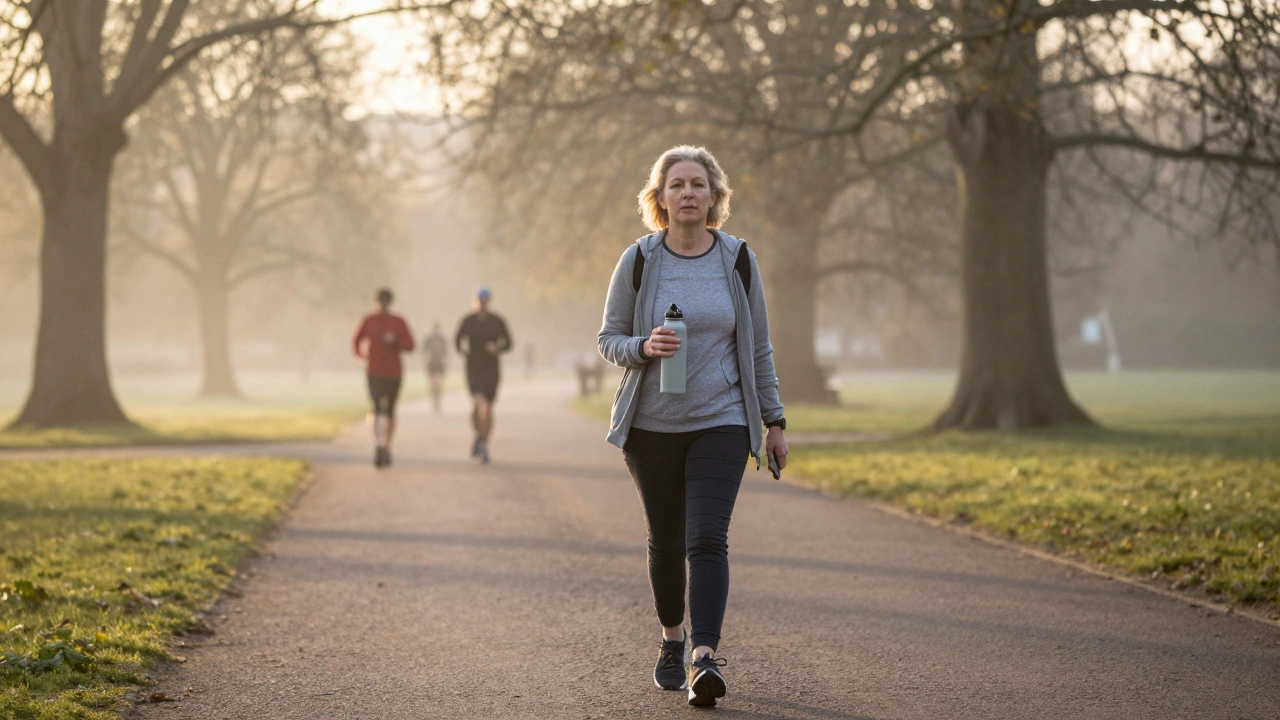
London isn’t just a city of historic landmarks and bustling markets-it’s also becoming a hub for people who want to live longer, sharper, and stronger. From high-end clinics in Mayfair to community fitness groups in Hackney, the capital is quietly reshaping how its residents think about aging. Forget the idea that aging means slowing down. In London, a growing number of people are reversing biological markers of aging-not with magic pills, but with daily habits backed by science.
What Actually Works in London’s Longevity Scene
When you talk to biohackers, GPs, and nutritionists in London, they don’t talk about expensive treatments. They talk about sleep, movement, and food. A 2025 study from University College London tracked 1,200 residents over 50 and found that those who slept 7-8 hours nightly, walked at least 8,000 steps a day, and ate a diet rich in leafy greens, fermented foods, and wild-caught fish had biological ages up to 6 years younger than their chronological age. That’s not hype. That’s measurable data from blood tests and telomere length analysis.
One Londoner, 58-year-old Priya Mehta, started her routine after a routine blood scan showed high inflammation markers. She didn’t join a spa retreat. Instead, she began walking to work instead of taking the Tube, started cooking with turmeric and garlic daily, and set a hard 10:30 p.m. bedtime. Two years later, her CRP (a key inflammation marker) dropped by 62%. Her doctor called it "one of the most dramatic improvements" he’d seen without medication.
The London Anti-Aging Toolkit: No Gadgets Required
You don’t need a $10,000 cryotherapy chamber or a gene therapy session to start optimizing your health. The most effective tools are simple, cheap, and already in your life.
- Sunlight before 10 a.m.-Londoners who get 15-20 minutes of morning sun without sunglasses reset their circadian rhythm. This boosts melatonin production at night and lowers cortisol. It’s free, and it works better than most supplements.
- Walking meetings-Many London professionals now hold calls while walking through Hyde Park or along the Thames. Movement increases blood flow to the brain. Studies show it improves memory and decision-making within 20 minutes.
- Hydration with minerals-Tap water in London is safe, but it’s low in magnesium and calcium. Adding a pinch of Himalayan salt or a magnesium supplement before bed helps muscle recovery and reduces nighttime cramps. A 2024 survey by the London Nutrition Group found that 73% of people who did this reported better sleep and less joint stiffness.
- Temperature contrast-Cold showers after a warm bath or sauna are popular in East London wellness circles. Just 2-3 minutes of cold exposure three times a week triggers brown fat activation, which burns calories and reduces visceral fat. No expensive machines needed.
Food That Fights Aging in London Kitchens
The average Londoner eats 3.5 portions of vegetables a day-below the WHO’s 5-a-day recommendation. But the longevity-focused crowd doesn’t just eat veggies. They eat the right ones.
Brassicas like kale, broccoli, and Brussels sprouts are everywhere in London’s farmers’ markets. These contain sulforaphane, a compound that activates Nrf2-the body’s master antioxidant switch. A 2023 study in the British Journal of Nutrition showed that people who ate brassicas 4+ times a week had 40% lower oxidative stress levels.
Fermented foods are another quiet revolution. Miso soup, kimchi, and kefir are no longer niche. You’ll find them in Pret’s lunch boxes, in Whole Foods’ refrigerated aisles, and even in some NHS GP practices that now prescribe gut health. The gut-brain axis isn’t just a buzzword-it’s a pathway to reduced brain fog and lower anxiety. London dietitians report that patients who added one serving of fermented food daily saw mental clarity improvements in under 3 weeks.
And then there’s the protein shift. Older Londoners are moving away from low-fat diets and toward high-quality protein-eggs from free-range hens, sardines, lentils, and grass-fed beef. Muscle mass isn’t just about strength; it’s about survival. After age 50, people lose 1-2% of muscle per year. Eating 30g of protein at breakfast (not lunch) slows that loss. One 62-year-old retired teacher in Camden started adding two eggs and a scoop of pea protein to her morning porridge. Three months later, she could carry her own groceries again.

Community Matters More Than You Think
Loneliness ages you faster than smoking. London has over 300 community-based longevity groups, from walking clubs in Brixton to intergenerational cooking circles in Islington. These aren’t just social events-they’re biological interventions.
A 2025 Imperial College study found that people who participated in weekly group activities (gardening, dancing, book clubs) had 30% lower levels of IL-6, a key inflammatory cytokine linked to Alzheimer’s and heart disease. The effect was stronger than taking statins or blood pressure meds.
One group in Southwark, called "The Silver Swimmers," meets every Tuesday at the local pool. Members range from 60 to 85. They don’t race. They just move. The water reduces joint strain. The rhythm of strokes calms the nervous system. And the laughter? That’s the real medicine.
Why London’s Approach Is Different
Other cities push supplements, wearables, or IV drips. London’s longevity movement is grounded in behavior, not gadgets. It’s about integrating health into daily life-not adding another app to your phone.
There’s no "London Method" per se. But there is a pattern: small, consistent actions repeated over time. A 10-minute walk before breakfast. A glass of water with lemon. A phone-free hour before bed. These don’t sound revolutionary. But when done for 10 years, they change your biology.
The NHS is starting to notice. In 2025, pilot programs in Camden and Lambeth began offering "Longevity Prescriptions"-free 30-minute sessions with lifestyle coaches who help patients build routines based on sleep, movement, and nutrition. No drugs. No devices. Just a plan.

Where to Start Today
You don’t need to overhaul your life. Pick one thing. Just one.
- Go outside for 10 minutes before 10 a.m. today. No phone. Just sunlight.
- Swap one processed snack for a handful of walnuts or a boiled egg.
- Drink a glass of water with a pinch of salt before bed.
- Call a friend instead of scrolling.
Do that for 21 days. Then add another. That’s the London way. Not perfection. Progress.
What Doesn’t Work
Don’t fall for the hype. No supplement, no expensive serum, no "miracle" treatment has been proven to reverse aging in humans long-term. The FDA has warned against dozens of anti-aging products sold in London’s boutique wellness shops. Many contain unregulated peptides or untested compounds. The results? Wasted money and sometimes real harm.
And don’t think you need to be rich to benefit. The most effective longevity practices cost little or nothing. The real investment? Time. Consistency. And the courage to choose small, boring actions over flashy shortcuts.
Can you really reverse aging in London with lifestyle changes?
Yes-but not in the way you think. You can’t turn 70 into 30. But you can lower your biological age by years. Studies from UCL and Imperial College show that people who follow consistent sleep, movement, and nutrition habits can reduce markers of aging like inflammation, insulin resistance, and telomere shortening. It’s not magic. It’s biology.
Is the London NHS offering longevity programs?
Yes. Since early 2025, NHS pilot programs in Camden, Lambeth, and Southwark have launched free "Longevity Prescriptions." These are 30-minute sessions with lifestyle coaches who help patients build routines around sleep, walking, and whole-food nutrition. No prescriptions, no gadgets-just personalized behavior plans. The program is expanding to other boroughs in 2026.
Do I need to join a gym or buy expensive equipment?
No. London’s most successful longevity practitioners rarely use gyms. Walking, gardening, swimming, and bodyweight exercises at home are more effective long-term. Public parks, community pools, and free outdoor fitness zones (like the ones in Victoria Park and Richmond Park) are widely used. The key is consistency, not intensity.
Are supplements like NMN or resveratrol worth taking in London?
There’s no strong evidence that NMN, resveratrol, or similar supplements extend human lifespan. Some may help in lab settings, but human trials are limited and often funded by companies selling them. London doctors advise focusing on food first: broccoli, berries, nuts, and fermented foods deliver similar benefits naturally. If you take supplements, stick to vitamin D (especially in winter) and magnesium-both are backed by solid data.
How does social connection affect aging in London?
Loneliness raises inflammation markers as much as smoking. Londoners who engage in weekly group activities-like walking clubs, cooking classes, or choir groups-have significantly lower levels of IL-6, a key driver of age-related disease. A 2025 study found that social engagement reduced biological aging by 2-4 years compared to isolated peers. It’s not about popularity. It’s about regular, meaningful connection.