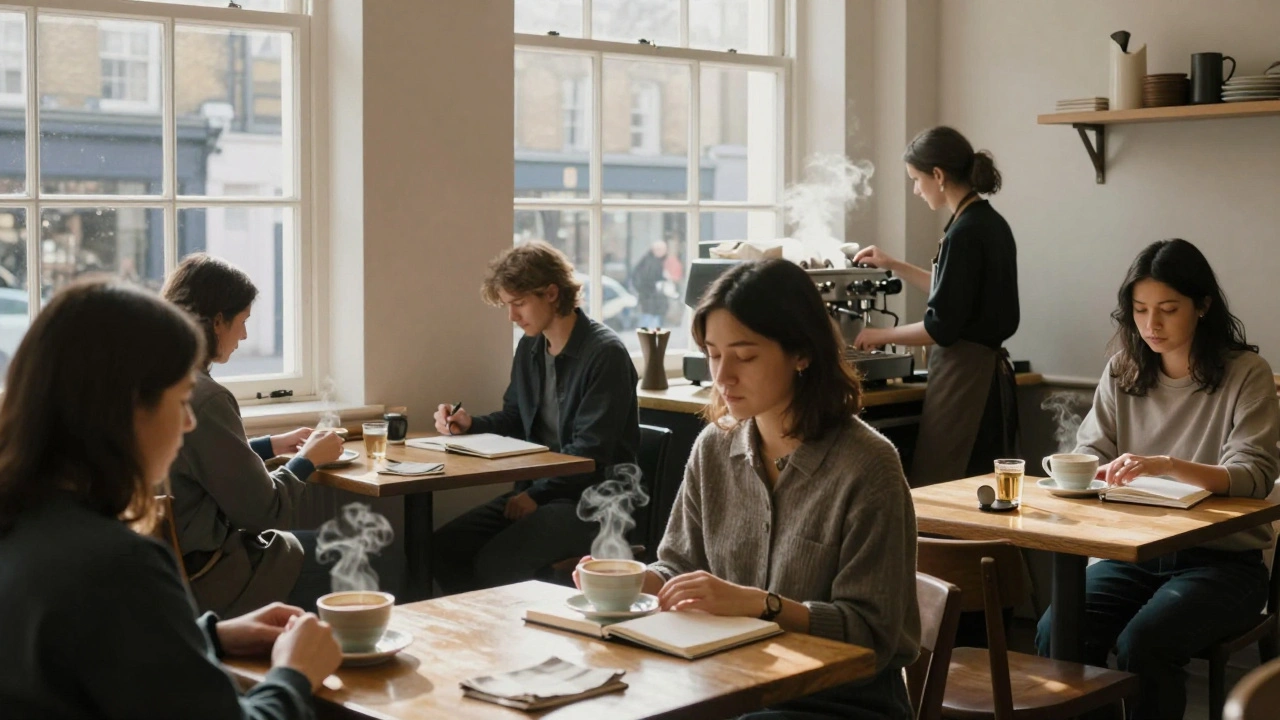
London’s coffee scene isn’t just about caffeine anymore. By 2025, it’s become a living lab for flavor, ethics, and tech - all poured into a cup. Walk into any neighborhood shop from Peckham to Islington, and you’ll notice something different. It’s not just the latte art. It’s the beans, the brewing, the silence between sips. The city’s coffee culture has evolved beyond third-wave obsession into something more thoughtful, more urgent, and more delicious.
Single-Origin Beans Are No Longer a Luxury
Five years ago, single-origin beans were a niche talking point. Today, they’re the baseline. Every reputable London coffee shop now sources directly from small farms - often with traceable GPS coordinates. You don’t just get a bag labeled "Ethiopia" anymore. You get "Yirgacheffe, Gedeo Zone, Lot #12, harvested July 2024, washed by Alemayehu Tadesse". That level of detail isn’t for show. It’s because drinkers now care about soil health, fair wages, and climate resilience.
Shops like Origin a London-based specialty coffee roaster founded in 2017 that partners directly with 12 coffee-growing communities across Africa and Latin America and Flat White a London coffee roastery known for transparent supply chains and carbon-neutral shipping publish farm visits on Instagram. Customers don’t just buy coffee - they follow the journey. A 2024 survey by the UK Coffee Industry Association found 68% of Londoners now check the origin label before purchasing. That’s up from 29% in 2020.
Cold Brew Is Dead. Long Live Nitro and Sparkling
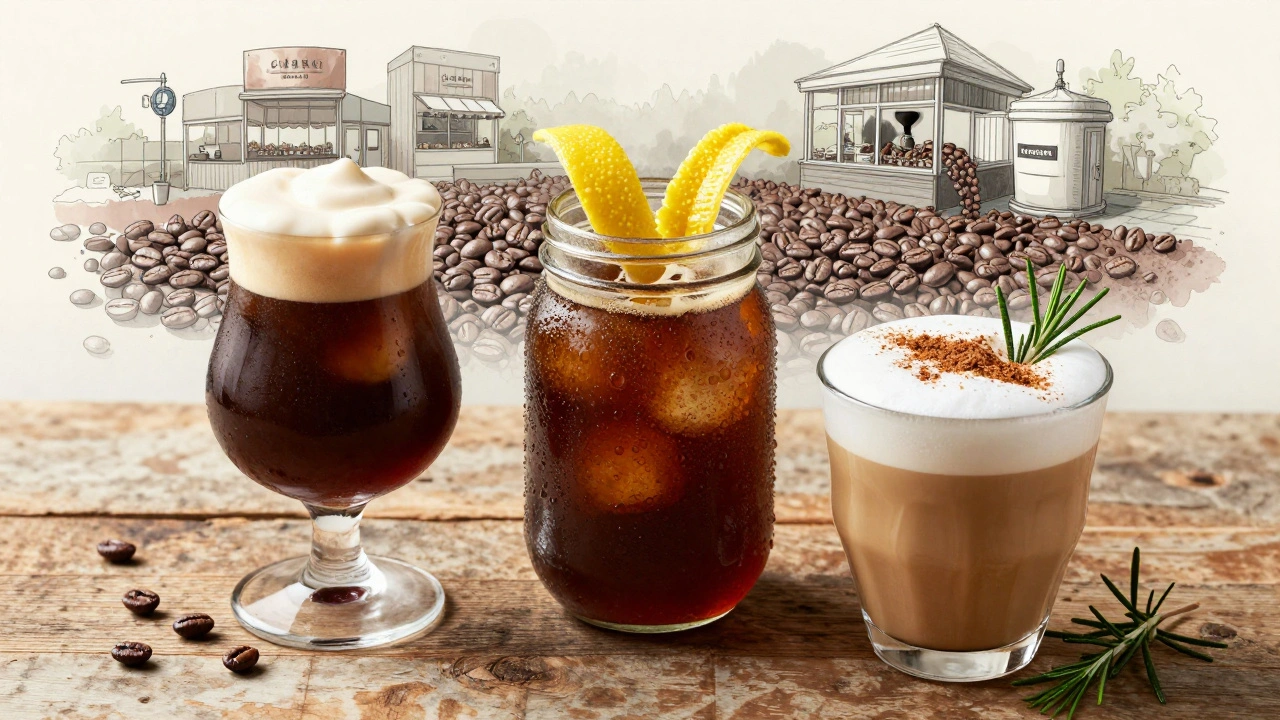
Remember when cold brew was the star? It’s not gone, but it’s been outpaced. In 2025, the real innovation is in texture and effervescence. Nitro cold brew, once a novelty, is now standard at 87% of independent London cafes. The creamy mouthfeel from nitrogen infusion isn’t just pretty - it cuts acidity without milk, making it a go-to for lactose-intolerant drinkers.
Even more surprising? Sparkling coffee. Yes, carbonated. Shops like Colectivo a London coffee bar that pioneered sparkling coffee infusions using naturally carbonated mineral water and cold-brewed Arabica in Shoreditch serve sparkling coffee in mason jars with lemon zest. It’s not a gimmick. It’s a response to demand for low-sugar, low-calorie refreshment. One study from King’s College London found that 42% of under-30s prefer sparkling coffee over soda for afternoon energy. The flavor profile? Bright, crisp, with a natural fizz that lifts floral and citrus notes.
Plant-Based Milk Is Evolving - Beyond Oat
Oat milk still dominates. But it’s no longer the only option. Londoners are experimenting. Soy milk has made a comeback thanks to new low-fermentation techniques that remove beany aftertaste. Coconut milk, once too sweet, is now fermented with probiotics for a tangy, yogurt-like bite. And then there’s hemp milk - creamy, nutty, and rich in omega-3s.
At Grind a London cafe specializing in plant-based milk alternatives and nutritional labeling on every drink in Camden, baristas offer a tasting flight: oat, soy, coconut, hemp, and even pea milk. Each has a different froth, sweetness, and aftertaste. Pea milk, for example, steams like dairy but leaves zero aftertaste. It’s becoming popular among baristas who need to serve 100+ drinks a day without hand fatigue from over-frothing.
Zero-Waste Brewing Is Now Standard
London’s coffee shops are no longer just composting grounds. They’re circular systems. Extract a zero-waste coffee bar in Brixton that repurposes spent grounds into skincare products and plant fertilizer turns used coffee grounds into hand cream and garden soil. They sell both in-store. Grounds a London-based coffee roastery that uses solar-powered roasting and compostable packaging made from coffee husks packages beans in bags made from the very husks discarded during roasting. The result? Zero plastic. Zero landfill. And a product that smells like coffee before you even open it.
Waste isn’t just avoided - it’s monetized. In 2024, London cafes collectively diverted 320 metric tons of coffee waste from landfills. That’s equivalent to 1.2 million plastic bottles. The city even introduced a "Green Barista" certification program. To earn it, shops must prove they reuse or recycle 95% of their waste. Over 140 shops have qualified.
AI-Powered Personalization Is in Your Cup
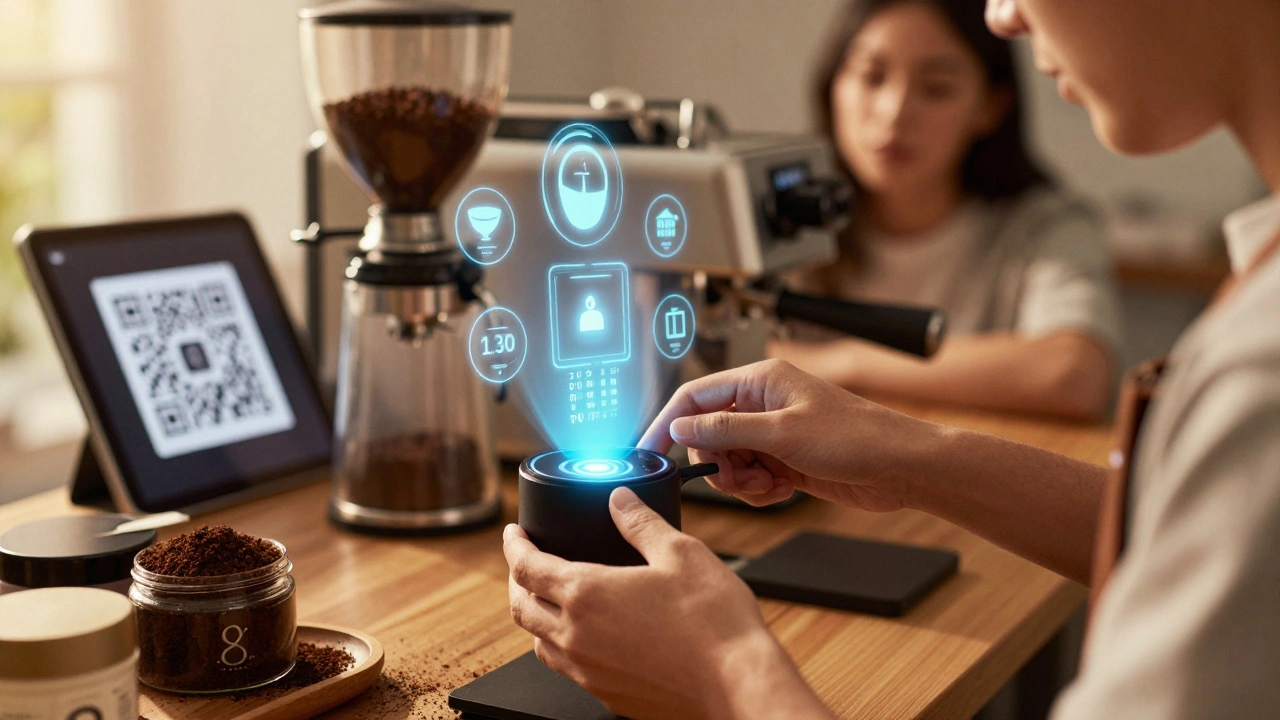
Step into Barista AI a London coffee shop that uses machine learning to customize brews based on customer preferences tracked via app in Soho, and you’ll notice something odd: no menu. Instead, you scan a QR code. The app asks: "Sweet? Bitter? Creamy? Bold?" Then it remembers your last order. Last week, you liked a light roast with a hint of honey. Today, it suggests a Yirgacheffe with a touch of maple syrup - because the AI noticed you’ve been craving sweeter notes after winter.
This isn’t sci-fi. It’s real. Barista AI uses data from 12,000 London regulars to predict flavor preferences. The system adjusts grind size, water temperature, and brew time automatically. Customers don’t need to say a word. The coffee just… knows. Early adopters report 74% fewer "wrong orders". And yes - it’s working. Orders are up 40% since the system launched in late 2024.
Quiet Spaces Are the New Third Place
The "third place" - home, work, coffee shop - used to mean loud, social, Instagrammable. Now, it’s the opposite. London’s best coffee shops in 2025 are silent. No music. No Wi-Fi. Just the hiss of steam, the clink of ceramic, and the quiet hum of people reading, writing, or just breathing.
Still a London coffee bar designed for mindfulness, with no screens, no music, and a 15-minute silence policy after 10am in Notting Hill enforces a "no devices" rule after 10 a.m. They sell journals, not laptops. The result? A 60% increase in repeat visits from professionals who say they’ve rediscovered focus. It’s not anti-tech - it’s pro-attention.
What’s Next? The Rise of Coffee as Medicine
By 2025, London coffee isn’t just fuel. It’s functional. Shops are adding adaptogens - ingredients like reishi, ashwagandha, and lion’s mane - into cold brews and lattes. These aren’t marketing buzzwords. They’re backed by clinical trials. A 2025 study from Imperial College London showed that daily consumption of lion’s mane-infused coffee improved focus and memory recall in 81% of participants over 8 weeks.
NeuroCup a London specialty coffee bar offering functional beverages with clinically tested adaptogens and no added sugar serves a "Focus Blend" with lion’s mane, L-theanine, and a trace of dark chocolate. It’s not a latte. It’s a cognitive enhancer. And it’s selling out daily.
London’s coffee shops aren’t just serving drinks anymore. They’re serving experiences - curated, conscious, and deeply personal. Whether you’re sipping sparkling coffee in a silent room or savoring a latte made from beans grown 8,000 miles away, the cup has become a conversation. And in 2025, that conversation is louder than ever.
What’s the most popular coffee drink in London in 2025?
The most popular drink isn’t a latte or cappuccino anymore - it’s nitro cold brew. Its creamy texture and natural sweetness have made it the top choice for both casual drinkers and coffee purists. Sparkling coffee is the fastest-growing trend, especially among younger customers who want something refreshing without sugar.
Are plant-based milks still dominated by oat milk?
Oat milk is still the most common, but it’s no longer the only option. Soy and hemp milk have made strong comebacks thanks to improved processing. Pea milk is gaining traction for its neutral taste and protein content. Some shops now offer five different plant-based options, each with distinct textures and flavors.
Is sustainability just a trend in London coffee shops?
No - it’s now a requirement. Over 140 shops have earned the city’s "Green Barista" certification by recycling or reusing 95% of their waste. Spent grounds are turned into skincare, compost, and packaging. Solar roasting and plastic-free bags are standard. Sustainability isn’t a selling point anymore - it’s the baseline.
Do London coffee shops use AI to customize drinks?
Yes - and it’s working. Shops like Barista AI use machine learning to track customer preferences and auto-adjust brew settings. Customers scan a QR code, answer a few questions, and get a personalized cup every time. Orders are more accurate, and repeat visits have increased by 40% since the system launched.
What’s the deal with functional coffee - like lion’s mane?
Functional coffee blends adaptogens like lion’s mane, ashwagandha, and L-theanine into drinks for mental clarity and stress relief. A 2025 study showed 81% of regular users reported improved focus. These aren’t gimmicks - they’re backed by clinical trials and sold in certified, sugar-free formats.