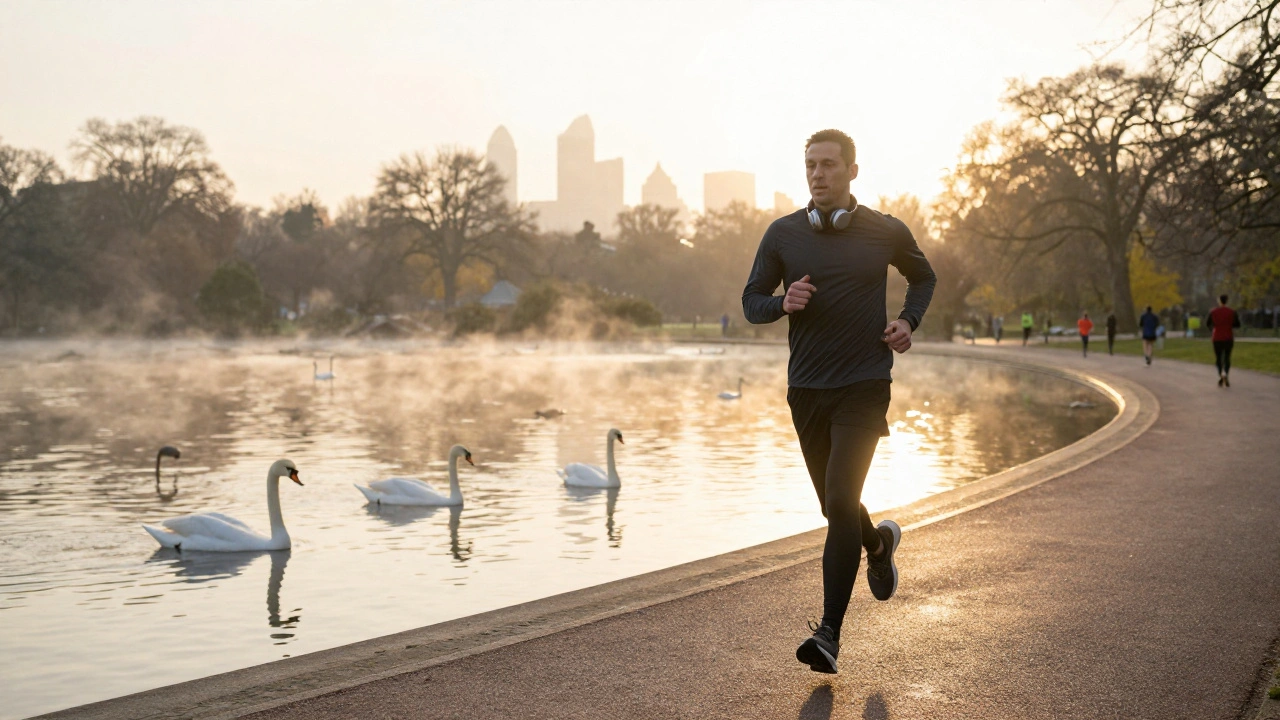
London isn’t just about the Tube, the pubs, and the museums. If you’re looking to lace up your shoes and get your heart pumping, the city’s green spaces are some of the best urban running grounds in the world. You don’t need a gym membership or fancy equipment-just a pair of trainers and a sense of direction. Whether you want a flat, fast loop or a hilly, scenic trail, London’s parks deliver. And the best part? Most of them are free, open 24/7, and packed with locals doing the same thing you are.
Hyde Park: The Classic Urban Run
Hyde Park is where Londoners go to run when they want to feel like they’re in the middle of nature without leaving the city. The Serpentine Lake forms a 3.5-mile loop that’s flat, well-lit, and paved. It’s perfect for tempo runs, interval training, or just a steady jog with views of the water and the occasional swan gliding past. Thousands of runners hit this loop daily, especially at sunrise and after work. You’ll see everything from elite athletes in compression gear to first-timers in hoodie and sweatpants. The park’s multiple entry points-from Marble Arch to Knightsbridge-mean you can start wherever you are.
Pro tip: Avoid the main paths during rush hour. The outer perimeter near the Serpentine is quieter and less crowded. If you’re doing speed work, the stretch between Hyde Park Corner and Lancaster Gate has a smooth, even surface with minimal interruptions.
Regent’s Park: The Scenic Loop with a View
Regent’s Park is the most beautiful running route in central London, hands down. The 3.5-mile outer circle is paved and gently rolling, with trees lining the path and glimpses of the London skyline peeking through. The inner circle, known as the Queen Mary’s Gardens, is more intimate-perfect for a slower, meditative run. It’s lined with flowerbeds in spring and quiet benches year-round.
What makes Regent’s Park stand out is the variety. You can run the full loop in under 30 minutes if you’re pushing hard, or take your time and stop to watch the boating lake or the open-air theatre. It’s also one of the few parks where you’ll find dedicated running groups meeting at 7 a.m. on weekdays. Check out the Regent’s Park Running Club-they’re friendly, no-pressure, and always have someone willing to pace you.
Greenwich Park: Hills, History, and Panoramas
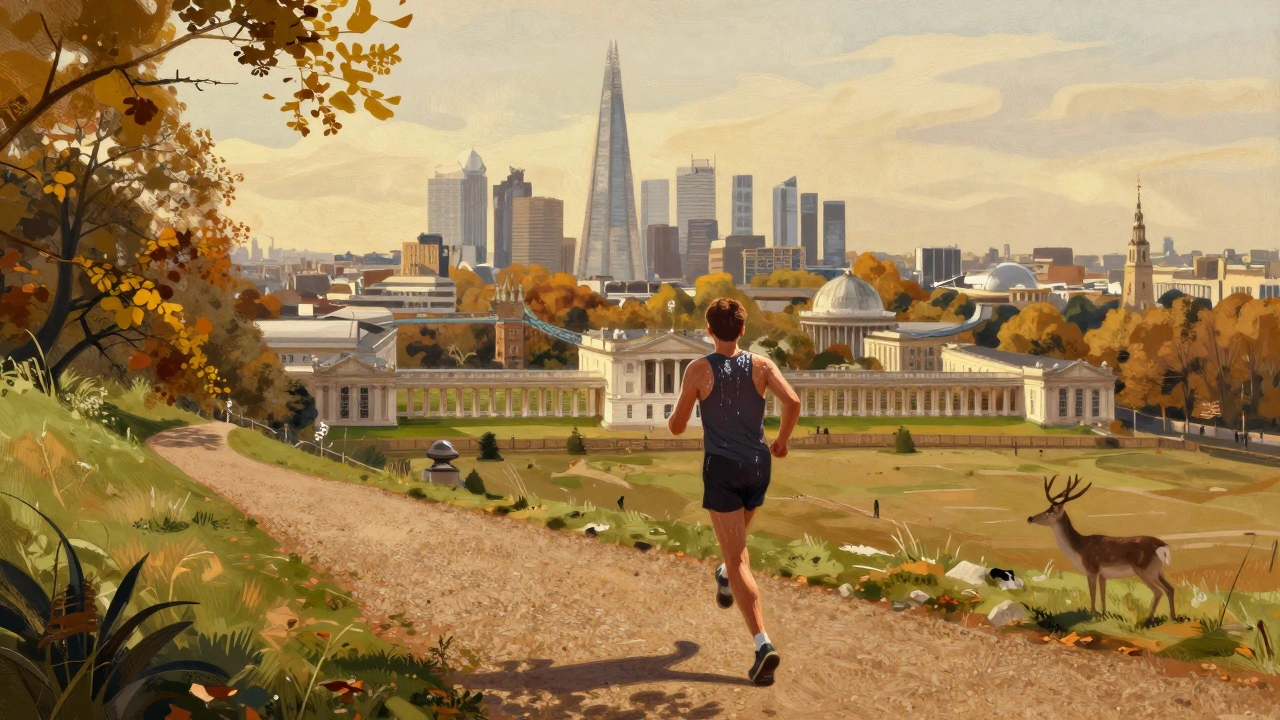
If you’re ready to challenge your lungs and your legs, head to Greenwich Park. It’s not flat. It’s not easy. But it’s one of the most rewarding runs in London. The climb up to the Royal Observatory rewards you with a 360-degree view of the city-from the Shard to the Tower Bridge. The main loop is about 2.5 miles, but you can extend it by running along the Thames Path to Cutty Sark and back.
The hill isn’t just a test-it’s a training tool. Runners use it for hill repeats, and many local coaches recommend it for building strength. The path is gravel and grass in parts, so wear trail shoes if you’re planning to run here regularly. It’s less crowded than Hyde Park, especially on weekday mornings. You’ll often have the upper slope to yourself, with only the sound of your breath and the distant chime of Big Ben.
Richmond Park: The Wild Side of London Running
Richmond Park is where London stops feeling like a city. At 2,500 acres, it’s the largest of London’s Royal Parks and feels more like a national forest. The park has over 15 miles of trails, from wide gravel paths to narrow dirt tracks winding through ancient oak trees. It’s home to 630 free-roaming deer-keep your distance, but don’t miss the chance to run alongside them at dawn.
The most popular route is the 6-mile perimeter loop, which is mostly flat and shaded. For a tougher workout, try the 8-mile loop that includes the climb up King Henry’s Mound. The view from the top is worth every step. You’ll see the entire city skyline, and on clear days, you can spot St. Paul’s Cathedral. This park is perfect for long slow distance runs or trail running beginners. The ground is soft, the air is cleaner, and the pace is slower-just how running should feel sometimes.
Victoria Park: East London’s Community Hub
Victoria Park, or “Vicky Park” as locals call it, is the heart of East London’s fitness scene. It’s big, loud, and alive. The 2.2-mile lake loop is popular with joggers, but you’ll also see yoga groups, Zumba classes, and people doing bodyweight circuits on the grass. The path is mostly paved, with sections shaded by willow trees. It’s flat, well-maintained, and lit at night.
What sets Victoria Park apart is its energy. You’ll run past street food vendors on weekends, drum circles in the amphitheater, and runners of all ages and backgrounds. It’s not a silent sanctuary-it’s a celebration of movement. If you’re looking to feel part of a community, this is your spot. The park also has free outdoor fitness equipment scattered around the edges, so you can add strength drills to your run.
Hampstead Heath: The Wild, Hilly Escape
Hampstead Heath is the city’s most rugged running terrain. It’s not manicured. It’s not predictable. But it’s pure. The 790-acre park has over 20 miles of trails, some paved, some dirt, some steep. The famous Parliament Hill offers a 1-mile climb that ends with a breathtaking view of the skyline. It’s a favorite among serious runners training for marathons.
The Heath’s trails are unmarked, so bring a map or use a GPS app. The ground can be muddy after rain, and some paths are narrow and root-filled. That’s not a drawback-it’s a feature. If you want to build balance, agility, and endurance, this is where you do it. You’ll pass ponds, woodlands, and even a historic swimming pond (open year-round for brave souls). The park is less touristy than Hyde Park and feels more like a secret escape.
St. James’s Park: The Quick Lunchtime Run
Don’t underestimate St. James’s Park. It’s small-just 147 acres-but it’s perfectly positioned for a 20-minute run between meetings. The 1.5-mile loop around the lake is flat, paved, and lined with ducks, pelicans, and the occasional royal carriage. It’s the most central of all the parks, just steps from Buckingham Palace and Whitehall.
It’s ideal for a lunchtime jog, a post-work wind-down, or a quick warm-up before a longer run elsewhere. The path is smooth, the lighting is good, and there are plenty of water fountains. You’ll see a lot of business professionals here, in suits and running shoes. It’s the kind of place where you can run fast and feel like you’re still in the middle of London’s power center.

What to Bring and What to Avoid
Running in London’s parks is simple, but a few things make it better:
- Water-Even short runs can be dehydrating. Carry a small bottle or plan your route near a fountain.
- Reflective gear-Many parks are lit, but not all paths are. Wear something visible if you run at dawn or dusk.
- A phone with offline maps-Some parks have spotty signal. Download the route ahead of time.
- Trail shoes-For Hampstead Heath, Richmond Park, and Greenwich Park, regular road shoes won’t cut it on muddy or uneven ground.
Avoid these mistakes:
- Running on the grass unless it’s designated-many parks ban it to protect the turf.
- Listening to music at full volume-stay aware of cyclists, walkers, and other runners.
- Leaving trash-there are bins, but many runners forget. Pack out what you pack in.
When to Run
London’s parks are busiest on weekends, especially Sunday mornings. If you want solitude, aim for weekdays between 6-8 a.m. or 7-9 p.m. Summer evenings are magical-the light lasts until 9 p.m., and the air is warm. Winter runs are crisp and quiet, but dress in layers. Wind can be brutal near the water.
Check the weather before you go. Rain turns some paths to mud, especially in Richmond and Hampstead. A light rain jacket and quick-dry clothes are worth it.
Why These Parks Work
These routes aren’t just scenic-they’re functional. Each one serves a different need:
- Hyde Park and St. James’s: Fast, flat, and convenient for speed work.
- Regent’s Park and Victoria Park: Social, community-driven, great for motivation.
- Greenwich Park and Hampstead Heath: Hill training and endurance building.
- Richmond Park: Long-distance, nature immersion, mental reset.
You don’t need to run them all. Pick one that matches your goal. Run it regularly. Then add another. London’s parks are your free gym, your therapy space, and your escape-all in one.
Are London’s running parks safe at night?
Yes, most major parks like Hyde Park, Regent’s Park, and Victoria Park are well-lit and patrolled. Stick to main paths and avoid isolated areas. Many runners go out after dark, especially in summer. Use a headlamp or reflective gear, and let someone know your route. Avoid running alone in smaller, less-trafficked parks after 10 p.m.
Do I need special shoes for London parks?
For paved loops like Hyde Park or St. James’s, regular running shoes are fine. But if you’re heading to Hampstead Heath, Richmond Park, or Greenwich Park, trail shoes with grip are a smart choice. The ground can be muddy, root-covered, or uneven. Road shoes will wear out faster on these surfaces and increase your risk of slipping.
Can I run with my dog in London parks?
Yes, but rules vary. In Hyde Park and Regent’s Park, dogs must be on a leash. In Richmond Park, they can be off-leash in most areas but must stay under control. Always clean up after your dog. Some parks have designated dog-free zones near children’s play areas or bird habitats-look for signs.
Is there a fee to run in London’s Royal Parks?
No. All Royal Parks, including Hyde Park, Kensington Gardens, and Greenwich Park, are free to enter and use. There are no entry fees, no passes needed, and no registration. You can run, walk, or picnic anytime the park is open.
Which park is best for beginners?
Start with St. James’s Park or Victoria Park. Both have flat, well-marked paths, lots of people around, and easy access to public transport. They’re less intimidating than hilly or remote parks. Once you’re comfortable, try Regent’s Park or Hyde Park. Save the hills for later.
Are there running groups in London parks?
Yes. Regent’s Park Running Club meets at 7 a.m. on weekdays. London Running Club hosts weekly group runs in Hyde Park. There are also free community runs like Parkrun, which happens every Saturday morning at 9 a.m. in 10 different London parks. Parkrun is open to all paces-walkers, joggers, and runners welcome.
Next Steps
Start small. Pick one park near you and run it once this week. Notice how it feels. Then try another. Don’t aim for distance or speed at first-just show up. London’s parks aren’t just places to run. They’re places to breathe, to think, to reset. You don’t need to be fast. You just need to move.