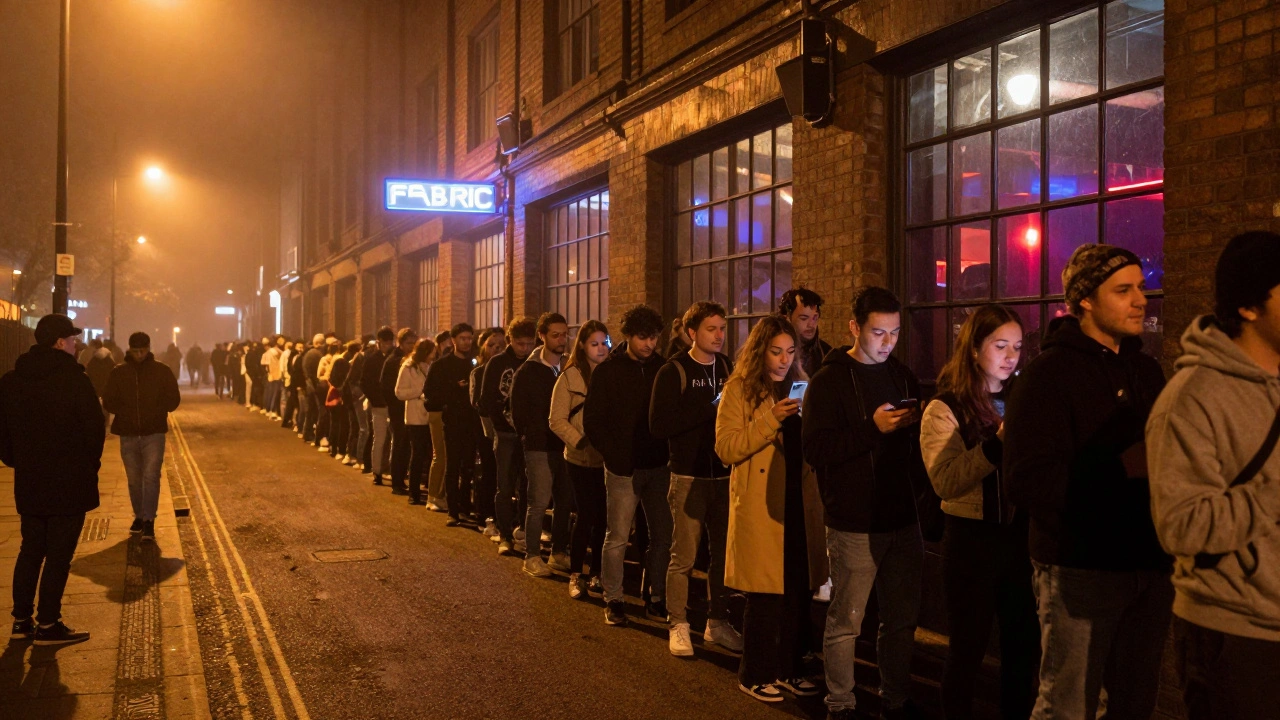
On a Friday night in London, the queue for Fabric stretches down the street. Not because it’s the fanciest club, or because it’s the loudest. But because it’s the one place where the music still matters more than the lights, the bottles, or the VIP section. Fabric isn’t just a nightclub. It’s a temple for electronic music, built on 25 years of sweat, bass, and unbroken dedication to the sound.
What Makes Fabric Different?
Fabric opened in 1999 in a converted meat warehouse in Farringdon. No neon signs. No bottle service gimmicks. Just two rooms - Fabric and FabricLive - with world-class sound systems designed by the same team behind the legendary Berghain in Berlin. The speakers are custom-built, the subwoofers are tuned to shake your chest, and the acoustics are engineered so that every kick drum lands like a heartbeat.
Unlike most clubs that chase trends, Fabric stays true to its roots: techno, house, drum & bass, and experimental electronic music. It doesn’t book celebrities just because they have Instagram followers. It books artists who move the culture - people like Ricardo Villalobos, Helena Hauff, and Peggy Gou - who’ve played here dozens of times because they know the crowd and the system will treat their music right.
The Sound System That Changed Clubbing
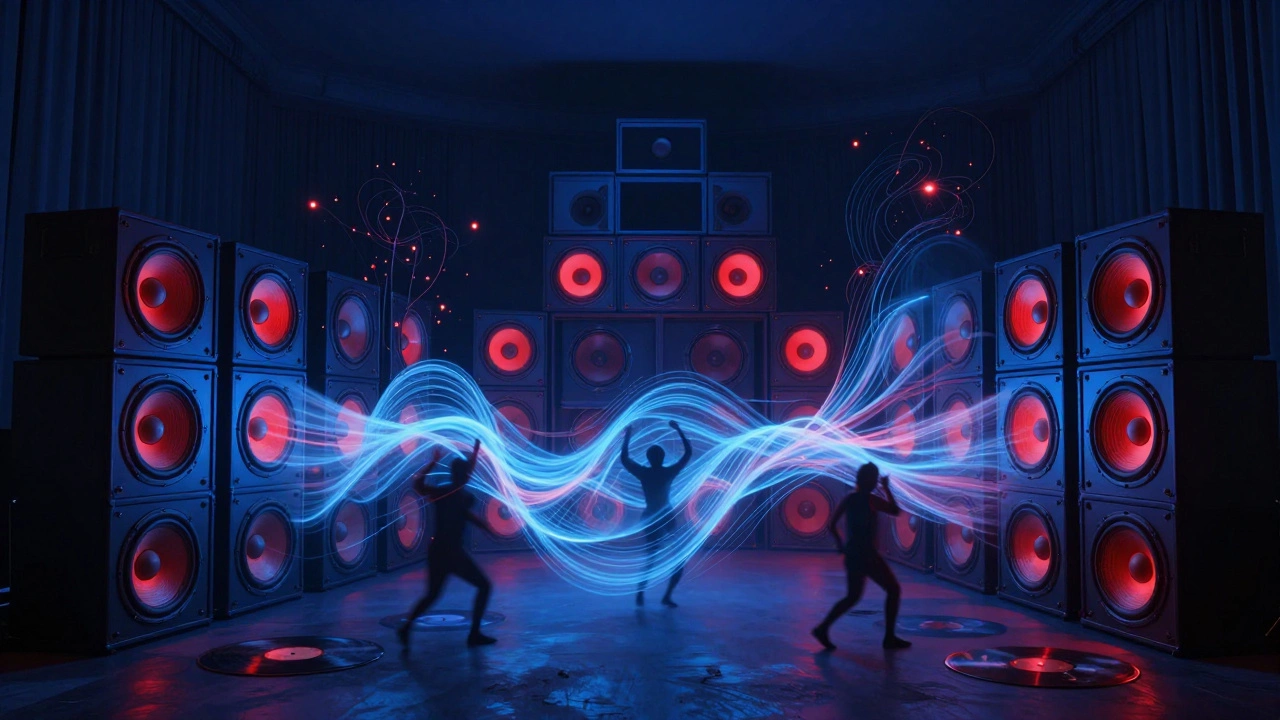
Fabric’s sound system isn’t just powerful - it’s precise. The main room uses a 32-speaker array with 16 subwoofers, each calibrated to deliver frequencies below 20Hz without distortion. That’s the kind of bass you feel in your bones, not just your ears. A 2023 study by the University of London’s Audio Engineering Lab found that Fabric’s system delivers the lowest harmonic distortion of any nightclub in Europe - even lower than Berghain.
Why does that matter? Because electronic music isn’t just about beats. It’s about texture - the hiss of a vinyl crackle, the ripple of a delay pedal, the subtle decay of a reverb tail. At Fabric, you hear every layer. You don’t just dance to the music. You feel it unravel.
How the Events Work
Fabric doesn’t do themed nights like ‘80s Retro’ or ‘TikTok Hits’. Instead, it runs weekly residency nights with curated lineups. On Fridays, it’s usually techno - deep, hypnotic, minimal. Saturdays lean into house and disco with a darker edge. Sundays? That’s where the underground experimental stuff lives - noise, industrial, abstract electronica. The DJs don’t play for 90 minutes. They play for five hours. No rush. No setlists posted online. You show up, you don’t know what’s coming, and you trust the curation.
There’s no VIP area. No table service. No dress code beyond ‘don’t wear flip-flops’. You pay £15 at the door (or £12 if you buy online in advance). That’s it. No overpriced cocktails. No fake champagne. Just beer, water, and a small bar that never runs out of ice.

Who Comes Here?
Fabric’s crowd is a mix. Students from Goldsmiths. Doctors who clock out at 10 p.m. On a Friday. Retired engineers who still build synths in their garages. Tourists who heard about it from a friend in Berlin. Locals who’ve been coming since 2005. You’ll see people in designer coats next to guys in ripped jeans and band tees. No one cares what you wear. They care if you’re there for the music.
There’s no phone flashing in the crowd. No one taking selfies. The lights stay low. The focus is on the dance floor - a sea of bodies moving in sync, not for the camera, but because the rhythm has taken over.
Why It Survived When Others Died
Fabric nearly closed in 2016. The council tried to shut it down over noise complaints and drug-related incidents. But the community fought back. Over 100,000 people signed a petition. DJs from around the world wrote open letters. The Guardian ran a front-page story. The club didn’t just survive - it came back stronger.
They installed better sound insulation. Added security staff trained in harm reduction. Partnered with drug-checking charities. And they kept the music pure. That’s the secret: Fabric didn’t change to stay alive. It stayed alive because it never stopped being itself.
What to Expect on Your First Visit
- Get there early - lines start forming by 10 p.m. on weekends.
- Bring cash. The bar doesn’t take cards.
- Wear comfortable shoes. You’ll be standing for hours.
- Don’t expect to see your favorite pop DJ. If you came for Ed Sheeran, you’re in the wrong place.
- Stay hydrated. The bass is intense, and the room gets hot.
- Leave your ego at the door. No one’s judging your dance moves.
And if you’re lucky? You’ll catch a surprise guest. Maybe it’s a DJ who’s been off the radar for years. Maybe it’s a live set from someone who only plays once a year. That’s the magic of Fabric. It doesn’t book for the crowd. It books for the music.
Where It Fits in the Global Scene
Fabric is part of a small, elite group of clubs that define electronic music culture: Berghain in Berlin, Rex Club in Paris, Watergate in Berlin, and Output in Brooklyn before it closed. These aren’t just venues. They’re institutions. They’ve shaped genres. They’ve launched careers. They’ve kept the underground alive when mainstream clubs turned into party buses with DJs.
Fabric’s influence is everywhere. If you’ve ever heard a techno track with a 4/4 kick that feels like it’s breathing - that sound was refined in this room. If you’ve ever danced until your feet bled and didn’t care - you were dancing to the ethos of Fabric.
Is It Still Worth It in 2025?
Yes. More than ever.
With AI-generated playlists flooding streaming services and TikTok dictating what’s ‘cool’, Fabric is one of the last places where music still has agency. Where a DJ can play a 12-minute track with no drop, and the crowd doesn’t leave. Where the sound system is more important than the lighting rig. Where the music isn’t a backdrop - it’s the reason you’re there.
If you want to feel what real electronic music sounds like - not the edited version on Spotify, not the remix for TikTok, but the raw, unfiltered, human-made version - then Fabric is still the place to go.
It’s not about the name. It’s not about the location. It’s about the sound. And in 2025, that sound is still alive - loud, deep, and unapologetic.
Can I bring my phone to Fabric?
Yes, you can bring your phone, but it’s not encouraged. The club doesn’t ban phones, but the atmosphere is designed to be immersive. Most people leave theirs in their coat or bag. Flashing screens and selfies disrupt the vibe - and the crowd notices. If you must use it, step outside.
Is Fabric open every night?
No. Fabric is open Thursday through Sunday, with the busiest nights being Friday and Saturday. Sunday is usually the most experimental night, often featuring live sets or lesser-known artists. It’s closed Monday through Wednesday.
What’s the age limit at Fabric?
You must be 18 or older to enter. ID is checked at the door. No exceptions. Even if you look older, bring a valid photo ID - driver’s license, passport, or UK proof-of-age card.
Does Fabric have a dress code?
No formal dress code. You’ll see everything from hoodies to tailored coats. But no flip-flops, no sportswear with visible logos, and no overly flashy outfits. The crowd values authenticity over trends. Dress for dancing, not for Instagram.
Can I buy tickets at the door?
Yes, but it’s risky. On weekends, especially if a big name is playing, tickets often sell out online days in advance. Buying at the door costs £15 - £3 more than online. If you’re serious about going, buy tickets ahead on Fabric’s official website.