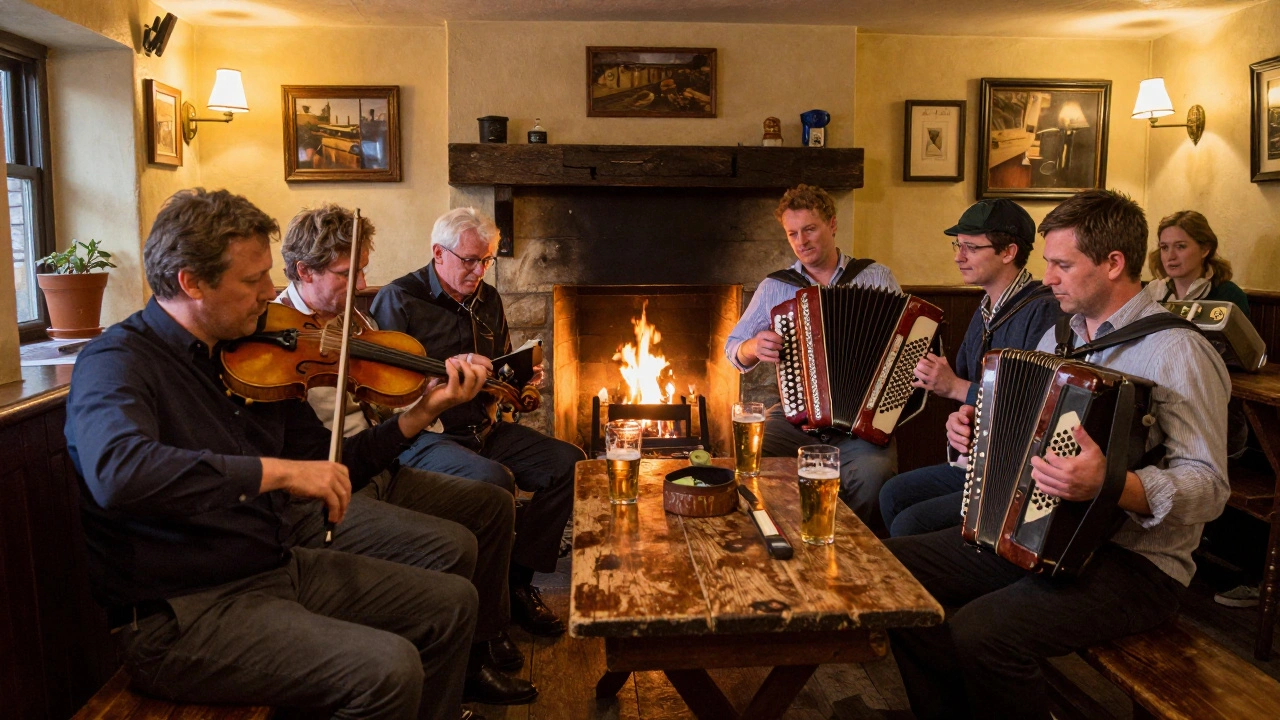
The core of this experience isn't just about watching a stage; it's about the Trad Session an informal gathering of traditional musicians who play tunes together, often in a pub or festival tent. These sessions are the heartbeat of the community. You'll see players with Fiddle a violin used in traditional folk music with a distinct rhythmic bowing style, Accordion a bellows-driven instrument common in English and Celtic folk, and the occasional concertina a small, hexagonal free-reed instrument popular in maritime and English folk music. The rule of thumb here is simple: if you play, you join in; if you don't, you listen and cheer. It's a democratic way of making music that strips away the barrier between the performer and the audience.
The Heavy Hitters: Must-Visit Festivals
If you're planning your calendar, you need to look beyond the big-name pop festivals. The real gold is in the smaller, specialized events. One of the most iconic experiences is the English Traditional Music a genre of music rooted in the rural and industrial heritage of England, focusing on oral tradition and community dance scene found in the Home Counties. Many of these events cluster around the spring and summer months, taking advantage of the greenery in places like the Chilterns or the Cotswolds.
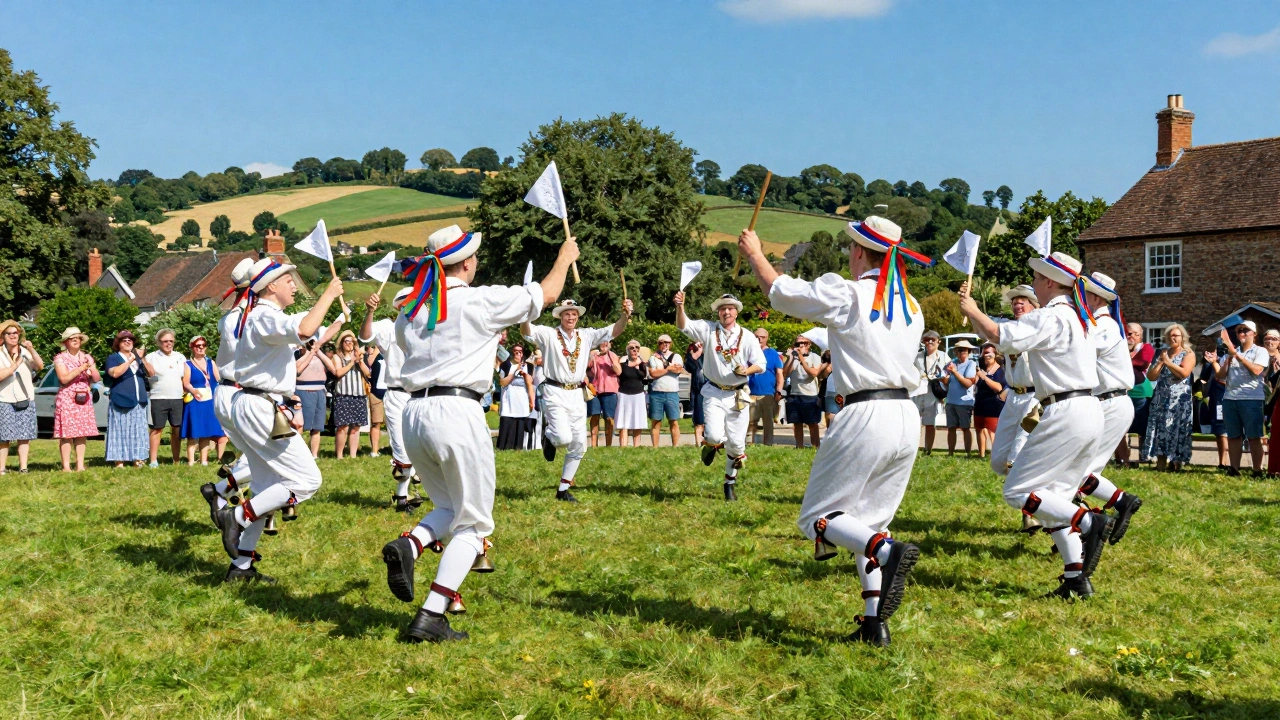
For those who want a deep dive into the English sound, look for events that emphasize Morris Dance a form of English folk dance involving rhythmic stepping and the use of sticks or handkerchiefs. It might look eccentric to an outsider-bells on the shins, ribbons on the hats-but it's a living piece of history. When you see a Morris side performing in a village square, they aren't just dancing for a crowd; they're keeping a centuries-old social contract alive. The rhythm is infectious, and the energy is high, especially when the music transitions from a slow air to a galloping jig.
| Experience Type | Vibe | Best For | Key Instrument |
|---|---|---|---|
| Village Green Festivals | Family-friendly, sunny, relaxed | Beginners & Families | Acoustic Guitar |
| Pub Trad Sessions | Intimate, loud, social | Musicians & Enthusiasts | Fiddle / Concertina |
| Dance Weekends | High energy, physical, social | Active learners & Dancers | Melodeon |
| Folk Clubs | Listening-focused, storytelling | Lyric lovers & Collectors | Harp / Vocals |
Mastering the Art of the Trad Session
Walking into a session for the first time can be intimidating. You might worry about your skill level or not knowing the exact "set" of tunes. Here's the secret: most session leaders aren't looking for perfection; they're looking for the "groove." In English trad, the rhythm is everything. If you're playing a Melodeon a type of diatonic button accordion common in English traditional music, your job is to provide the pulse that the dancers can follow.
If you're a beginner, start by listening for a few tunes. Notice how the musicians nod to each other to signal the end of a set. A typical set consists of two or three tunes played in sequence, often shifting from a reel to a jig. Don't be afraid to ask a player about the origin of a song. Most folk musicians are walking encyclopedias of local history and are more than happy to tell you if a particular melody comes from a mining village in Durham or a farming community in Somerset.
Finding Your Feet with English Country Dance
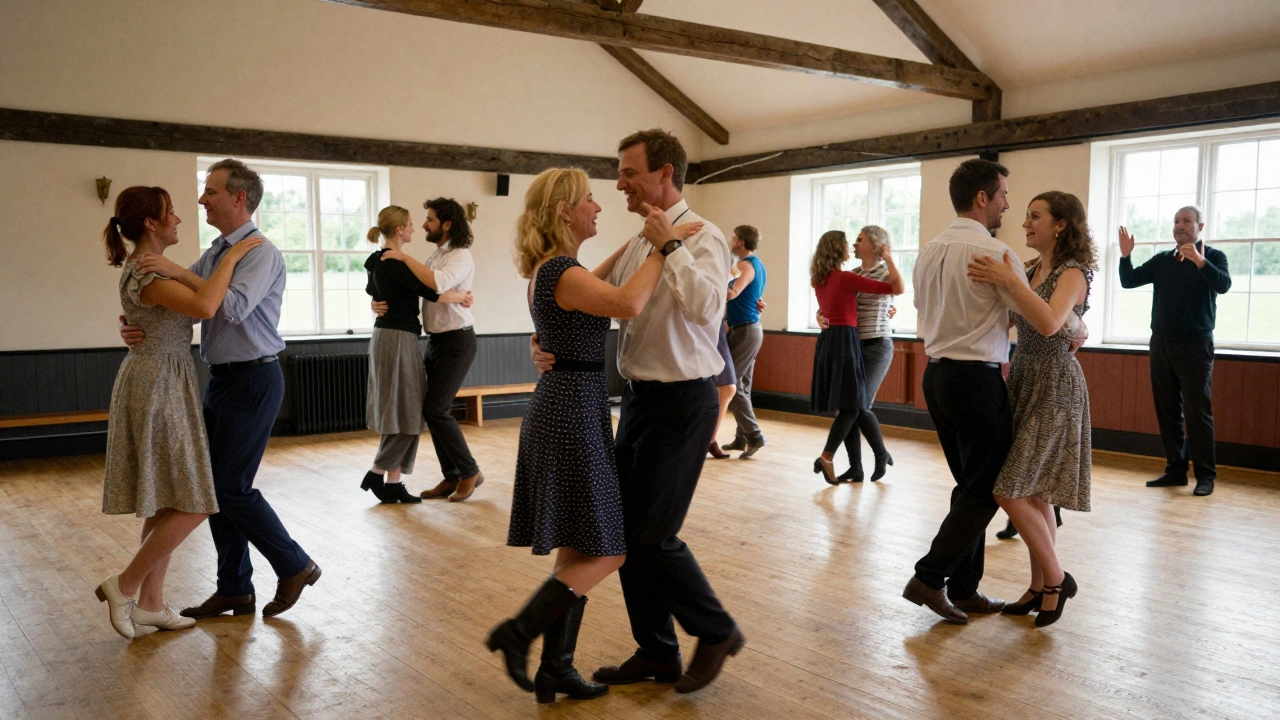
You can't separate the music from the movement. English Country Dance A social dance form characterized by structured patterns, usually danced in sets of couples is the physical manifestation of the music. Unlike ballroom dancing, which is often about the couple's internal chemistry, country dance is about the whole room. You'll be switching partners, forming circles, and weaving through lines of people.
The beauty of these dances is their inclusivity. At most festivals near London, you'll find "caller" sessions. A Dance Caller A person who instructs dancers on the movements of a folk dance in real-time stands at the front and shouts out the moves-"Circle left!" or "Right and left through!" This means you don't need to memorize a single step to join in. It turns a dance floor into a giant, coordinated game. If you trip over your own feet, you're just providing a comic beat for the rest of the room to laugh at-including the experts.
Practical Tips for the Folk Traveler
When heading out to these festivals, forget the glitz. The dress code is strictly "practical." Rain boots (wellies) are practically mandatory, as most of these events take place in fields that turn into mud pits the moment a cloud appears. A sturdy waterproof jacket is your best friend. These are grassroots events; don't expect five-star hotels. Many people opt for camping or local B&Bs, which adds to the experience of disconnecting from the city grind.
In terms of timing, the peak season runs from May to September. However, the "winter sessions" in cozy pubs are where the real intimacy happens. While the summer is for the big dances and open-air stages, the winter is for the storytelling and the slower, more haunting ballads. If you're looking for the most authentic experience, try to find a "Ceilidh" (though more common in Scotland, the English version is equally spirited) held in a community hall. The acoustics might be terrible, but the atmosphere is unmatched.
Navigating the Local Scene
To find these gems, you have to look where the algorithms don't usually point. Local noticeboards in village pubs, community centers, and dedicated folk society newsletters are the primary sources. While social media is catching up, the most prestigious sessions are still often announced via word-of-mouth.
If you're based in London, check out the smaller venues in areas like Islington or Hackney that host weekly folk nights. These act as a gateway to the larger festivals in the countryside. They allow you to meet the musicians who will eventually be headlining the festival stages in July. Building these relationships is key; the folk world is small, and a recommendation from a regular can get you into the most exclusive "back-room" sessions where the real magic happens.
Do I need to be a musician to enjoy a trad session?
Absolutely not. Trad sessions are as much about the social atmosphere and the listening experience as they are about the playing. Many people attend simply to enjoy the music, drink a pint, and soak in the community vibe. Your presence as a listener is actually encouraged, as it provides the energy the musicians feed off.
What is the difference between Morris Dancing and Country Dancing?
Morris Dancing is primarily a performance-based folk dance, often done in costume with props like sticks or bells, and is usually watched by a crowd. English Country Dancing is a social activity where the goal is for everyone to participate, switching partners and following patterns together in a set.
Which instruments are most common in English folk?
The fiddle is arguably the most prominent, providing the lead melody. However, the melodeon, accordion, concertina, and acoustic guitar are essential for providing the rhythmic and harmonic backing. You'll also occasionally see tin whistles and uilleann pipes, though the latter are more common in Irish trad.
Are these festivals expensive to attend?
Generally, no. Most folk festivals are grassroots events with affordable ticketing. Many pub sessions are free to attend, though it's customary to buy a few drinks to support the venue. Larger festivals may have a gate fee, but it typically includes access to multiple stages and workshops.
Where can I find a list of upcoming festivals near London?
The best way is to follow local folk clubs and societies on social media or check community boards in villages across the Home Counties. Many festivals also list their dates on regional cultural calendars and folk-specific forums.
What to do next
If you're feeling the itch to get involved, don't wait for a massive festival. Start by finding a local folk club in your neighborhood. It's the lowest-pressure way to get used to the sounds and the social etiquette. From there, invest in a pair of decent waterproofs and a map of the surrounding counties.
If you're a musician, bring your instrument but keep your ego at the door. Focus on the rhythm and the communal aspect rather than showing off. And if you're a dancer, just remember to keep smiling-even if you're going the wrong way around the circle. The community is incredibly welcoming to anyone who shows a genuine interest in keeping these traditions alive.