Most people think of Bath as just another pretty town with old buildings. But if you’ve never spent a full day here - really walked its streets, soaked in its history, and felt the steam rise from its thermal springs - you’re missing one of England’s most unique experiences. This isn’t a museum visit. It’s a sensory journey through 2,000 years of life, from Roman emperors to modern wellness seekers.
The Roman Baths: More Than Ruins
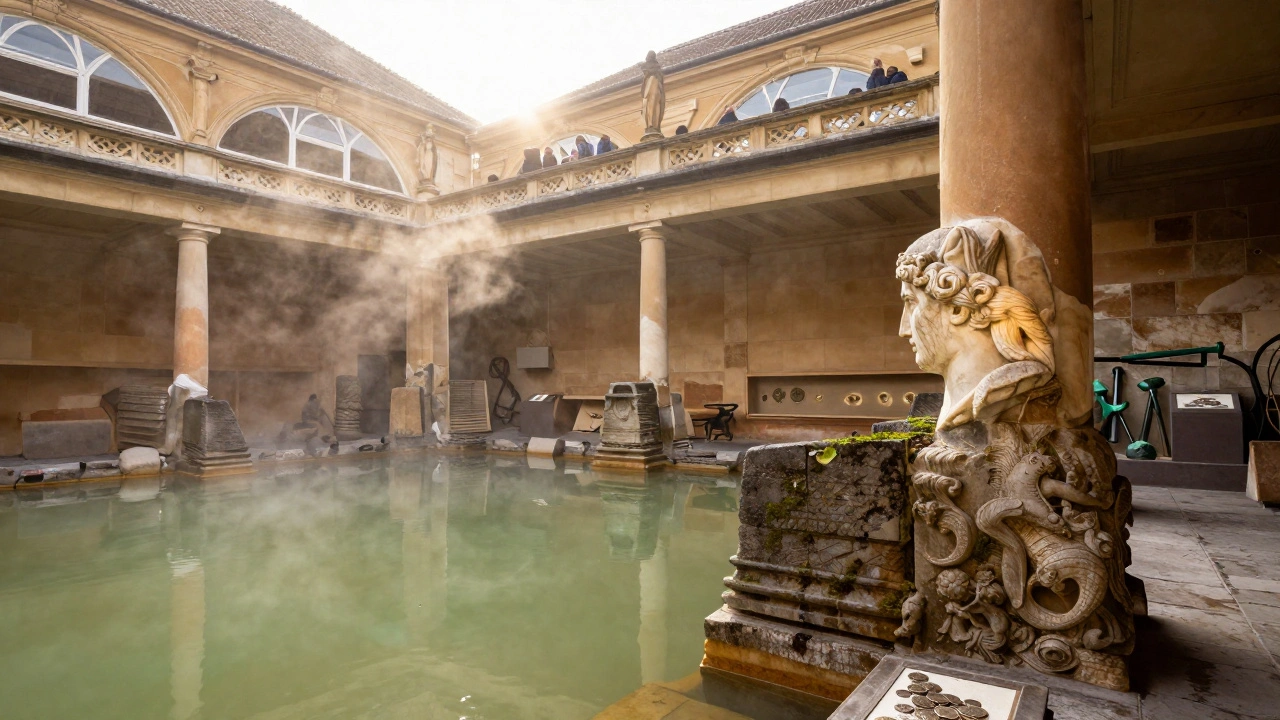
The Roman Baths aren’t just ancient stones under a glass roof. They’re the best-preserved Roman temple-and-bathing complex in the entire northern Roman Empire. Built around 70 AD, the site wasn’t just for cleaning - it was sacred. People came to worship Sulis Minerva, the goddess who healed through the hot spring water. The water still flows today, at 46°C, exactly as it did two millennia ago.
Walk down into the Great Bath and look up. The original stone steps, still worn smooth by Roman sandals, lead into water that’s been used for healing since before the fall of Rome. The surrounding colonnades, the carved head of the goddess, the hypocaust heating system under the floor - every detail was engineered for comfort and ritual. The museum doesn’t just show artifacts. It shows how people lived. You’ll see coins thrown into the water as offerings, bronze surgical tools used by Roman doctors, and even the lead pipes that carried water to private homes.
Don’t skip the Sacred Spring. It’s the source. The water rises 1.2 million liters a day from deep underground, heated by geothermal energy. You can’t swim in it - the water is too hot and not filtered for bathing - but you can taste it. A small cup of the mineral-rich water is offered at the end of the tour. It tastes like iron and earth. People still swear it helps with arthritis.
Georgian Streets: Walking Through a Time Machine
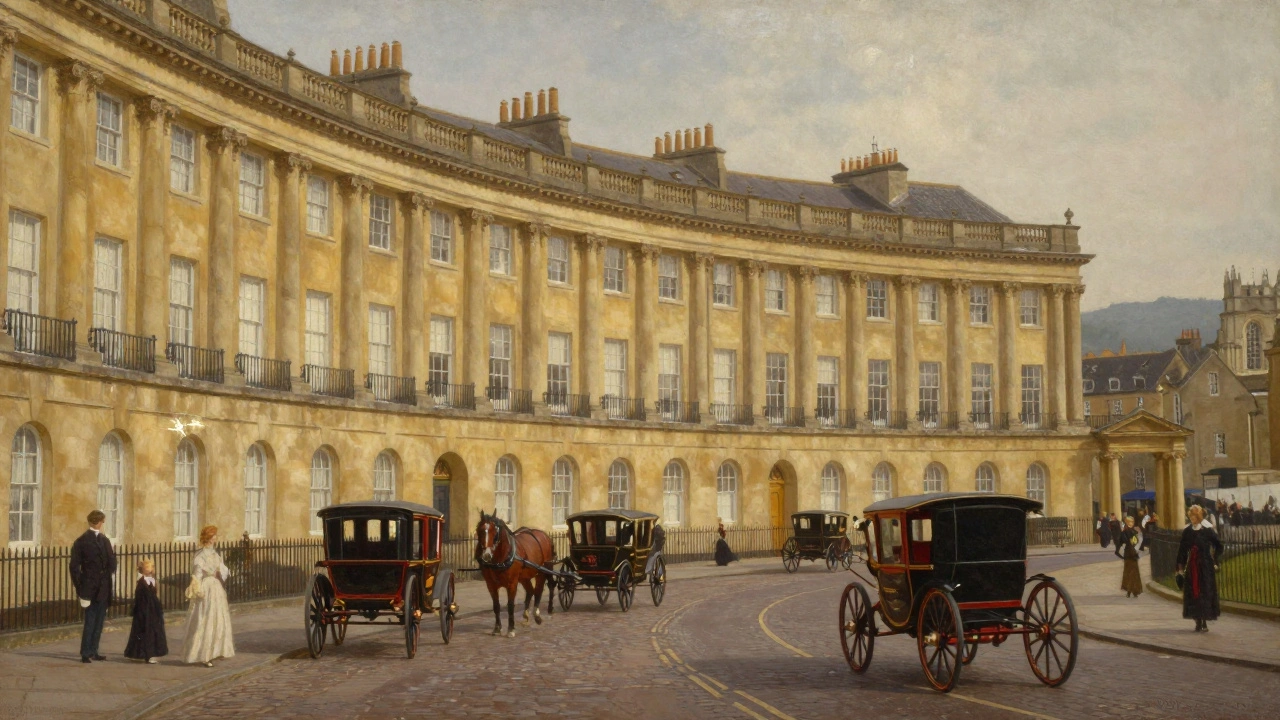
Step out of the Roman Baths and into the 18th century. Bath’s Georgian architecture isn’t just pretty - it’s a perfectly preserved urban plan. The city was rebuilt between 1700 and 1800 as a fashionable spa destination for the wealthy. The result? Uniform terraces of honey-colored stone, sweeping crescents, and elegant squares that still feel like a stage set for a Jane Austen novel.
Start at the Royal Crescent. It’s not just a row of houses - it’s a single architectural statement. Thirty terraced homes, curved like a half-moon, all with identical facades and wrought-iron railings. The front doors are numbered 1 to 30, but the real magic is behind them. Number 1 Royal Crescent is now a museum. Inside, you’ll find a fully restored Georgian townhouse - complete with a servant’s bell system, a cold bath in the basement, and a dining room set for a 12-course dinner. The ceilings are higher than modern homes, the fireplaces wider, and the windows taller to catch the light.
Walk down Gay Street. It connects the Royal Crescent to the Circus, another circular layout designed by John Wood the Elder. The Circus isn’t a roundabout - it’s three identical curved buildings forming a perfect circle. Look up at the stone carvings: alternating faces of gods and goddesses, suns and moons. Each one has a meaning. The design was meant to reflect the harmony of the universe.
Stop at the Assembly Rooms. This was where Bath’s elite danced, played cards, and gossiped. Now it’s a museum with period costumes, music boxes, and a ballroom so large it could hold 400 people. The floors are still original - polished wood that creaks just right underfoot. Try the afternoon tea here. Scones with clotted cream, served on fine china, just as they were in 1780.
The Spas: Modern Healing in Ancient Waters
Today, Bath doesn’t just sell history - it sells relaxation. The Thermae Bath Spa is the only natural hot spring spa in the UK. And it’s open to the public. You can pay £40, walk in, and soak in the same waters the Romans did - but this time, you’re allowed to swim in them.
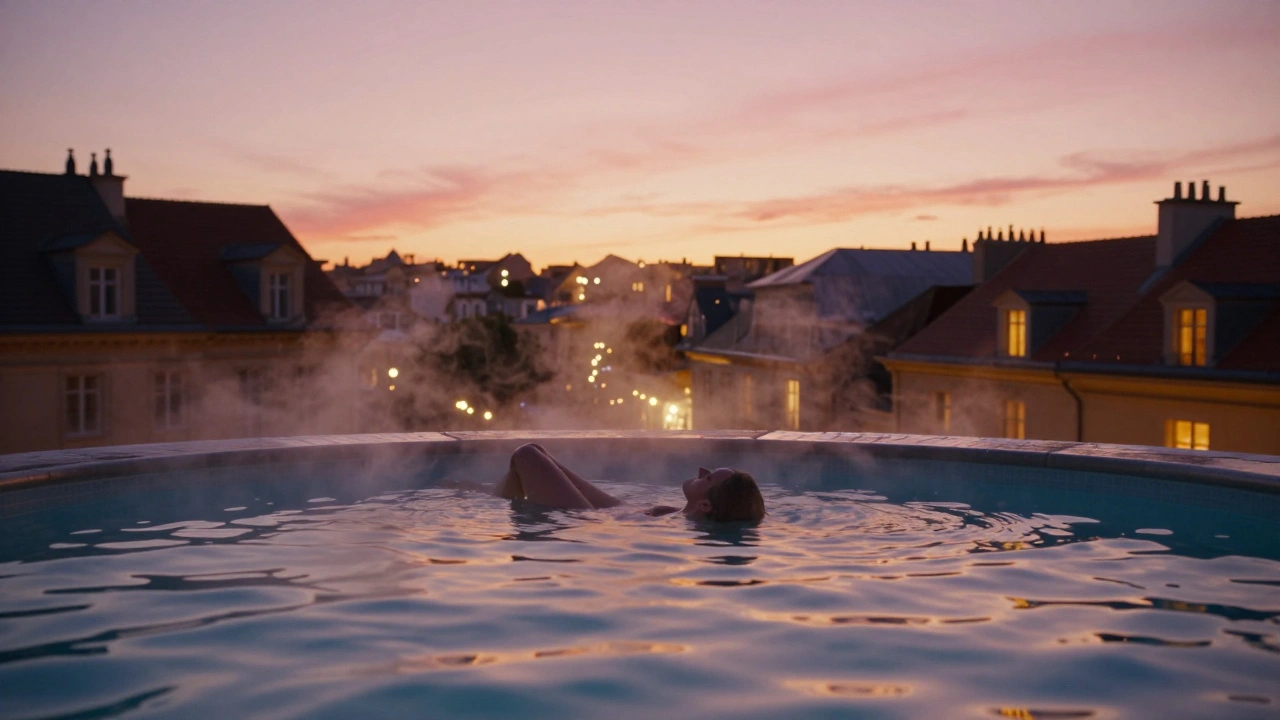
The spa has four pools: the open-air rooftop pool, the Minerva Bath, the Steam Room, and the Aqua Thermal Pool. The rooftop pool is the highlight. At sunset, you float in warm water while looking over the city’s rooftops and the hills beyond. The steam rises off the surface, mixing with the cool air. It’s quiet. No phones. No noise. Just you, the water, and the glow of the city lights.
The treatments go beyond soaking. Try the thermal mud wrap - made from mineral-rich clay from the spring. Or the hot stone massage, where heated basalt stones are placed along your spine. The staff know their stuff. They don’t push packages. They ask what you need. Tired? Sore? Stressed? They’ll match the treatment to your body, not your wallet.
Even if you don’t book a treatment, you can still use the changing rooms, the sauna, and the relaxation lounge. Bring a book. Sit by the window. Drink herbal tea. The whole place smells like lavender and eucalyptus. It’s the kind of calm you don’t find in city spas.
Where to Eat: From Pub Grub to Fine Dining
Bath doesn’t have chains. It has character. For lunch, head to The Pump Room - right next to the Roman Baths. It’s been serving tea and sandwiches since 1790. Order the Bath bun - a sweet, spiced pastry with currants and sugar topping. It’s local. It’s old. It’s delicious.
For something more casual, try The Ivy Bath Brasserie. The menu changes daily, but the roast duck with apple and red cabbage is always a winner. Or go to The Wild Garlic, a tiny restaurant tucked behind a bookshop. They source everything within 30 miles. The lamb comes from a farm just outside the city. The cheese is made by a woman who still uses a wooden press.
For dinner, book ahead at The Bath Priory. It’s a 17th-century manor with a Michelin star. The tasting menu is 10 courses, each paired with a local wine. It’s expensive, but worth it if you’re celebrating. If not, the pub down the street - The Bath Arms - serves the best fish and chips in the county. Crispy batter, flaky cod, mushy peas. No frills. Just perfect.
How to Make the Most of One Day
Start early. Arrive by 9:30 AM. The Roman Baths open at 9:00, and the crowds come after 11. Spend two hours there. Then walk to the Royal Crescent - it’s a 15-minute stroll. Take photos from the top of the hill. Walk down Gay Street. Stop for tea at the Assembly Rooms. Head to the Thermae Spa by 3:00 PM. Soak for an hour. Then wander the boutiques on Milsom Street. Buy a jar of Bath Chilli Jam or a bar of handmade lavender soap.
Stay for sunset. The light hits the stone buildings just right. Everything glows. You’ll understand why this place has drawn visitors for 2,000 years.
What to Bring
- Comfortable walking shoes - the cobbled streets are uneven.
- A light jacket - even in summer, the evenings get cool.
- A reusable water bottle - tap water in Bath is excellent.
- A small towel - if you’re going to the spa, you’ll need one.
- Cash - some small shops still don’t take cards.
Getting There
Bath is 90 minutes from London by train. From Manchester, it’s about 3 hours. Trains run every hour. Get off at Bath Spa station - it’s a 10-minute walk to the Roman Baths. Parking is expensive and limited. Take the train.
Can you swim in the Roman Baths?
No, you cannot swim in the Roman Baths. The water is too hot (46°C) and not treated for bathing. It’s preserved as a historical site. But you can swim in the modern Thermae Bath Spa, which uses the same natural spring water, just filtered and cooled to safe levels.
Is Bath worth a day trip from London?
Absolutely. A day trip from London is easy - trains leave every hour and take just over an hour and a half. You’ll have time to see the Roman Baths, walk the Georgian streets, have a proper lunch, and soak in the spa. It’s more immersive than a quick museum visit and feels like a real escape.
Do you need to book tickets in advance?
Yes, for the Roman Baths and Thermae Bath Spa. Both sell timed entry tickets, and they often sell out, especially on weekends. Book online at least a day ahead. The Assembly Rooms and Royal Crescent are free to walk around, but guided tours inside require booking.
Is Bath crowded in winter?
Less so than in summer, but the spa is actually more popular in winter. The contrast of warm water and cold air makes the experience magical. The streets are quieter, the pubs are cozier, and you’ll get better service. Just pack a warm coat - the stone buildings hold the chill.
Can you visit Bath without spending a lot of money?
Yes. You can walk the Georgian streets, admire the architecture, and visit the free exhibits at the Museum of Bath Architecture. The Pump Room offers tea for under £10. You can buy a Bath bun for £2.50. The spa is the big expense - but you can skip it and still have a full, rich day.