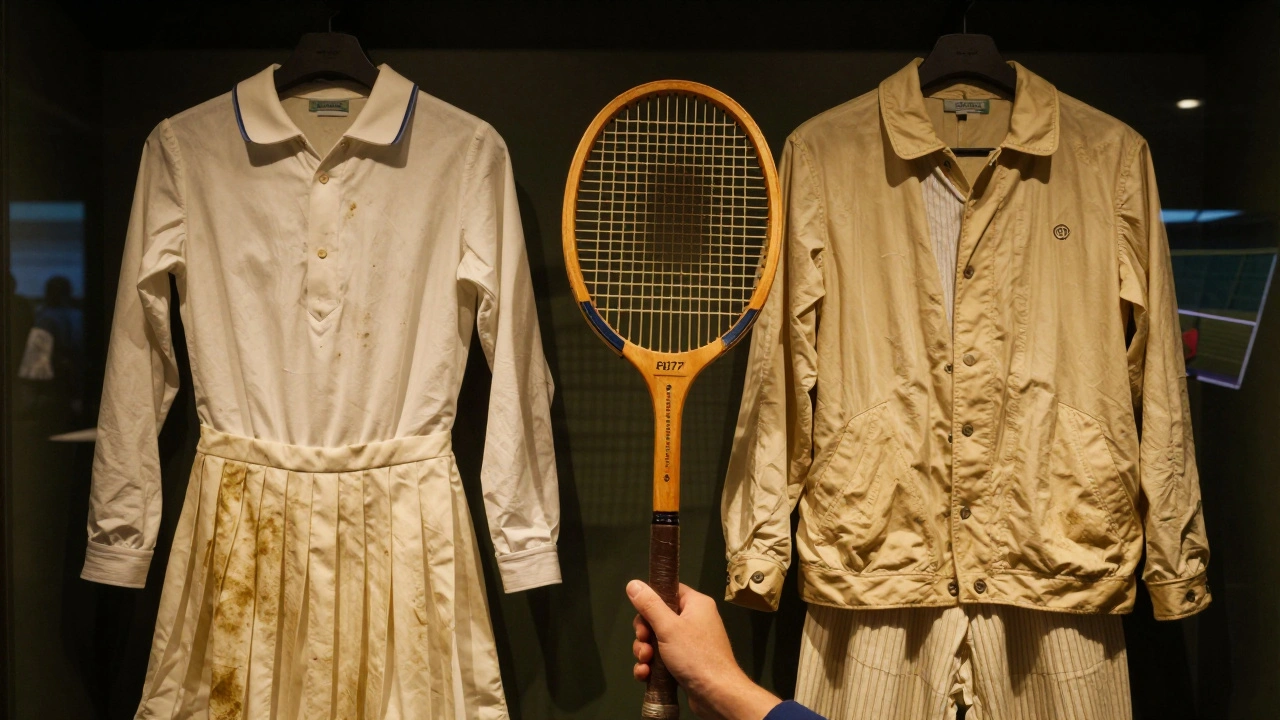
Most people know Wimbledon for the grass courts, the all-white outfits, and the strawberries and cream. But if you’ve ever walked past the quiet, tree-lined entrance on Church Road and wondered what’s inside, you’re not alone. The Wimbledon Lawn Tennis Museum isn’t just a collection of old rackets and dusty trophies. It’s the heartbeat of tennis history - a place where you can stand where legends stood, hold the same ball they served, and see the exact moment the game changed forever.
What’s Inside the Wimbledon Lawn Tennis Museum
The museum opened in 1977, right before the centenary of the Wimbledon Championships. It’s not big, but it’s packed. You walk through eight themed galleries that take you from 1877 to today. The first thing you see? The original 1877 rackets - made of wood, heavy as a brick, and barely big enough to hit the ball. Back then, players used them with a sidearm motion, almost like bowling. No one could have imagined how much the game would change.
One of the most striking exhibits is the 1980s collection of Björn Borg’s gear. His sweatbands, his wooden racquet with the oversized head, even the exact shade of his white shorts. You can press a button and hear his voice from a 1980 final, saying, “I didn’t think I could win again.” He won five straight titles. No one’s done that since. The museum doesn’t just show what he wore - it shows what he carried in his head.
The women’s gallery is just as powerful. Martina Navratilova’s 1984 dress, still stained with grass, sits beside the 1997 racquet Steffi Graf used to win her sixth title. The museum doesn’t shy away from the hard truths either. There’s a section on the 1973 boycott by women players demanding equal prize money. A single sign reads: “We didn’t ask for permission. We demanded it.” That fight led to equal pay in 2007. You can see the exact cheque from that first equal prize payout.
How the Tours Work
The museum tour lasts about 75 minutes and includes access to Centre Court and No. 1 Court - but only if they’re not in use. You don’t just look at them from outside. You walk onto the court. You stand in the exact spot where Andy Murray hit his winning serve in 2013. You sit in the royal box where the King sat during the 2012 final. You even get to hold a replica of the original Wimbledon trophy - the Challenge Cup - a 12-inch silver bowl that’s been passed down since 1887. It’s heavier than you think.
The tour starts with a short film in a dimly lit room. It’s not flashy. Just grainy footage of early matches, men in long trousers, women in full skirts. Then it cuts to 2024, when Carlos Alcaraz won his first title at 20. The contrast isn’t just about gear. It’s about speed. The average serve in 1900 was 75 mph. Today, it’s 145. The museum shows you how the game got faster, not just bigger.
There’s a touch screen you can use to compare your serve speed to the pros. Most people hit 80 mph. The record is 148 mph - set by John Isner in 2018. You’ll walk away realizing you’ve never really seen tennis. You’ve seen highlights. This is the real thing.
The Championships Through the Decades
The museum doesn’t just display objects. It tells stories. In 1936, Fred Perry won his third straight title. He was the last British man to do it. His plaque says: “He never lost a match on Centre Court.” You can see his shoes. They’re worn thin on the inside - he’d shift his weight hard to the left on every forehand. That’s why he won.
The 1980s brought a revolution. Borg, McEnroe, Connors. The museum has a video wall that plays their 1980 final on loop. You can hear the crowd. You can see McEnroe screaming at the umpire. The museum doesn’t edit it. It lets you feel the tension. That match changed tennis. It turned it from a quiet sport into a global spectacle.
Then there’s 2001. Venus Williams won her first title. She was the first Black woman to win since Althea Gibson in 1958. The museum has her winning outfit - a sleeveless black top with gold trim. It’s simple. No logos. Just power. The exhibit next to it shows Gibson’s 1957 trophy. The two are placed side by side. No caption needed.
2019 was the year the roof was fully used. Rain had canceled play for three days straight in 2018. In 2019, they played under it. The museum has a section on the roof’s engineering - how it took 15 years to build, how it weighs 3,000 tons, how it slides open in 10 minutes. You can watch the closing ceremony of the 2019 final from inside the roof, with rain still falling outside.
Why This Museum Matters
There are tennis museums in New York, Paris, Melbourne. But Wimbledon’s is different. It’s not about the sport. It’s about the people. The museum doesn’t just list winners. It shows the ones who didn’t win but changed the game.
There’s a corner dedicated to the linespeople. Not the umpires. The ones who called the lines. They used to stand in the sun, no shade, no breaks. In 1999, they got their first hats. In 2010, they got shade. The museum has a photo of the first linesperson to wear a hat. Her name was Maureen. She worked for 42 years.
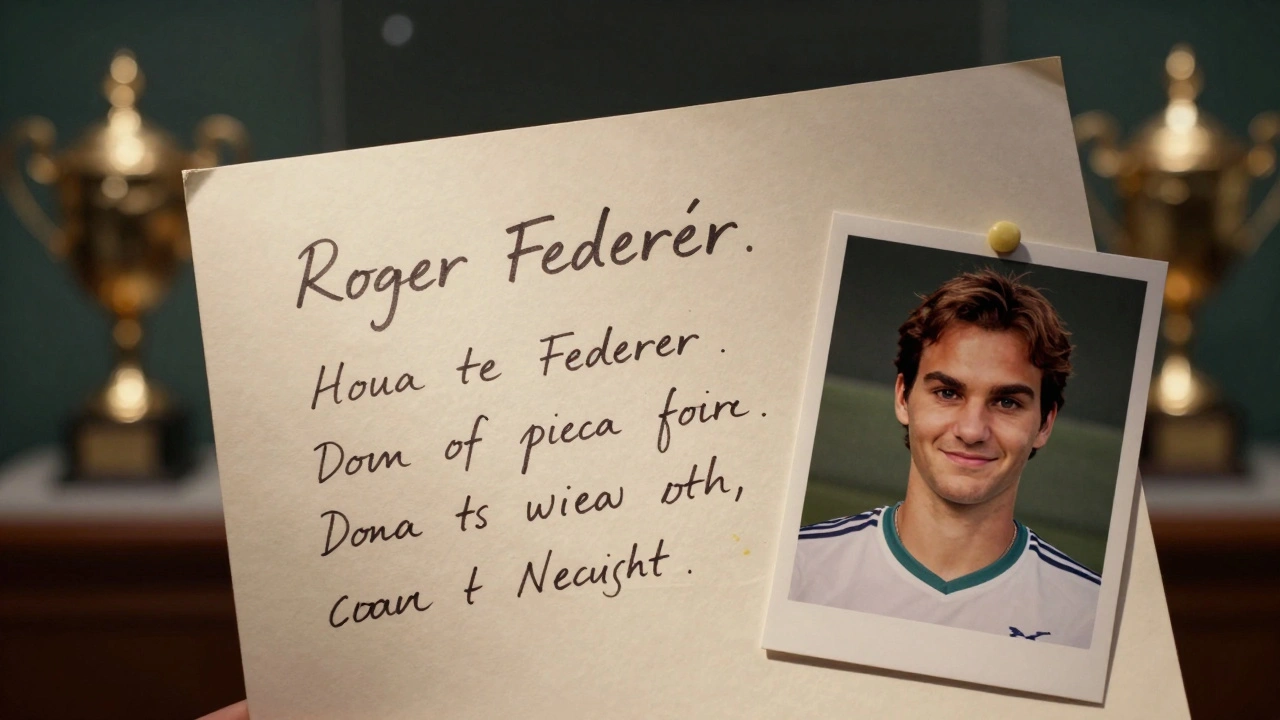
The museum also has a wall of player letters. Not press releases. Real letters. A handwritten note from Roger Federer to a young fan in 2004: “I still get nervous before every match. Keep playing.” A note from Serena Williams after her 2012 win: “I didn’t think I’d be here again. Thank you for believing.”
This isn’t a shrine. It’s a conversation. It’s not about trophies. It’s about the sweat, the doubt, the comeback, the quiet moments before the roar.
What to Do Before You Go
- Book tickets online. Walk-ins are rare. The museum sells out weeks ahead during tournament week.
- Go early. The tour starts at 9:30 AM. The crowds are lighter, and you get better access to the courts.
- Wear flat shoes. You’ll be walking on grass, concrete, and old wooden floors.
- Don’t skip the gift shop. It’s small, but they sell real replicas - the 1877 racket, the 1980 Borg sweatband, even the 1990s match balls.
- If you’re there during the tournament, stay for the evening session. The museum closes at 6 PM, but the courts light up after dark. You can watch the final from the stands without a ticket.
What Most Visitors Miss
Most people leave after the main tour. But there’s a hidden room - the “Archive Room.” It’s not part of the standard tour. You have to ask. Inside, you’ll find the original 1877 tournament rules, handwritten in ink. The first prize was 12 guineas. The winner had to pay for his own travel. There’s also a box of match balls from every final since 1902. You can touch them. Some are cracked. One from 1945 is stained with mud. The war was still on. They played anyway.
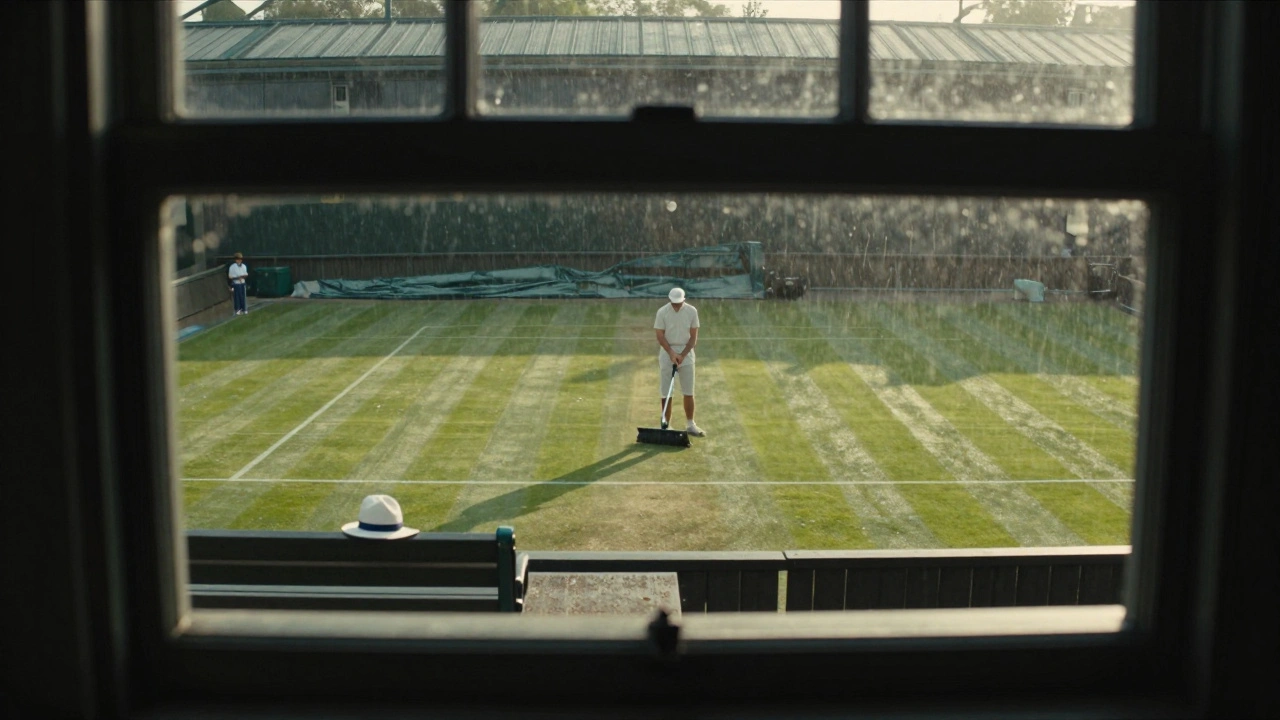
There’s a small window in the archive that looks out onto Centre Court. On quiet days, you can see a single groundskeeper raking the grass. He’s the only one who knows how to do it right. The museum doesn’t tell you his name. But if you watch long enough, you’ll see him pause, look up, and smile. He’s been doing it for 37 years.
Is the Wimbledon Lawn Tennis Museum open year-round?
Yes, the museum is open every day from March to October, with extended hours during The Championships (late June to early July). It closes briefly in November and December for maintenance. From January to February, it’s open only on weekends. Check the official website for exact dates before planning your visit.
Do I need a ticket to the tournament to visit the museum?
No. The museum has its own separate entrance and ticketing system. You don’t need a tournament ticket to visit. In fact, many people visit outside tournament week to avoid crowds. Tickets are cheaper then, too.
Can I walk on Centre Court during the tour?
Yes, but only if the court isn’t being used for practice or a match. The tour includes a walk onto Centre Court and No. 1 Court. You can stand in the center, hold a racket, and take photos. During tournament week, access is limited to certain times of day, so early tours are best.
Are there guided tours, or is it self-guided?
The museum offers a 75-minute guided tour only. There’s no self-guided option. The guides are former tournament staff, coaches, or historians. They know the stories behind every item. You’ll learn more than you would reading a plaque.
Is the museum suitable for children?
Yes. There are interactive touchscreens, a kids’ quiz game, and a mini-racket you can try swinging. The tour is engaging for ages 8 and up. Families often say the highlight is the serve-speed comparison - kids love trying to beat the pros.
Can I take photos inside?
Yes, photography is allowed throughout the museum, including on the courts. Flash is not permitted near delicate artifacts, and tripods are banned. Most visitors use phones or small cameras. The museum encourages sharing photos with #WimbledonMuseum.
How long does the tour take?
The guided tour lasts 75 minutes. Most visitors spend an extra 30 to 45 minutes exploring the gift shop, archive window, and interactive displays. Plan for at least two hours if you want to take it all in.
Is the museum wheelchair accessible?
Yes. The museum is fully wheelchair accessible with ramps, elevators, and accessible restrooms. Audio guides are available in multiple languages, and tactile exhibits are provided for visually impaired visitors. Staff are trained to assist with special needs.