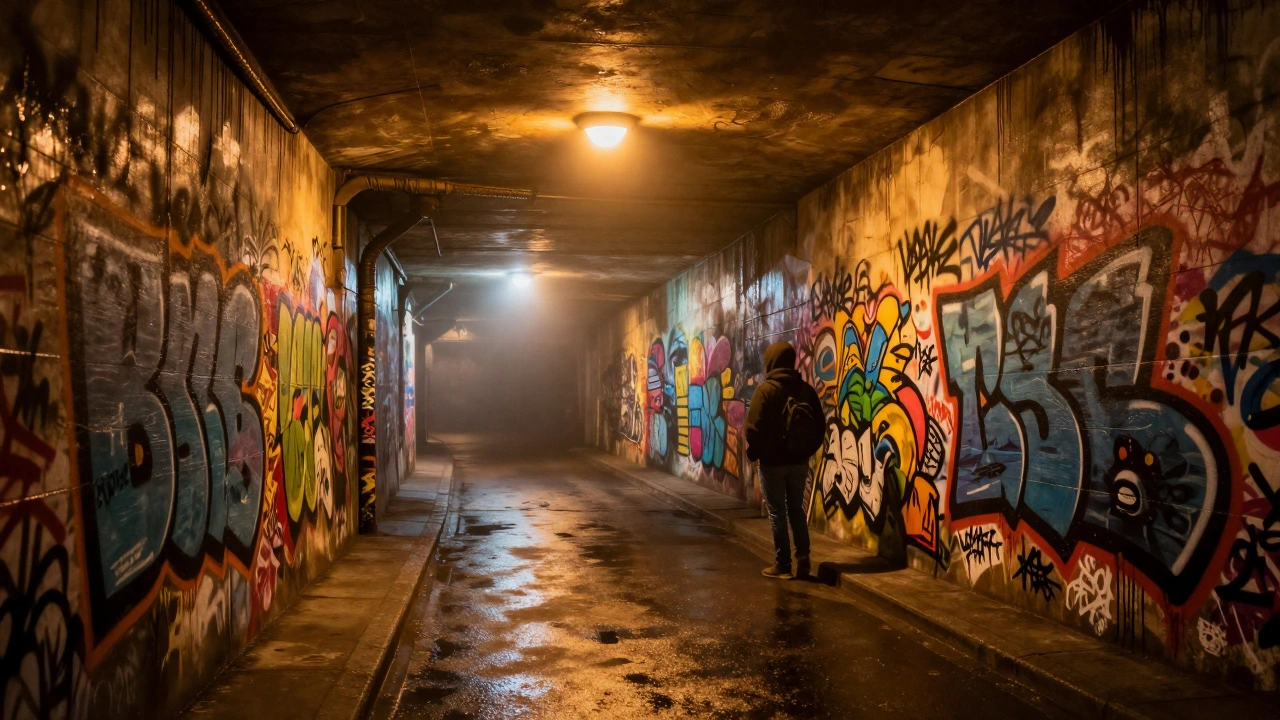
Walk through London’s backstreets after dark, and you’ll see it: bursts of color on brick walls, wild murals swallowed by alleyways, tags that glow under flickering streetlights. This isn’t vandalism. It’s a living, breathing art scene that’s been shaping the city’s soul for over 40 years. Most tourists snap photos of Big Ben or the London Eye. Few ever find the real heartbeat of the city - the graffiti that doesn’t ask for permission.
The Birth of London’s Graffiti Scene
London’s graffiti didn’t start with spray cans. It began with chalk and nail polish in the late 1970s, when kids from Brixton and Hackney started marking their names on trains and walls. By the 1980s, the city had its first wave of subway artists, inspired by New York’s subway art but twisted with British grit. Unlike New York, where graffiti was often about territory, London’s scene was more about expression - rebellion, identity, and noise in a quiet city.
By the 1990s, crews like Stuckist and London Bombing were turning derelict warehouses into open-air galleries. Banksy emerged in the early 2000s, not as a lone genius, but as one voice in a chorus. His work didn’t invent the scene - it just made the world notice it.
Where to Find the Real Stuff
You won’t find the best graffiti on tourist maps. The real pieces hide where the city forgets to look.
- Leake Street Tunnel - Under Waterloo Station, this is the only legal graffiti wall in central London. Artists come here to test new styles, and it changes daily. Some pieces are gone by morning.
- Camden Underworld - Behind the music venue, the alleyways are covered in layered tags, portraits, and political stencils. It’s a graveyard of art, where old pieces fade under new ones.
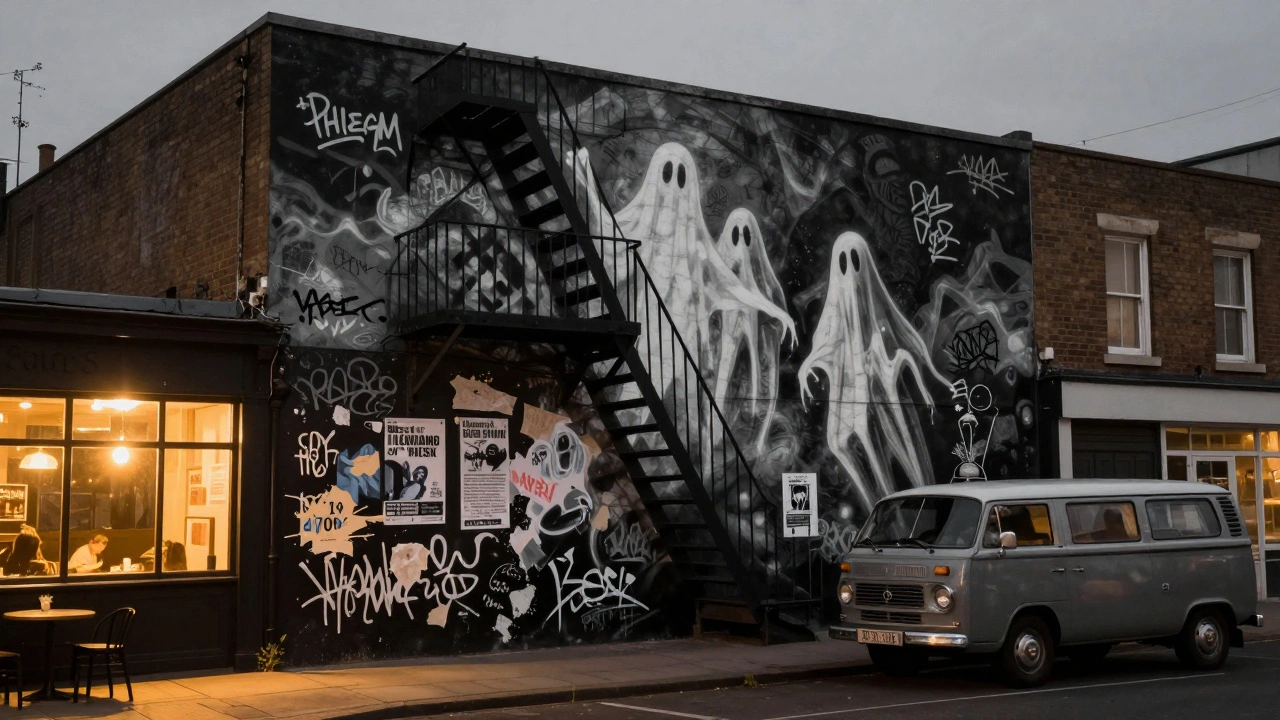
- Shoreditch’s Backstreets - Around Brick Lane, between the coffee shops and vintage stores, you’ll find murals that look like gallery pieces. But they’re not commissioned. They’re taken. One artist, known only as Phlegm, has painted over 30 walls here since 2010. His black-and-white figures stare out from fire escapes like ghosts of the city.
- Peckham Rye - This south London spot has become a hotspot for international artists. A 2023 mural by Brazilian artist Os Gêmeos still draws crowds, even though it was painted without a permit.
Some spots are safe to visit. Others? Not so much. The area near the old railway arches in Bermondsey is still controlled by local crews. You don’t just walk in. You watch. You wait. You don’t take photos unless you’re invited.
Who Are the Artists?
Most graffiti artists in London don’t have Instagram accounts. Many don’t even use their real names. But their work is everywhere.
Stik - His stick-figure people are simple, but they carry weight. You’ll find them on bridges, underpasses, and the sides of council flats. They look like they’re holding hands with the city. His piece in Whitechapel, painted in 2012, was protected by locals after developers tried to paint over it. The community fought. They won.
Ben Eine - He went from tagging alleyways to painting entire storefronts. His bold, colorful lettering is now on walls from Shoreditch to Notting Hill. He once told a reporter: “I didn’t want to be famous. I just wanted the wall to look better.”
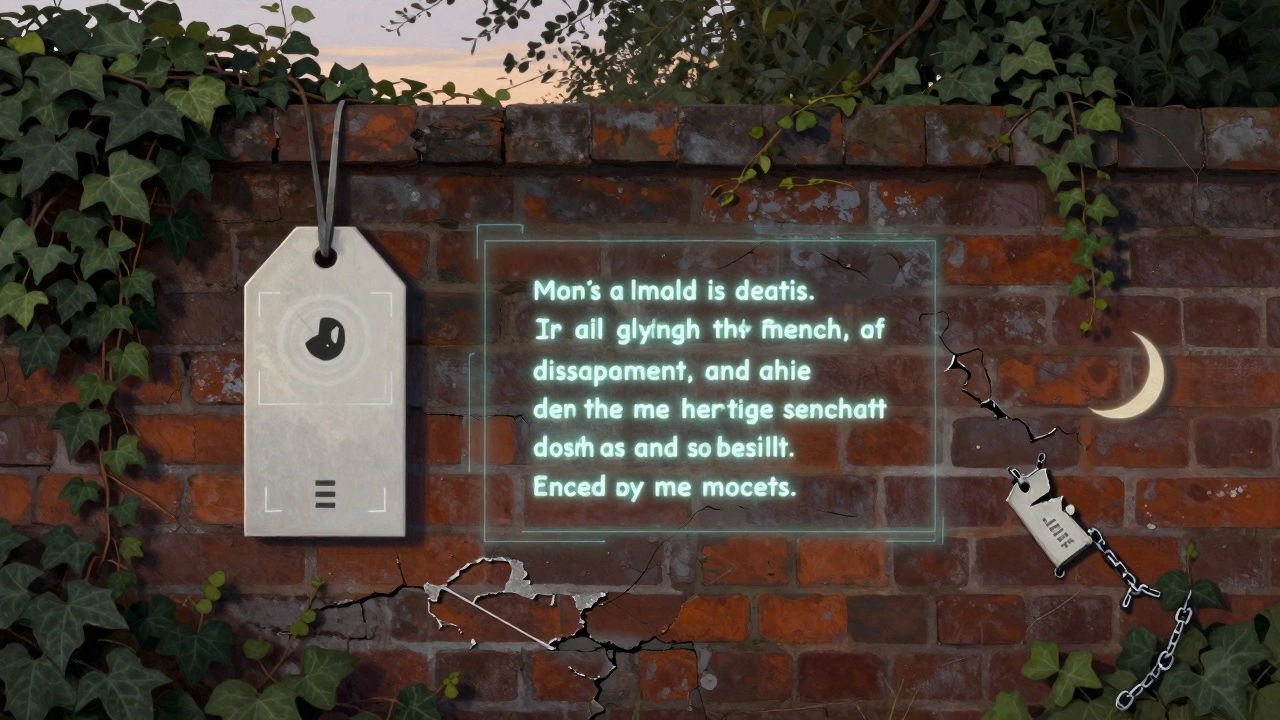
Rebel Crew - A collective of six artists who work only at night. They don’t sign their pieces. They leave symbols - a crescent moon, a broken chain. No one knows who they are. But everyone knows their work. A 2021 piece in Dalston, a giant hand holding a rose, became an unofficial memorial after a local teenager died. People left flowers under it for months.
These aren’t rebels with nothing to lose. Many have day jobs - teachers, mechanics, baristas. Some are in their 50s. One artist, known as Wiz, has been painting since 1985. He’s still out there, every weekend, with a can and a hood up.
The Legal Gray Zone
London’s approach to graffiti is messy. The city cleans up fast - over 12,000 square meters of graffiti were removed in 2024 alone. But it also quietly tolerates certain areas. Leake Street is the exception, not the rule.
There’s no official list of legal walls. No permits. No application process. Artists learn the rules through word of mouth: don’t tag on historic buildings, don’t cover someone else’s work without asking, don’t paint near schools. Break those rules, and you’re not just risking arrest - you’re risking respect.
Some councils have started commissioning murals to “clean up” areas. But it doesn’t always work. A 2023 project in Tower Hamlets paid artists to paint over old tags. The result? A bland, corporate-looking mural that locals ignored. The real art kept coming back - in alleys, on fences, under bridges.
Why It Matters
Graffiti isn’t just paint on walls. It’s a record of who the city forgets.
In 2020, during lockdown, artists across London painted messages of solidarity - “We’re Still Here,” “No One Is Forgotten.” These weren’t political slogans. They were lifelines. People stopped to read them. Some cried. Others took photos and shared them. The city didn’t clean them up for weeks.
Studies from King’s College London show that neighborhoods with active street art have lower rates of vandalism. Why? Because when people see art, they feel seen. Graffiti turns blank walls into conversations. It turns forgotten corners into landmarks.
And it’s changing. More artists are using augmented reality. One piece in Peckham, painted in 2025, only shows its full message through a phone app. The wall looks like a simple tag. But when you scan it, a voice tells the story of a woman who lost her home to gentrification. It’s art that doesn’t just sit there - it speaks.
The Future of London’s Graffiti
The old-school crews are aging. The new generation is digital. But the spirit hasn’t changed.
Teenagers in Croydon are using AI tools to design stencils. College students in Camden are organizing “paint nights” to teach beginners how to spray without damaging property. Even some police officers admit - if you have to choose between a tagged wall and a broken window, they’d rather have the art.
The real threat isn’t the council. It’s gentrification. As areas like Shoreditch and Dalston get cleaned up, the artists are pushed out. The murals get replaced with branded cafes. The alleyways get turned into “creative hubs.” The art doesn’t disappear - it just moves. Deeper. Darker. Harder to find.
That’s the truth about London’s graffiti: it’s not dying. It’s hiding.
And if you know where to look, you’ll still find it.
Is graffiti legal in London?
Most graffiti is illegal in London unless it’s on a designated wall like Leake Street Tunnel. Painting on private or public property without permission is considered criminal damage. But enforcement varies - some areas are cleaned daily, while others are ignored for months. Local crews often have unwritten rules about what’s off-limits, like churches, schools, and historic buildings.
Where can I see authentic street art in London?
The best spots are Leake Street Tunnel, the alleyways behind Brick Lane in Shoreditch, Peckham Rye, and the railway arches in Bermondsey. Camden Underworld and Dalston also have strong scenes. Avoid tourist traps like the “Banksy Wall” in East London - most of those are reproductions or commissioned pieces. Real graffiti is messy, layered, and constantly changing.
Who are the most famous London graffiti artists?
Banksy is the most known, but he’s just one voice. Stik, Ben Eine, Phlegm, and Rebel Crew are deeply respected in the local scene. Many artists avoid fame - they don’t use real names, and some refuse interviews. Their art speaks louder than their identities.
Is street art good for neighborhoods?
Yes, in most cases. Studies from King’s College London show areas with active street art have lower vandalism rates and higher community pride. Murals give people a sense of ownership. When locals see art that reflects their lives, they protect it. But when councils hire artists to paint over raw graffiti with sanitized murals, it often backfires - the community sees it as erasure, not improvement.
Can I take photos of graffiti in London?
You can photograph most public graffiti, but be respectful. Don’t block entrances, climb walls, or touch the art. In some areas - especially near Bermondsey or Peckham - locals watch closely. If someone asks you to stop, do it. Some artists consider photography a form of theft. Others don’t mind. When in doubt, ask quietly. Most will say yes - if you show respect.