Urban Art Styles in London: Street Murals, Graffiti, and Public Expression
When you walk through London’s streets, you’re not just seeing buildings and traffic—you’re seeing urban art styles, a living, evolving form of public expression that turns walls into stories and alleyways into galleries. Also known as street art, it’s not just decoration—it’s protest, identity, memory, and beauty all rolled into one. Unlike traditional art locked behind museum glass, this stuff lives where people actually walk, ride buses, or wait for the tube. It’s messy, bold, and often temporary, but that’s what makes it powerful.
London’s street art, a broad category including murals, stencils, wheatpastes, and graffiti. Also known as public art, it’s deeply tied to the city’s neighborhoods—each area has its own flavor. In Peckham, you’ll find large-scale murals celebrating Caribbean heritage. In Shoreditch, it’s abstract spray-painted chaos mixed with political slogans. In Whitechapel, murals honor migration stories. These aren’t random tags—they’re intentional acts, often commissioned by locals or community groups. The London Mural Festival, a major annual event that brings together artists from across the UK and beyond to create large public works. Also known as public art initiative, it’s one of the biggest drivers of this movement. You won’t find it in guidebooks—you find it by turning a corner and stopping dead in your tracks.
What makes urban art styles in London different from other cities? It’s the mix. You’ve got trained fine artists working alongside self-taught kids with spray cans. You’ve got corporate sponsors funding murals next to illegal pieces tagged overnight. You’ve got history—Banksy started here, but now hundreds of unknown artists are shaping the scene just as much. The city doesn’t just tolerate this art; it often celebrates it. Councils hire artists to paint over vandalism with meaningful murals. Schools bring kids out to help paint. Even the Tube has commissioned pieces. This isn’t vandalism—it’s a dialogue.
If you’re curious about where to look, start with the East End. Follow the trail from Hackney to Brixton. Notice how some murals are faded, others brand new. Some tell stories of loss, others of joy. The art changes with the seasons, the politics, the mood of the neighborhood. It’s not static. It’s alive. And that’s why it matters. You don’t need a ticket. You don’t need a reservation. You just need to walk around with your eyes open.
Below, you’ll find real stories from the people making this art happen—the festivals, the artists, the neighborhoods, and the hidden corners where London’s most powerful messages are painted in bold colors. Whether you’re here for the visuals, the culture, or the raw emotion behind the brushstrokes, this collection shows you how urban art styles aren’t just seen—they’re felt.
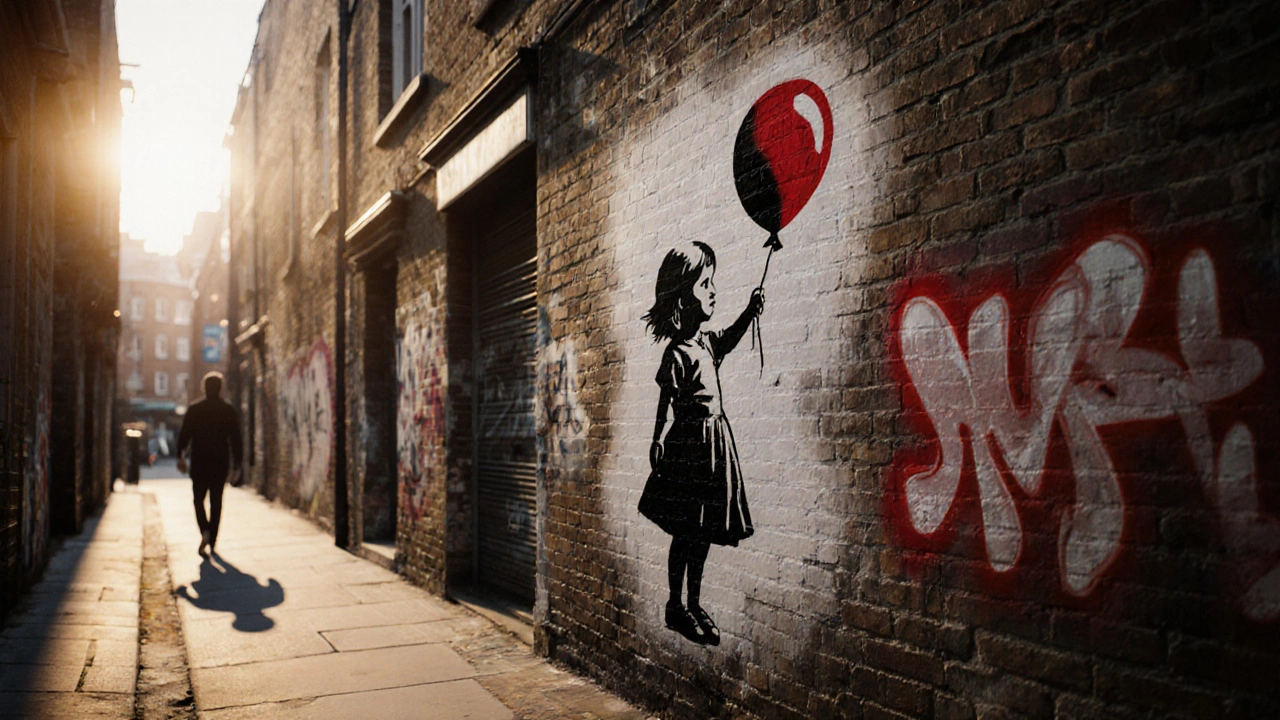
Stencil vs Freehand: Street Art Styles to Spot in London
Discover how stencil and freehand street art differ in London, where to spot each style, and what makes them powerful. Learn to tell them apart and understand the artists behind the walls.
READ MORE