St James’s Park lake: London’s Royal Pond with Pelicans, Views, and History
At the heart of London, St James’s Park lake, a serene, man-made pond in London’s oldest royal park, fed by natural springs and shaped by centuries of royal design. Also known as the St James’s Park pond, it’s not just water—it’s a living piece of London’s history, watched over by pelicans, framed by Buckingham Palace, and loved by locals who come to sit, stroll, or just breathe. This isn’t a tourist photo op you rush through. It’s a place where time slows down, where the rhythm of the city fades into the rustle of reeds and the occasional splash of a duck.
The lake is part of St James’s Park, London’s first royal park, established in the 1500s as a hunting ground and later transformed into a landscaped garden by Charles II and George IV. Also known as the Royal Park, it connects Buckingham Palace to the Houses of Parliament, acting as a green corridor through the city’s political and royal core. Around the lake, you’ll find paths worn smooth by generations of walkers, benches where people read or nap, and bridges that offer the best views of the pelicans—those iconic, slightly dramatic birds that have lived here since the 1660s. The pelicans aren’t just for show; they’re part of a centuries-old tradition, fed daily by park staff, and watched by crowds who return year after year.
What makes this spot different from other London green spaces? It’s the mix of grandeur and calm. You’re surrounded by power—Buckingham Palace looms to the west, the Foreign Office to the east—but the lake keeps it quiet. You won’t find food trucks or loud music here. Instead, you’ll see couples feeding bread to swans, photographers waiting for the perfect light on the palace, and old men tossing crumbs with the same routine they’ve had since the 1980s. It’s the kind of place that doesn’t need hype. It just is.
And then there’s the wildlife. Beyond the pelicans, the lake supports a quiet ecosystem: coots, moorhens, Canada geese, and even the occasional kingfisher. In winter, the water freezes just enough for kids to skate on the edges. In spring, the flowers along the paths explode in color—tulips, daffodils, and rhododendrons planted by the Royal Parks team every year. The lake isn’t just a body of water; it’s a seasonal canvas.
People come here to escape the noise, but they stay because of the details—the way the light hits the water at sunset, the sound of the pelicans squabbling over bread, the fact that you can sit on a bench and still hear the distant hum of traffic, but it doesn’t feel like it belongs here. This is London’s quiet secret, tucked between government buildings and royal residences, open to everyone, free to visit, and unchanged in spirit for over 400 years.
Below, you’ll find stories that connect to this place—how it shaped nearby neighborhoods, how it’s featured in London’s cultural life, and why it remains one of the most peaceful spots in a city that rarely stops moving. Whether you’ve walked its paths a hundred times or are seeing it for the first time, there’s always something new to notice here.
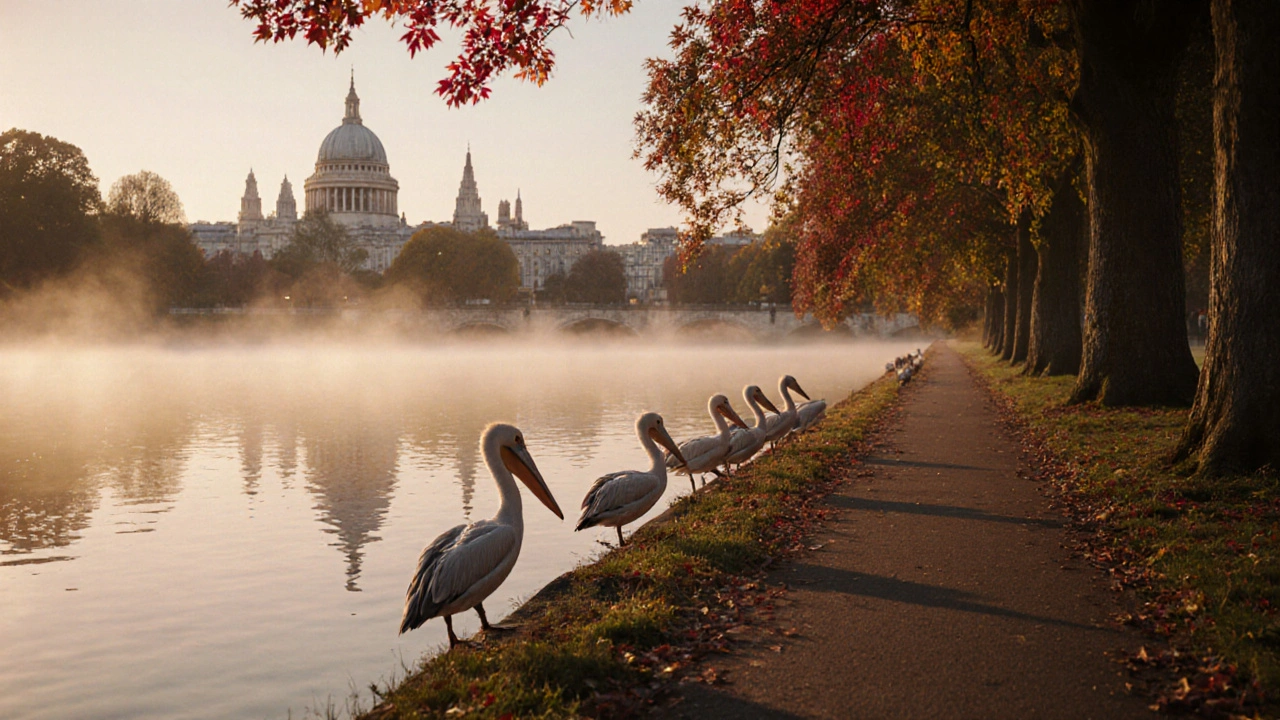
St James’s Park: Royal Park and Lake Views in the Heart of London
St James’s Park is London’s oldest royal park, famous for its tranquil lake, resident pelicans, and views of Buckingham Palace and Big Ben. A peaceful escape in the heart of the city, it’s a living space shaped by centuries of care.
READ MORE