Modern Skyscrapers London: The City’s Bold New Skyline
When you think of modern skyscrapers London, tall, innovative buildings that redefine urban space in the capital. Also known as contemporary high-rises, these structures aren’t just about height—they’re about function, design, and how a 21st-century city grows upward without losing its soul. London’s skyline has changed faster in the last 20 years than in the previous 200. It’s not just the Shard, the 310-meter glass spire designed by Renzo Piano that dominates the Southwark skyline—it’s the cluster of sleek towers around Canary Wharf, a former dockland turned global finance hub with towers like One Canada Square and 25 Bank Street. These aren’t random additions. They’re answers to demand: space for tech firms, luxury apartments, and global businesses that need to be in the heart of Europe’s most connected city.
What makes these buildings stand out isn’t just their size. It’s how they blend old and new. The Shard leans into its context—its glass facets reflect the Thames and the Tower of London, making it feel part of the city’s story, not an outsider. The Gherkin, or 30 St Mary Axe, uses its curved shape to cut wind resistance and reduce energy use. Even the Walkie Talkie, despite its early controversy, was redesigned to fix its infamous sunbeam problem. These aren’t just office blocks. They’re engineered responses to weather, traffic, light, and public space. And they’re not just for business. Many now include rooftop gardens, public viewing decks, and even art installations. The London skyline, the visual profile of the city’s tallest buildings seen from key vantage points has become a living museum of architectural evolution.
You don’t need to be an architect to appreciate them. Walk along the Thames Path from Tower Bridge to London Bridge and you’ll see the shift—from historic brick warehouses to glass giants. Take the DLR to Canary Wharf and notice how the towers frame the sky differently at sunrise versus sunset. Or hop on the Emirates Air Line cable car and see them all at once: the Shard, the Walkie Talkie, the Cheesegrater, the Scalpel. Each one has a name, a story, and a purpose. And behind every one of them are engineers, urban planners, and developers who had to fight for permission, adjust for heritage, and balance profit with public good. This isn’t just construction. It’s negotiation. It’s compromise. It’s the city deciding, brick by glass brick, what it wants to be.
What follows are posts that dig into the real impact of these towers—how they’ve changed where people live, work, and relax. You’ll find guides on the best views, the architects behind them, how they affect local communities, and even which ones have hidden public spaces you can walk through for free. No fluff. Just the facts, the places, and the people who made London’s skyline what it is today.
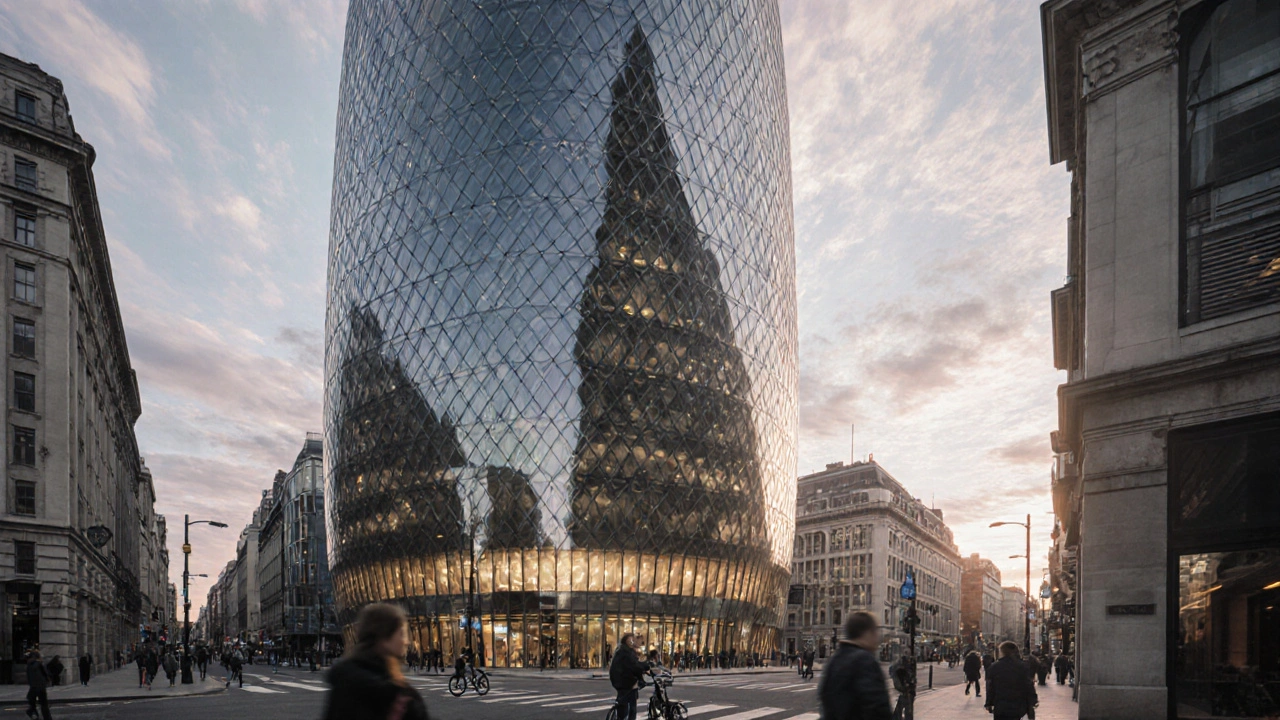
City of London Architecture: Best Modern Skyscrapers for Instagram Photos
Discover the best modern skyscrapers in the City of London for Instagram photos, including the Gherkin, Walkie Talkie, and Cheesegrater. Learn when to go, where to stand, and how to capture stunning reflections.
READ MORE