Freehand Graffiti in London: Street Art, Culture, and Public Expression
When you see freehand graffiti, hand-drawn, unstructured street art created without stencils or templates, often as a direct expression of identity or protest. Also known as wildstyle writing, it’s the heartbeat of urban creativity in London—unpolished, unpredictable, and deeply personal. Unlike corporate murals or commissioned pieces, freehand graffiti doesn’t ask for permission. It takes space. And in London, that space is everywhere—from the alleyways of Shoreditch to the underpasses of Peckham, from the rail yards of Brixton to the bridges over the Thames.
This isn’t vandalism to everyone. It’s a language. street art London, the broader movement that includes murals, stencils, wheatpastes, and freehand tags. Also known as urban art, it’s shaped by the same energy that fuels London’s music, fashion, and protest scenes. Many of the artists behind freehand graffiti started with a marker and a wall, then moved to spray cans, then to entire buildings. Some never stopped. Others got picked up by galleries. But the ones who stay true to freehand? They’re the ones who still climb fences at 3 a.m. to leave something real before the city wakes up.
London’s freehand scene isn’t just about style—it’s about history. The city has been a global hub for graffiti since the 1980s, when New York’s subway art crossed the Atlantic and mixed with British punk, reggae, and hip-hop. Today, you’ll see the same raw energy in the looping letters of a Hackney tag as you do in the political murals of Camden. London murals, large-scale, often collaborative public artworks that sometimes grow out of freehand roots. Also known as public art, they’re the visible legacy of the underground—turned into city-sanctioned landmarks, but still carrying the soul of the original writer. You’ll find them on the sides of tube stations, in community centers, even on the sides of new luxury condos. The city doesn’t always approve, but it can’t ignore them.
What makes freehand graffiti in London different from other cities? It’s the mix. The speed. The diversity. A single wall might hold a teenager’s first tag, a veteran’s intricate piece, and a protest slogan all in one. It’s not about perfection—it’s about presence. And if you walk through the right neighborhoods, you’ll see how it changes with the seasons, with the news, with the mood of the block.
There’s no official map. No museum. Just alleyways, train yards, and forgotten corners where the art lives. And that’s the point. The best freehand graffiti isn’t meant to be Instagrammed—it’s meant to be stumbled upon. You don’t go looking for it. It finds you.
Below, you’ll find stories from the people who make it, the places where it thrives, and the moments when it turned from rebellion into legacy. From the hidden writers who never sign their names to the artists who turned their tags into global recognition—this is London’s street art, raw and real.
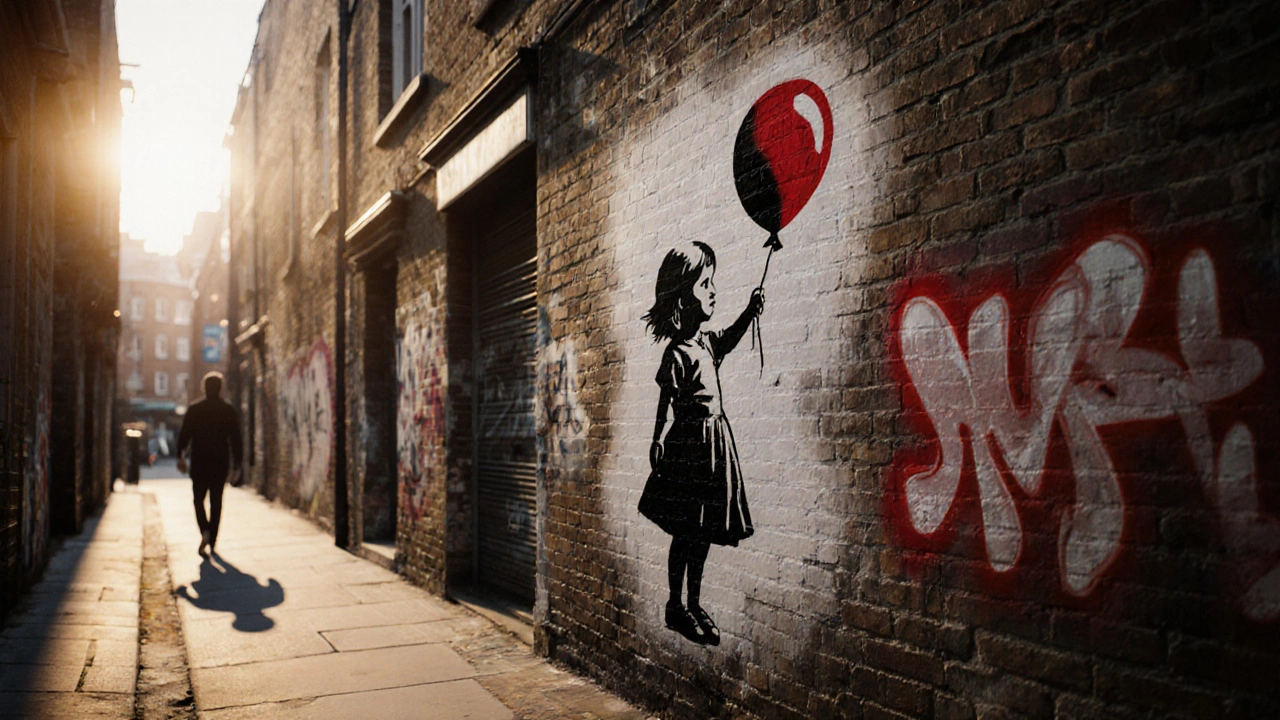
Stencil vs Freehand: Street Art Styles to Spot in London
Discover how stencil and freehand street art differ in London, where to spot each style, and what makes them powerful. Learn to tell them apart and understand the artists behind the walls.
READ MORE