Court Dress: What It Is, Why It Matters, and Where to See It in London
When you think of court dress, the formal, historically rooted attire worn by judges, barristers, and legal officials in British courts. Also known as legal robes, it’s not just uniform—it’s a living tradition that ties modern law to centuries of English justice. You might picture powdered wigs and black gowns, but court dress is more than ceremony. It’s about authority, continuity, and identity. And in London, where law and theatre have always walked side by side, you’ll find this style echoing far beyond the courtroom.
Court dress overlaps with theatre costume design, the art of creating garments that convey character, status, and era on stage. Also known as stage attire, it’s where history meets performance. Look at the exhibitions at the V&A or the National Theatre—many of the elaborate gowns and powdered wigs you see were directly inspired by or borrowed from actual court dress. The same cut of a barrister’s robe appears in Shakespearean dramas. The same velvet trim that signals rank in Westminster shows up in a Victorian-era opera. These aren’t coincidences. They’re cultural echoes. The legal system borrowed its visual language from aristocracy, and theatre borrowed it back to tell stories of power.
Then there’s formal attire, the broader category of clothing worn in official, ceremonial, or high-status settings. Also known as ceremonial dress, it’s the umbrella under which court dress, military uniforms, and royal regalia all sit. In London, formal attire isn’t just for courts or coronations. It’s in the way people dress for state openings, award ceremonies, and even high-end weddings. The same principles—fabric weight, tailoring precision, symbolic color—apply everywhere. That’s why you’ll see modern designers in London’s sustainable fashion scene reworking traditional court elements into contemporary pieces: reclaimed wool, hand-stitched lace, muted dyes. It’s heritage with a conscience.
And if you’re wondering where to actually see this stuff up close? London’s got you covered. The V&A has entire rooms dedicated to historical legal garments. The Royal Courts of Justice still wear them daily (though some parts are being phased out). And if you’ve been to a West End play lately, chances are you’ve seen a costume designer’s nod to court dress—whether it’s a judge’s robe in a courtroom drama or a noble’s velvet coat in a period piece.
This isn’t about nostalgia. It’s about understanding how clothing carries meaning. Court dress tells you who’s in charge, who’s been trusted, who’s been trained. It’s visual law. And in a city where history is worn on the sleeve, you can’t talk about style without talking about power.
Below, you’ll find real stories from London’s hidden corners—where court dress lives today: in museum archives, on stage, in designer studios, and even in the quiet corners of old courtrooms. No fluff. Just the clothes, the people who wear them, and why they still matter.
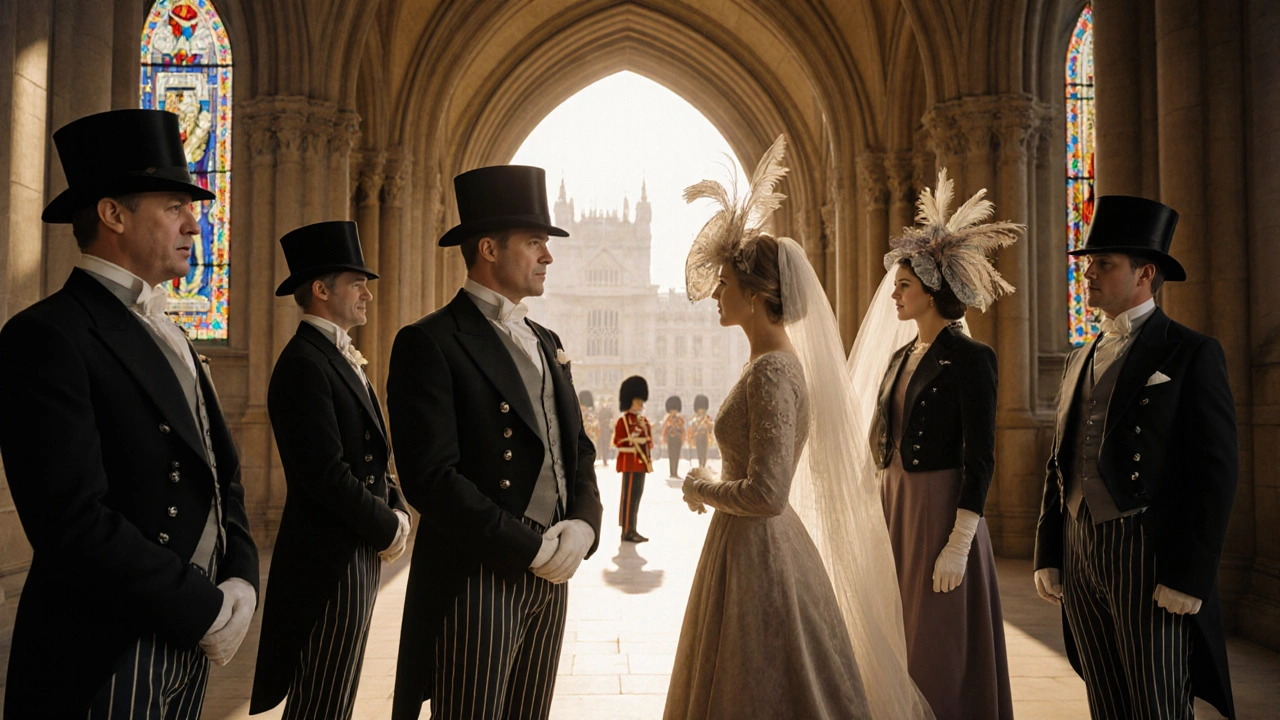
British Ceremonial Dress Codes: Hats, Tails, and Tiaras Explained
British ceremonial dress codes include morning dress, evening dress, and court dress - each with strict rules on hats, tails, and tiaras. These aren't fashion choices but constitutional traditions still followed today.
READ MORE