City of London Architecture: Historic Landmarks, Modern Skyscrapers, and Hidden Gems
When you walk through the City of London architecture, the unique blend of medieval stone, Victorian brick, and cutting-edge glass that defines London’s financial heart. Also known as the Square Mile, it’s not just a business district—it’s a living museum where every alley holds a story and every tower tells a new one. This isn’t just about pretty buildings. It’s about layers. The Romans built the first walls here. The Normans raised cathedrals. The Great Fire of 1666 wiped out most of it—only to be rebuilt with grit and ambition. Then came the Blitz. And then, in the 21st century, glass giants like The Gherkin and the Walkie Talkie rose up, not to erase the past, but to sit beside it.
What makes this place different from other parts of London? It’s the tension. You can stand in front of St Paul’s Cathedral, built in 1710, and turn around to see the Leadenhall Building, with its diagonal steel frame designed to let sunlight pour through the streets below. That’s not an accident. Architects and planners here have spent decades figuring out how to respect history without freezing it in time. The London skyline, the ever-changing profile of buildings that define the city’s visual identity from every angle isn’t just about height—it’s about balance. You’ll find 17th-century churches with twisted spires next to 21st-century towers with curved glass. The historic buildings, structures preserved for their cultural, engineering, or artistic significance in the City aren’t museum pieces. They’re offices, cafes, and homes. The Bank of England’s vaults still hold gold. The Guildhall still hosts ceremonies. And the Tower of London? Still standing, still drawing crowds, still whispering about kings and traitors.
And then there are the quiet corners. The alley behind Cornhill where a 1,000-year-old stone arch still supports a modern shop. The hidden courtyard near Fenchurch Street where a Roman altar was found during a subway dig. The way sunlight hits the curved glass of 20 Fenchurch Street at sunset, casting a warm glow over the old brick warehouses below. These aren’t tourist traps. They’re the real texture of the place. People who work here know where to find them. Visitors who only stick to the main roads miss the soul of the City.
What you’ll find in the posts below isn’t just a list of buildings. It’s a tour through time. You’ll see how Open House London lets you walk inside places you never knew existed. You’ll learn why some architects fight to keep a 19th-century facade while building a 40-story tower behind it. You’ll discover how the same streets that once carried horse-drawn carriages now echo with the footsteps of traders, tourists, and tech workers—all under the same sky. This isn’t just about style. It’s about survival. Adaptation. Memory. And if you pay attention, you’ll start to see how every brick, beam, and glass panel here is a quiet answer to one question: How do you build a future without forgetting where you came from?
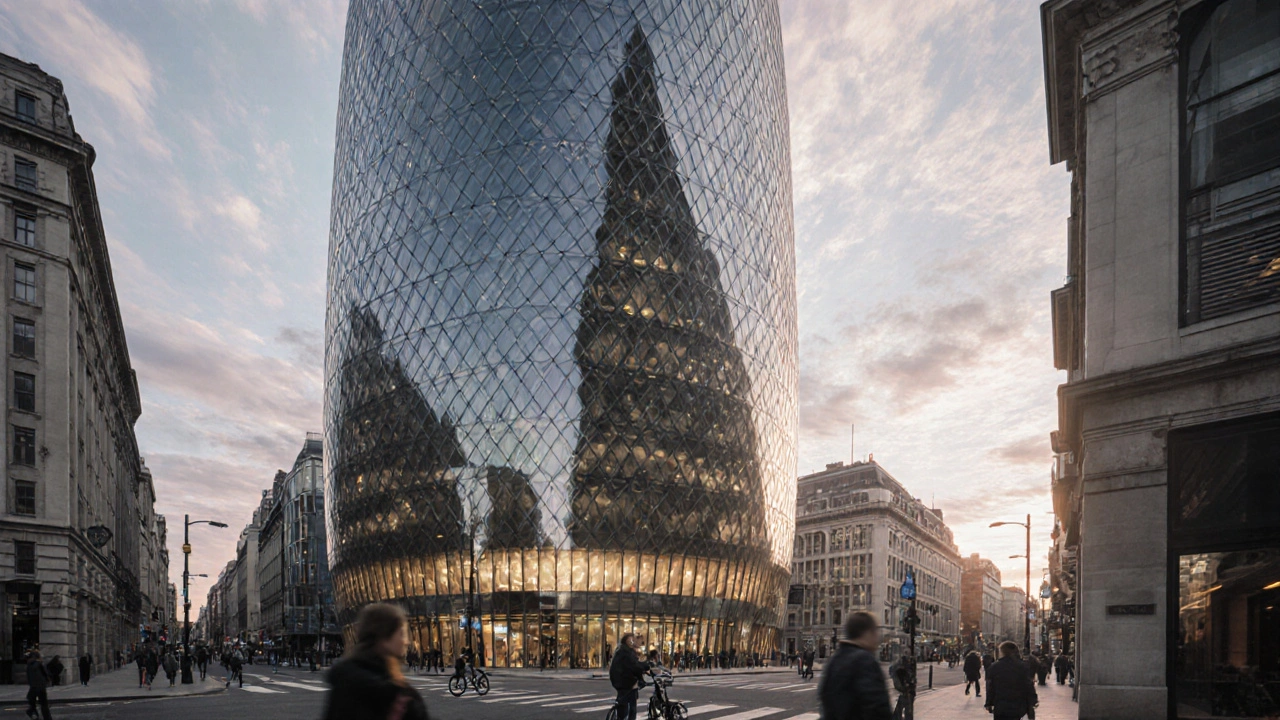
City of London Architecture: Best Modern Skyscrapers for Instagram Photos
Discover the best modern skyscrapers in the City of London for Instagram photos, including the Gherkin, Walkie Talkie, and Cheesegrater. Learn when to go, where to stand, and how to capture stunning reflections.
READ MORE