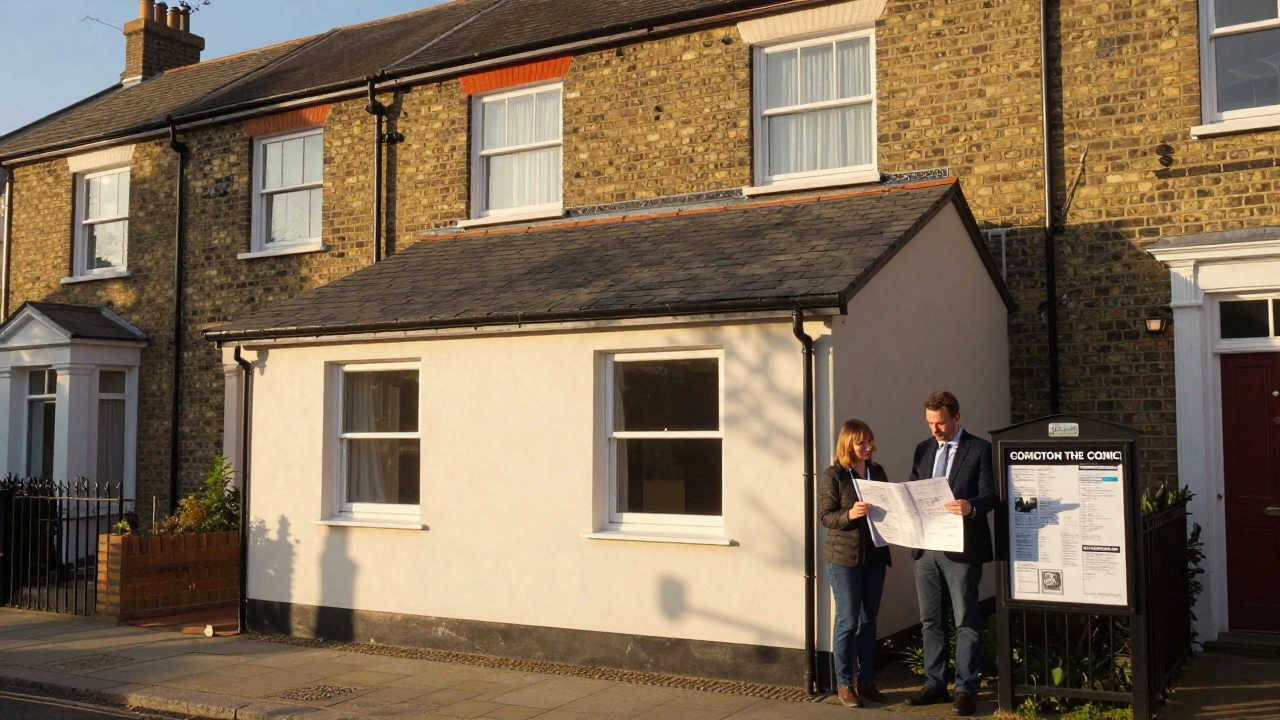
Renovating a home in London isn’t just about picking paint colors or swapping out kitchen cabinets. It’s a legal, financial, and logistical puzzle that can make or break your budget and timeline. If you’re thinking of upgrading your London property, you need to know what’s allowed, what’s not, and how much it’ll actually cost - not what the Instagram influencers say.
What You Can and Can’t Do Without Planning Permission
Not every renovation needs planning permission. The UK’s permitted development rights let you do certain works without applying, but London has tighter rules than the rest of England. For example, you can usually extend your home by up to 6 meters (for terraced houses) or 8 meters (for detached) without permission - but only if the extension doesn’t go beyond the rear wall by more than half the original width. And you can’t put a two-story extension on the side of your house in most London boroughs unless it’s set back at least 2 meters from the boundary.
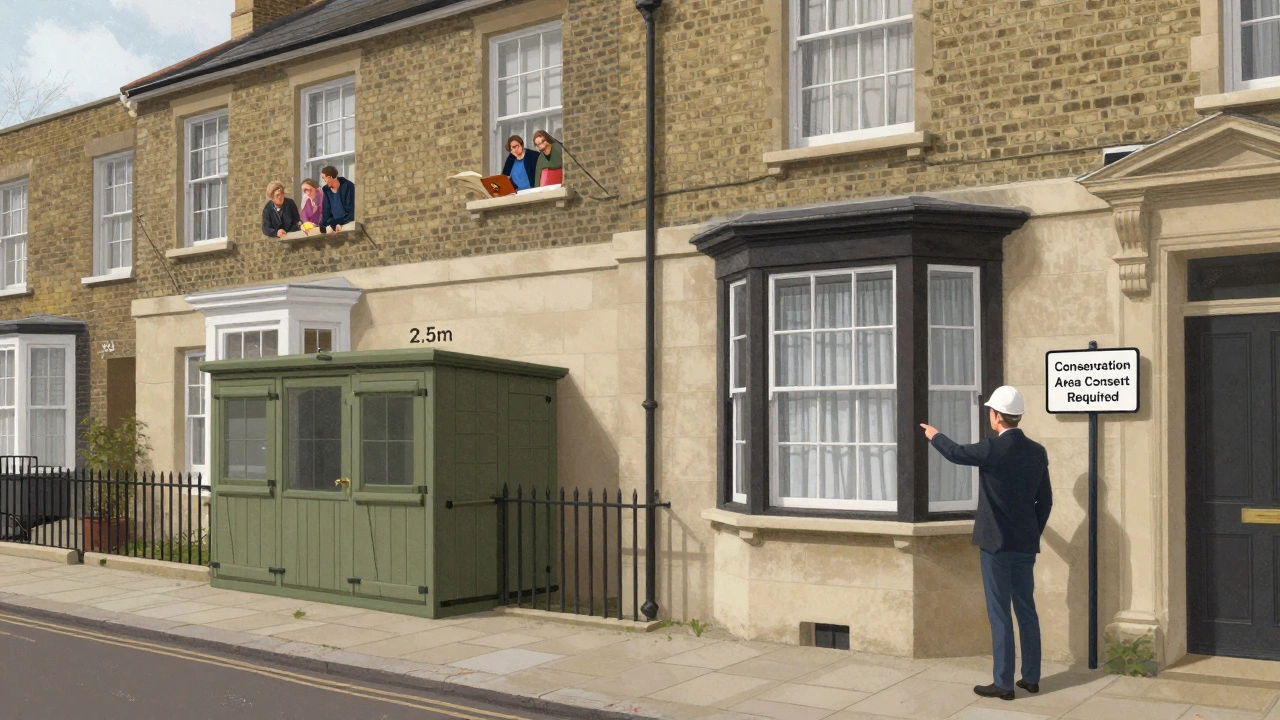
Roof extensions? Most require permission. Adding a dormer or converting your loft into a bedroom usually needs approval, especially if it changes the silhouette of the building. In conservation areas - think Hampstead, Notting Hill, or parts of Islington - even replacing windows with double glazing might need consent if the original were timber sash.
Outbuildings like sheds or garden offices are often allowed under permitted development, but only if they’re under 2.5 meters high, don’t cover more than half your garden, and aren’t closer than 2 meters to a boundary. If you’re thinking of building a granny flat or a separate dwelling, forget it - that’s a full planning application.
When You Absolutely Need Planning Permission
You’ll need to apply for planning permission if you’re:
- Building an extension beyond the permitted development limits
- Changing the use of a building (e.g., turning a garage into a flat)
- Adding a second storey or significantly altering the roofline
- Demolishing more than 50% of a listed building or one in a conservation area
- Installing cladding, solar panels on a listed property, or a new front entrance that changes the character of the building
London boroughs are strict. Camden, Westminster, and Kensington & Chelsea have some of the toughest rules in the country. In 2024, over 60% of planning applications in these areas were rejected or required major changes - often because applicants didn’t understand local design guidelines.
Building Regulations: The Other Half of the Puzzle
Planning permission isn’t the only hurdle. Building Regulations are about safety, energy efficiency, and structural integrity. You need these for almost every renovation - even if you don’t need planning permission.
For example:
- Adding a bathroom? You need proper drainage, ventilation, and waterproofing.
- Insulating your loft? You must meet current U-values (0.16 W/m²K for new builds, 0.18 for renovations).
- Installing new windows? They must have double glazing and meet energy efficiency standards.
- Replacing a boiler? It must be installed by a Gas Safe registered engineer.
Building Regulations approval is handled by your local council’s building control team or an approved inspector. You’ll pay around £300-£1,200 depending on the scope. Skipping this? You could face fines, be forced to rip out work, or even be unable to sell your home later.
How Much Does a London Renovation Actually Cost?
Costs vary wildly, but here’s what you can expect in 2025 based on real data from builders in South London and East London:
| Project | Average Cost | Cost per m² | Timeline |
|---|---|---|---|
| Basic kitchen refurb (new units, appliances, tiling) | £12,000-£20,000 | £250-£400 | 4-6 weeks |
| Full bathroom renovation | £8,000-£15,000 | £300-£500 | 3-5 weeks |
| Single-storey rear extension (up to 5m) | £45,000-£75,000 | £2,500-£3,500 | 12-16 weeks |
| Loft conversion (with dormer, bathroom, stairs) | £50,000-£90,000 | £2,800-£4,200 | 16-20 weeks |
| Two-storey extension | £90,000-£150,000 | £3,500-£5,000 | 20-28 weeks |
| Full house refurb (structure, electrics, plumbing, finishes) | £180,000-£300,000 | £2,500-£4,000 | 6-12 months |
These figures include labor, materials, permits, and professional fees. But they don’t include hidden costs like temporary relocation, structural surveys, or architect fees - which can add another £5,000-£15,000.
Hidden Costs Nobody Talks About
Most people underestimate the surprises. In 2024, a survey by the Royal Institution of Chartered Surveyors found that 73% of London renovation projects went over budget by at least 15%. Why?
- Asbestos: Found in 80% of homes built before 1999. Removal costs £1,500-£8,000 depending on amount.
- Structural issues: Crumbling foundations in old terraces? Expect £10,000-£30,000 to fix.
- Party wall agreements: If your renovation affects a shared wall, you must serve notice to neighbors. Legal fees: £500-£1,500.
- Utility upgrades: Old electrical systems may need full rewiring - £3,000-£7,000.
- Contingency fund: Always set aside 10-15% of your total budget. You’ll thank yourself later.
One homeowner in Peckham spent £22,000 on a kitchen renovation - then found out the floor joists were rotting. The fix cost £14,000 extra. That’s not uncommon.

How to Avoid Delays and Rejections
Planning applications in London take 8-12 weeks to process. If you get it wrong, you’ll lose months and money. Here’s how to get it right:
- Check your local council’s planning portal - every borough has different rules. Wandsworth allows larger extensions than Richmond.
- Book a pre-application meeting with your council’s planning officer. It’s free. They’ll tell you what’s likely to fly.
- Hire a local architect who’s done at least 10 projects in your borough. They know the inspectors and what they’re looking for.
- Don’t skip the design statement - it explains why your project fits the area. In conservation areas, this is non-negotiable.
- Notify neighbors early - if they object, your application can stall or fail.
One couple in Hackney applied without consulting their neighbor. The neighbor complained about noise and loss of light. The application was rejected. They had to redesign everything - and lost £3,000 in architect fees.
What Happens If You Skip Permissions?
You might think, "I’ll just do it and see if anyone notices." That’s a gamble. The council can:
- Issue a stop notice - forcing you to halt work immediately
- Require you to remove the work - at your own cost
- Impose fines up to £20,000
- Refuse to issue a completion certificate - meaning you can’t legally sell the property
Even years later, if a buyer’s solicitor finds unapproved work, the sale can collapse. Or worse - you’re forced to pay for retrospective approval, which costs more than doing it right the first time.
Final Tip: Get a Property Survey First
Before you spend a penny on design or demolition, get a structural survey. A basic survey costs £500-£800. A full building survey? £1,000-£1,800. It’s the cheapest insurance you’ll ever buy.
One buyer in Brixton thought they were getting a good deal on a 1920s semi. The survey found dry rot in the floorboards, outdated wiring, and a failing damp-proof course. They walked away - saving themselves £120,000 in repairs.
Renovating in London isn’t impossible. But it’s not a DIY weekend project either. It’s a complex, regulated, and expensive process - and the people who succeed are the ones who plan properly, budget generously, and respect the rules.
Do I need planning permission for a kitchen remodel?
No, you don’t need planning permission for a standard kitchen remodel - swapping cabinets, appliances, or retiling. But if you’re moving walls, altering plumbing, or changing the layout significantly, you’ll need Building Regulations approval. Always check with your local council if you’re unsure.
How long does planning permission take in London?
Standard applications take 8 weeks. Complex ones, especially in conservation areas or for large extensions, can take up to 12 weeks. You can pay for a priority service in some boroughs - but it’s not guaranteed to speed things up. Pre-application advice can cut weeks off the process.
Can I convert my garage into a bedroom without permission?
It depends. If the garage is attached and you’re not changing its external appearance, you might not need planning permission - but you will need Building Regulations approval for insulation, ventilation, fire safety, and access. If the garage is detached or you’re changing its use permanently, you’ll likely need planning permission.
Is it cheaper to extend or move?
Extending is usually cheaper than moving - but only if you do it right. A 2024 study by Zoopla found that the average cost of extending a 3-bed house in London was £75,000. The average cost of moving to a similar-sized home in the same area was £110,000. But if your extension needs major structural work or fails planning, the cost can balloon past moving.
What’s the most common mistake people make?
Underestimating hidden costs and skipping professional advice. People focus on the visible stuff - tiles, paint, fixtures - but ignore structural issues, asbestos, drainage, or party wall agreements. The result? Budget blowouts, delays, and legal headaches. Always budget 15% extra and hire a local architect or surveyor early.