Quick Highlights
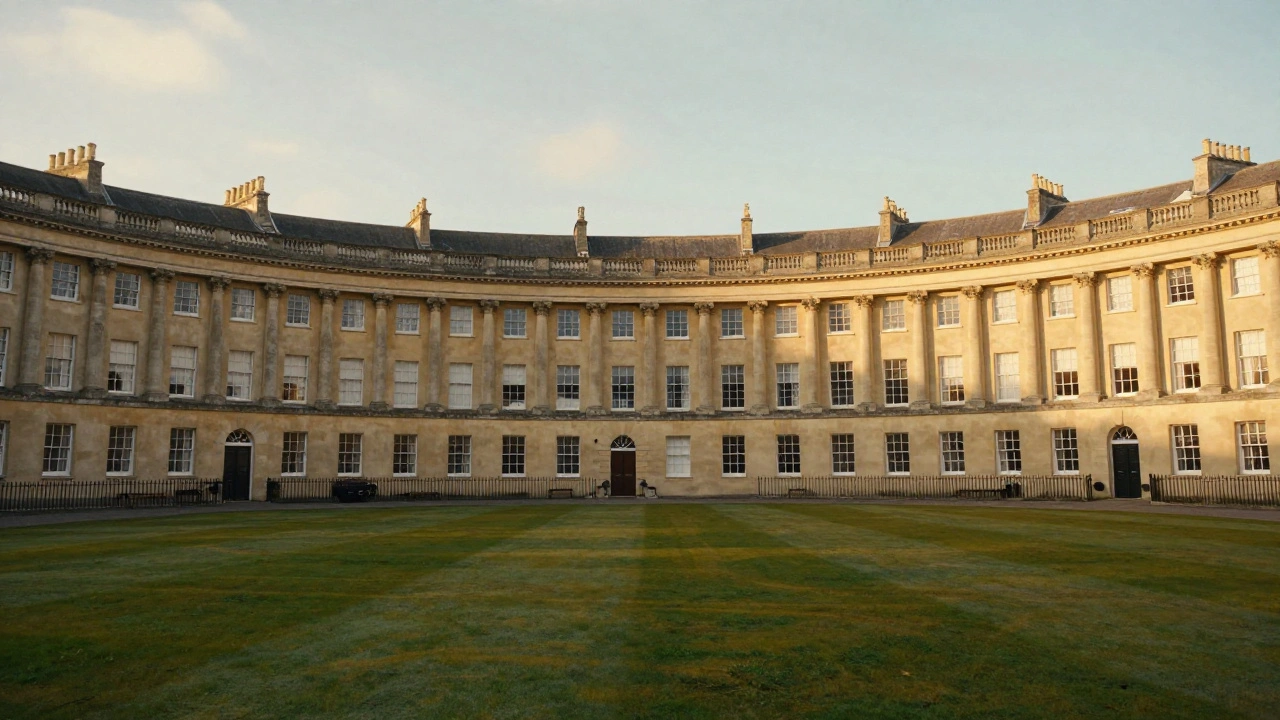
- Visit the Royal Crescent and St. James's Park for authentic Regency vibes.
- Look for Empire silhouettes and high-waisted gowns in fashion.
- Explore the contrast between the wealthy West End and the gritty East End.
- Combine historic architecture with modern filming hotspots for a full experience.
The Architecture of Power and Romance
To understand the Regency Era is the period from roughly 1811 to 1820 when George IV served as Prince Regent, you have to look at the bricks and mortar of London. The style of the time, known as Regency architecture, is all about symmetry, white stucco, and grand columns. If you want to feel like you've stepped into a movie, start at Regent Street. While it's now a shopping hub, the wide curves and grand facades were designed specifically to create a luxury corridor for the elite.
For a more intimate feel, head to St. James's Park. It's one of the oldest royal parks and served as the primary jogging track for the ton-the high-society crowd of the day. Imagine the tension of a chance encounter between a rebellious debutante and a brooding duke under the willow trees. Many period dramas use this area because the greenery perfectly frames the distant view of Buckingham Palace, which, though rebuilt later, sits on the grounds of the original Regency-era houses.
If you have time for a quick trip outside the city, the Royal Crescent in Bath is the ultimate pilgrimage. It's not in London, but it defines the visual language of the era. The sweeping curve of 30 houses is a masterclass in urban planning and has appeared in almost every major Regency-themed production. The scale of it makes you feel small, which was exactly the point-it was designed to impress and intimidate.
Where the Cameras Roll: Modern Film Hotspots
Modern shows like Bridgerton don't always film in the exact spots where the historical events happened, but they choose locations that mimic the mood. A lot of the "London" you see on screen is actually a mix of Hertfordshire estates and carefully chosen corners of the city. For instance, the lavish interiors often come from stately homes that have kept their original 19th-century wallpaper and moldings.
However, for authentic street scenes, filmmakers love the West End. The narrow mews and cobblestone alleys provide that claustrophobic, bustling energy of a city transitioning from horse-drawn carriages to an industrial powerhouse. If you walk through the areas around Mayfair, you can still find residential squares that look exactly as they did in 1815, provided you avoid the modern cars in your photos.
| Location | Vibe | Best For | Authenticity Level |
|---|---|---|---|
| Regent Street | Grand & Commercial | Shopping and Architecture | Medium (Highly Renovated) |
| St. James's Park | Romantic & Royal | Walking and Photography | High |
| The Royal Crescent | Opulent & Symmetrical | Historical Immersion | Very High |
| Mayfair Mews | Quiet & Intimate | Hidden Gems and Quiet Scenes | High |
Dressing the Part: The Art of Regency Fashion
You can't talk about this era without talking about the clothes. Regency fashion was a radical departure from the heavy, restrictive corsets and massive skirts of the 18th century. The look was inspired by Ancient Greece and Rome, focusing on simplicity, lightness, and natural forms.
For women, the defining piece was the Empire Waist Gown. This is a dress where the waistline is shifted up to just below the bust, allowing the fabric to flow loosely over the hips. This wasn't just a fashion choice; it was a statement of liberation. These gowns were often made of lightweight muslin, which was incredibly trendy but practically a nightmare to keep clean in a soot-covered city like London.
Then there were the accessories. A Spencer Jacket-a very short, cropped coat-was essential for keeping warm during those chilly London mornings. Pair that with long gloves and a bonnet, and you've got the complete look. The goal was to look effortless and ethereal, even if you were actually freezing your toes off in a drafty drawing room.
Men's fashion during this time was just as influential. This is the era of Beau Brummell, the man who basically invented the modern suit. He moved away from the flashy silks and powdered wigs of the previous century, opting for perfectly tailored trousers and a crisp white cravat. The Cravat was the centerpiece of a man's outfit; if your knot was sloppy, your social reputation could literally plummet. It was a game of precision and subtlety.
The Social Divide: High Society vs. The Streets
While the movies focus on the ballrooms and the champagne, the real London of the Regency era was a place of extreme contrast. On one side, you had the Ton, the exclusive social circle of the aristocracy. Their lives revolved around the "Season," a period in the spring when wealthy families moved to London to find suitable spouses for their children.
But just a few blocks away from the glittering party, the East End was a different world. While the rich were arguing over the shade of a ribbon, the working class lived in cramped tenements and navigated mud-slicked streets. This contrast is a recurring theme in the best period dramas, showing that the beauty of the architecture often hid a very messy reality.
If you want to experience this contrast today, visit the Museum of London. They have exhibits that show the actual tools, clothes, and home goods used by ordinary people during the early 1800s. It puts the fancy gowns in perspective when you see the heavy wool coats and basic pottery that the rest of the population relied on.
Practical Tips for a Regency-Themed Day Trip
If you're planning a day to track down these locations, don't just stick to the main tourist maps. Start your morning early at the parks to avoid the crowds, then wander through the mews of Mayfair. If you want to feel like a member of the ton, treat yourself to a traditional afternoon tea. While the modern version is slightly different, the concept of a mid-afternoon social gathering is very much in the spirit of the era.
For those who want to try the fashion, you don't need a full costume. A high-waisted dress or a well-fitted blazer with a neat scarf can give you a nod to the style without making you look like you're heading to a costume party. The key is the silhouette-keep it clean and structural.
Which movie locations in London are most authentic to the Regency era?
The most authentic vibes can be found in the royal parks like St. James's Park and the remaining historic squares in Mayfair. While many buildings have been updated, the general layout and the scale of the architecture in the West End still reflect the planning of the early 19th century.
What is the most important element of Regency fashion?
For women, it is undoubtedly the Empire waistline-a high waist positioned just below the bust. For men, the most critical element was the cravat and the overall precision of the tailoring, shifting the focus from flashy colors to perfect fit and cleanliness.
Where can I see real Regency-era clothing?
The Victoria and Albert Museum (V&A) in London has an incredible collection of historical textiles and clothing. You can also visit the Museum of London to see a broader range of attire, from the luxury gowns of the aristocracy to the practical clothes of the working class.
Is the "Season" in Bridgerton based on a real event?
Yes, the Social Season was a real phenomenon. Wealthy families would migrate from their country estates to London for several months in the spring and summer. The main goal was for eligible young men and women to meet and arrange marriages that would benefit their family's social or financial standing.
How do I travel to the Royal Crescent in Bath from London?
The easiest way is by train from London Paddington station to Bath Spa. The journey takes about an hour and a half. Once you arrive, the Royal Crescent is a short walk or bus ride from the city center.
What to do next
If you've fallen in love with this era, your next step should be diving into the literature of the time. Read a few Jane Austen novels to get the dialogue and social nuances right. After that, consider visiting the British Museum to see the neoclassical art that influenced the architecture and fashion of the period. It helps you understand why the Greeks and Romans were such a big deal to the people of 1810.
For those who want a deeper dive into the lifestyle, look for "Regency tea" events or historical reenactment groups in the UK. These groups are often incredibly knowledgeable about the specific ways of walking, bowing, and conversing that defined the age of elegance.