Walk through the City of London on any weekday morning, and you’ll see it everywhere-statues staring down from plinths, abstract metal shapes catching the sun between skyscrapers, even a giant red ball wedged between buildings like it got lost on the way to a circus. This isn’t random decoration. The Square Mile is one of the most densely packed open-air art galleries in the world, and most people don’t even notice it’s there.
The City doesn’t have museums with velvet ropes. Instead, it has public art built into the rhythm of daily life. A banker might grab coffee while glancing at a 19th-century bronze of a Victorian industrialist. A tourist might snap a photo of a modern steel sculpture that looks like a twisted ladder, unaware it’s called “The Helix” and was commissioned after the 2008 financial crash to symbolize resilience. This isn’t just decoration. It’s history, memory, and commentary carved into the urban fabric.
Where the Art Lives
You won’t find a single map that shows all of it. The City of London’s public art isn’t curated like a gallery-it’s layered. Some pieces are old, placed there when the City was still a walled settlement. Others were installed by corporate developers who were required to include art as part of new building permits. Since 2001, the City Corporation has enforced a policy that every major development over £1 million must allocate 1% of its budget to public art. That rule alone has added over 120 new sculptures in the last two decades.
Look for art where you least expect it: on the corner of Lombard Street, beside a Barclays branch, there’s a 1960s abstract piece called “The Four Seasons” by sculptor William Mitchell. It’s made of concrete and steel, and if you walk around it, you’ll see how each side represents a different season-spring as a burst of petals, winter as jagged shards. No plaque. No explanation. Just there.
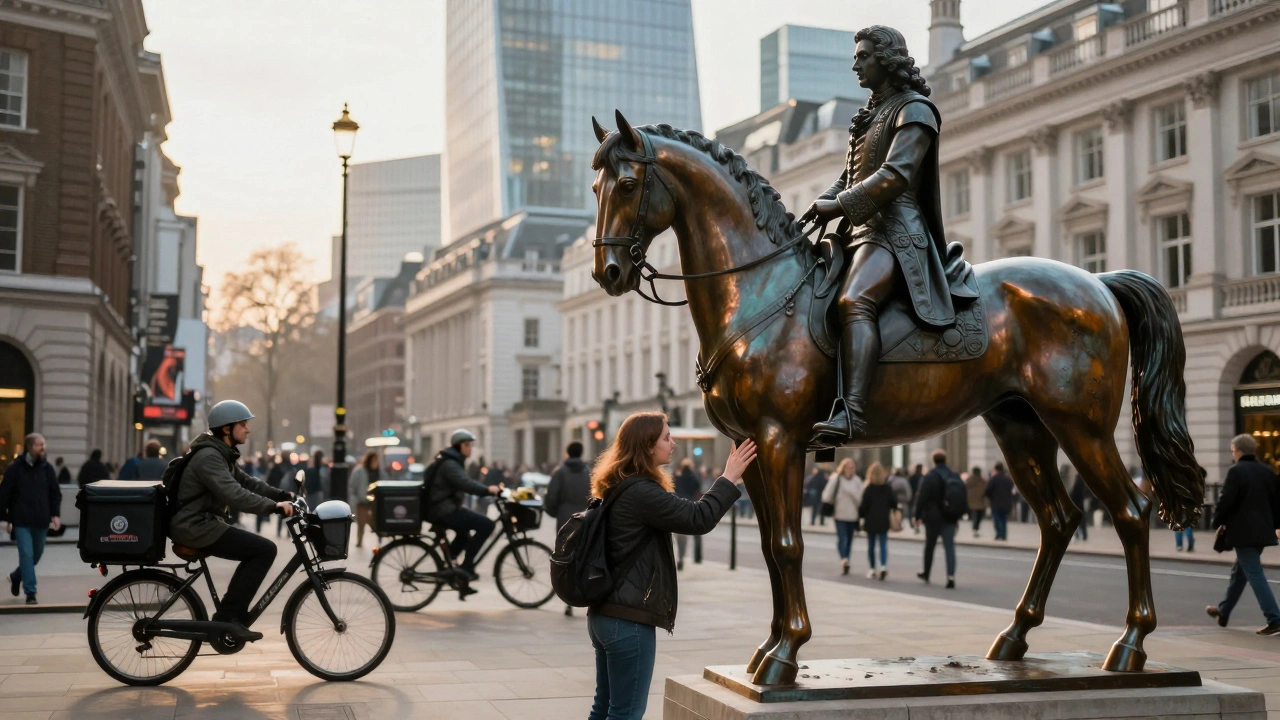
At the heart of the City, outside the Royal Exchange, stands a 17th-century statue of King Charles II on horseback. It’s one of the oldest surviving public sculptures in London. The bronze has been polished smooth by centuries of passing hands-people rub the horse’s hoof for luck. It’s not in a park. It’s in the middle of a pedestrian zone, surrounded by lunchtime crowds and delivery bikes.
Hidden Stories in Bronze and Steel
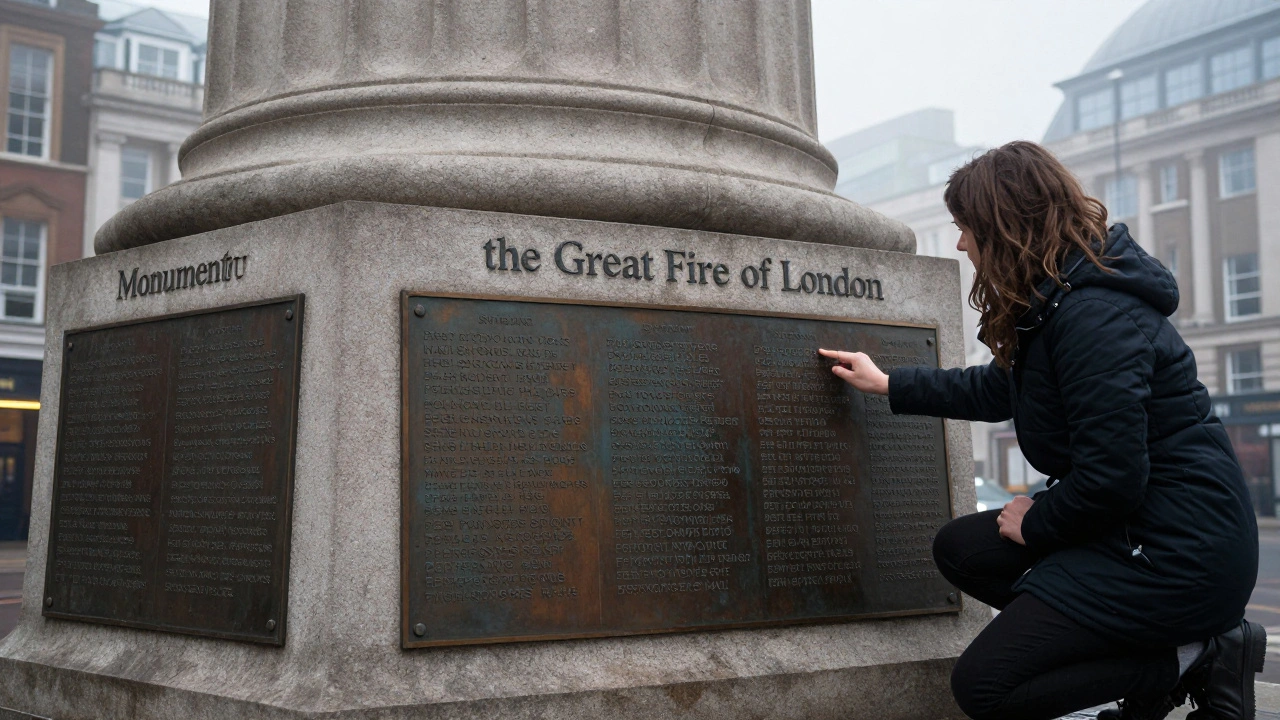
Not all public art here is grand. Some pieces tell quiet stories. Take the “Monument to the Great Fire of London”. Everyone knows the 202-foot column near Monument Station. But few realize the base is lined with bronze plaques listing every street and building destroyed in 1666. Walk around it, and you’ll find names like “Pudding Lane” and “Fishmongers’ Hall”-places that still exist today, but in completely different forms.
Then there’s “The Financial Times Sculpture”, a 2019 installation by artist David Mach. It’s a giant, folded newspaper made of steel, standing 12 feet tall. The folds mimic the texture of printed newsprint, and if you look closely, you’ll see tiny engraved headlines from 2008-“Bank Bailouts,” “Credit Crunch,” “Market Collapse.” It’s not a monument to wealth. It’s a monument to fear.
One of the most talked-about pieces is “The Equestrian Statue of John Churchill” outside the Bank of England. It’s not just a statue of a general. It’s a political statement. Churchill, the first Duke of Marlborough, was a war hero, but his wealth came from military contracts. The statue was paid for by the City’s merchants in 1730 as a thank-you for his role in securing loans during the War of Spanish Succession. In other words: art funded by debt, honoring a man who profited from it. That irony still echoes.
Modern Art in a Medieval Street Plan
The City’s streets haven’t changed much since the 1200s. Narrow alleys, sharp corners, dead ends. It’s chaotic for drivers, but perfect for art. Sculptures here don’t sit in open plazas-they hide in courtyards, cling to building corners, or rise from sidewalk gaps. The “Pigeon Sculpture” on Threadneedle Street, installed in 2015, looks like a real bird perched on a ledge. Except it’s made of polished stainless steel, and its reflection changes with the weather. On a rainy day, it looks wet. On a sunny one, it glows like a mirror. No one knows who put it there. The City Council doesn’t claim it. But people leave coins at its base anyway.
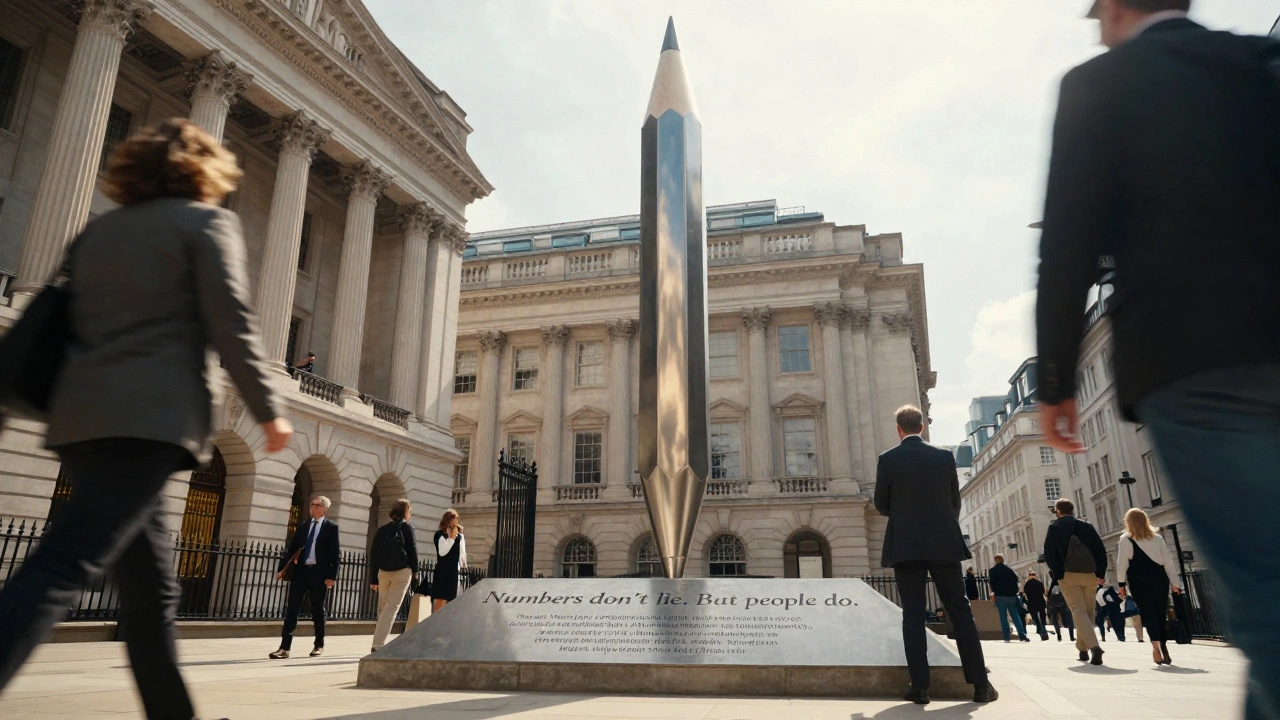
Modern pieces often play with scale. The “Giant Pencil” outside the London Stock Exchange is 20 feet tall and weighs 1.2 tons. It’s not a tribute to writing. It’s a metaphor: the pencil as a tool of control, of recording, of power. The steel tip points upward, toward the sky. The base is engraved with quotes from economists, journalists, and whistleblowers. One reads: “Numbers don’t lie. But people do.”
Who Decides What Stays?
There’s no public vote. No committee of artists. The City of London Corporation handles everything. They work with developers, historians, and occasionally, local businesses. A sculpture gets installed not because it’s beautiful, but because it fits. Does it reflect the area’s history? Does it challenge the narrative? Does it survive the weather, the pollution, the constant foot traffic?
Some pieces don’t make the cut. In 2020, a proposed statue of a female banker holding a ledger was scrapped after protests. Critics called it “tokenism.” Supporters said it was overdue. The sculpture was never installed. But the debate sparked a new policy: every new piece now must include public consultation. Even in the Square Mile, people are starting to ask: whose story are we telling?
Art That Changes With the City
Public art here doesn’t stay still. It evolves. The “Pilgrim” statue on the Thames-side path near the Gherkin was originally a simple figure holding a scroll. In 2022, after the pandemic, local schoolchildren painted the scroll with messages of hope: “I miss my grandma,” “I wish I could hug you,” “We are still here.” The City allowed it to stay. Now it’s one of the most visited pieces in the district.
Even the weather plays a part. Rain turns the black granite of “The Timepiece” into a dark mirror. Snow clings to the curves of “The Spiral” like icing. Wind makes the metal leaves of “The Whispering Tree” sing. These aren’t just static objects. They’re part of the city’s breathing.
Why It Matters
Most people think of the City of London as glass towers and trading floors. But if you take the time to look up, you’ll see something else: layers of history, conflict, resilience, and quiet rebellion. The art here doesn’t ask you to admire it. It asks you to remember.
It reminds you that finance isn’t just numbers-it’s people. That power isn’t just in boardrooms-it’s in the streets. And that even in the heart of global capitalism, there’s still room for poetry, protest, and the occasional giant red ball.
Is there a walking tour for public art in the City of London?
Yes. The City of London Corporation runs a free self-guided walking tour called “Art in the Square Mile,” available as a downloadable PDF or audio guide on their website. It covers 18 key sculptures, with historical context, artist names, and exact locations. You can pick it up at the Guildhall Library or download it on your phone. No app needed-just walk, look, and listen.
Can I touch or interact with the sculptures?
Most of them are designed to be touched. The bronze hoof of King Charles II’s horse is worn smooth from years of rubbing. The base of the Monument to the Great Fire has plaques you can trace with your fingers. Even the giant steel pencil invites you to circle it. But avoid touching older statues with fragile patinas-some are protected by low barriers for preservation. When in doubt, look for signs or ask a City Ranger.
Are there any free art installations that change over time?
Yes. The “Pilgrim” statue on the Thames path changes seasonally. Local schools and community groups are invited to add new messages every spring. In winter, the “Whispering Tree” near the Barbican gets wrapped in LED lights that flicker like fireflies. These aren’t permanent. They’re living, evolving pieces meant to reflect what’s happening in the city right now.
Why is there so much art in the financial district?
It’s not random. Since 2001, the City Corporation requires new developments over £1 million to spend 1% of their budget on public art. This policy was created to soften the cold, corporate feel of the area and reconnect the district with its history. It also gives artists a rare opportunity to work in high-visibility spaces. The result? A mix of medieval relics and cutting-edge installations, all telling different parts of the same story.
What’s the most controversial sculpture in the City?
The most debated piece is “The Debt Clock”, a digital display installed in 2016 near the Bank of England. It shows real-time UK national debt, updated every 15 seconds. Some call it an important wake-up call. Others say it’s demoralizing and misleading. It’s never been removed-not because everyone agrees, but because the City believes art should provoke, not comfort. The clock still runs.
Next time you’re in the City, skip the coffee shop line. Take five minutes. Look up. Look down. Look at the corners. The art is waiting.