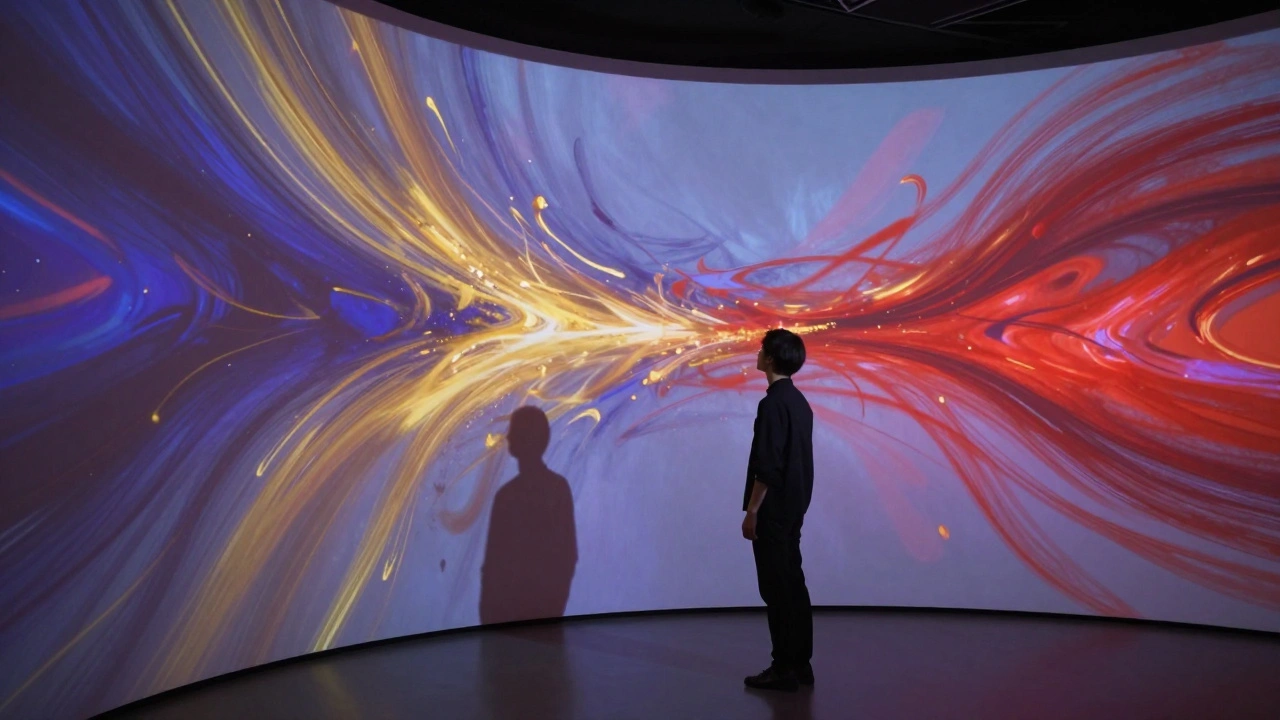
Walk through a room where the walls breathe with moving light, and your shadow becomes part of a living painting. That’s not science fiction-it’s new media art in London today. Forget static canvases and silent sculptures. The city’s art scene has shifted. It’s no longer about what you see on a wall. It’s about what you feel, touch, and become part of.
What Exactly Is New Media Art?
New media art isn’t just art made with computers. It’s art that uses technology as its canvas. This includes projection mapping, motion sensors, virtual reality, augmented reality, AI-generated visuals, and interactive soundscapes. Unlike traditional art, it doesn’t sit still. It reacts. It changes. It listens.
In London, this form of art exploded after 2018, when institutions like the Barbican and Tate Modern started dedicating entire floors to digital experiences. By 2025, over 40 permanent and rotating digital exhibitions were active across the city. The Tate’s Being Human show in 2024 used real-time facial recognition to alter color palettes based on visitors’ emotions. The results? People stayed an average of 27 minutes-three times longer than in traditional galleries.
Where to Find the Best Digital Art in London
Not all museums are created equal when it comes to immersive experiences. Here are the top spots where new media art isn’t just displayed-it’s lived.
- Tate Modern: Their AI: More Than Human exhibit (2023-2025) lets visitors train a neural network to paint alongside them. The system learns from your brushstrokes and generates abstract responses on a 12-meter screen.
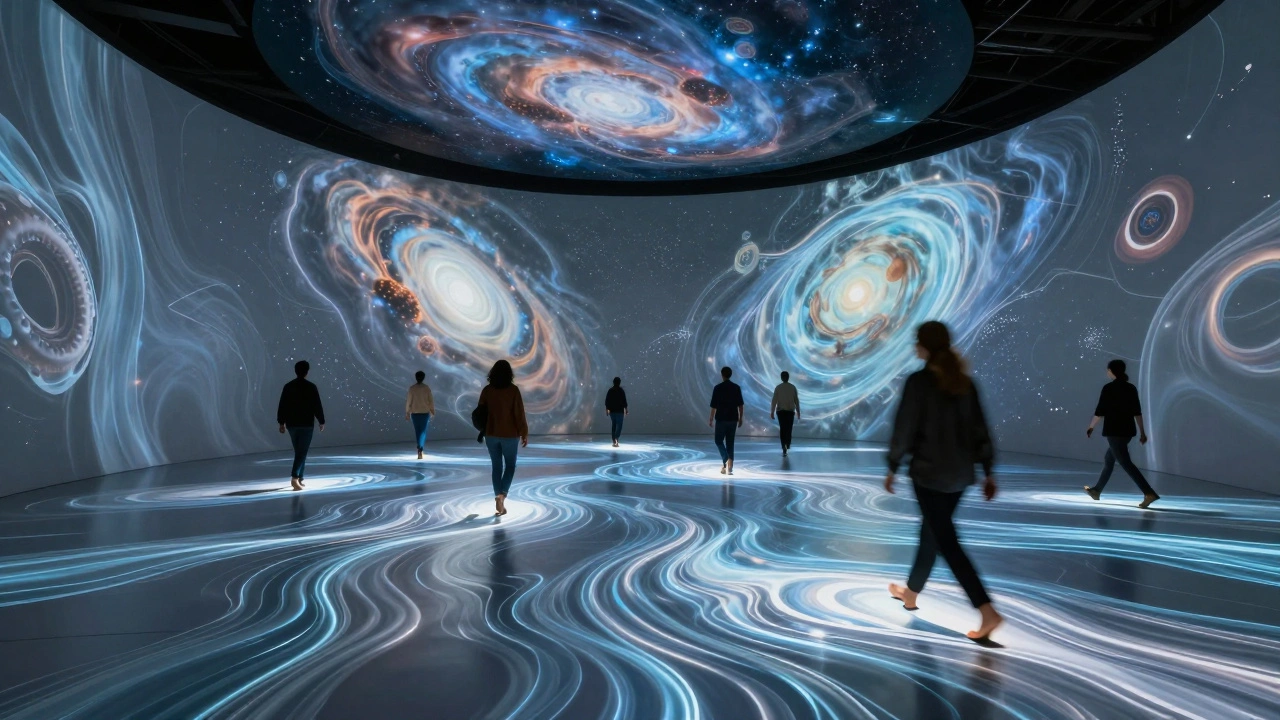
- Barbican Centre: The Into the Light installation (2025) uses 360-degree projection and haptic floors. Walk across it, and the ground ripples like water, responding to your pace and pressure.
- Victoria and Albert Museum (V&A): Their Code: The Language of the Future show features generative art created by algorithms trained on 10,000 years of global textile patterns. Each visitor leaves with a unique digital print.
- Coal Drops Yard: A pop-up space run by digital collectives. In early 2026, it hosted Whispering Walls, where voice recordings from Londoners were turned into swirling light patterns that changed with the weather outside.
These aren’t gimmicks. They’re experiments in human perception. Artists here aren’t trying to replace galleries-they’re trying to rebuild how we connect with meaning.
Why London Leads the World in Immersive Art
Why here? Why now?
London has three big advantages. First, it’s home to some of the world’s top tech universities-Imperial College, UCL, and King’s College all have labs merging art and AI. Second, the city has a history of embracing radical culture. Think punk, rave, and street art. Digital art is just the next evolution.
Third, funding. In 2023, Arts Council England allocated £12 million specifically to digital art projects. That’s up 200% from 2019. The money didn’t go to big names. It went to small collectives-students, coders, former dancers, ex-game designers-who turned abandoned warehouses into sensory playgrounds.
One team, called Signal Collective, built an exhibit called Memory Echo using data from 500 Londoners’ smartphone location histories. The result? A glowing maze that shows how often people pass the same street corner, but never speak to each other. It won the 2025 Digital Arts Prize at the Venice Biennale.
The Technology Behind the Magic
Behind every immersive piece is a mix of tools you might not expect.
- Projection mapping: Not just projectors. It’s software that warps images to fit irregular surfaces-like the curved walls of an old church turned into an art space.
- LiDAR sensors: These laser scanners track movement with millimeter precision. Used in Body as Data at the Science Museum, where visitors’ body heat and motion became musical tones.
- Generative AI: Tools like Stable Diffusion and Runway ML aren’t just for making images. Artists use them to create evolving soundscapes that change based on crowd density.
- Haptic feedback suits: Worn by participants in Tactile Dreams at the Royal Academy. The suit vibrates in rhythm with the art, creating a full-body experience.
What’s surprising? Most of this tech was developed for gaming or military use. Artists repurposed it because it was cheap, accessible, and open-source. You don’t need a billion-dollar budget. Just a Raspberry Pi, a camera, and a bold idea.
Who Is Making This Art?
Forget the lone genius in a studio. New media art is made by teams.
Take Hybrid Studio, a group of five people: a poet, a data scientist, a lighting designer, a former NHS nurse, and a teenager who coded their first app at 12. Their 2025 exhibit, When the City Sleeps, used real-time air quality data from 200 London sensors to shape a slow-moving cloud of colored mist in a basement space. The mist turned blue when pollution dropped. Red when it spiked.
These creators don’t sell prints. They sell experiences. Tickets to their shows cost £8-£15. Many are free. Some even let you submit your own voice, photo, or memory to be woven into the next version of the piece.
Is This Art-or Just a Fancy Light Show?
Sure, some installations look like rave decor. But the best ones do more than dazzle. They make you think.
Take Algorithms of Grief at the Southbank Centre. Visitors were asked to type a single word describing someone they lost. The word was fed into a machine learning model trained on 10 million obituaries. It then generated a 30-second audio poem in that person’s voice-using only public data. No photos. No names. Just tone, rhythm, and silence.
People left crying. Not because it was sad. Because it felt true.
This is the difference. Traditional art asks: “What does this mean?” New media art asks: “What does this make you feel? And why?”
What’s Next for Digital Art in London?
By 2027, London plans to open its first permanent digital art museum in a disused Underground station near King’s Cross. It’ll have no walls. Just sensors, speakers, and AI that reshapes the space daily based on weather, traffic, and social media trends.
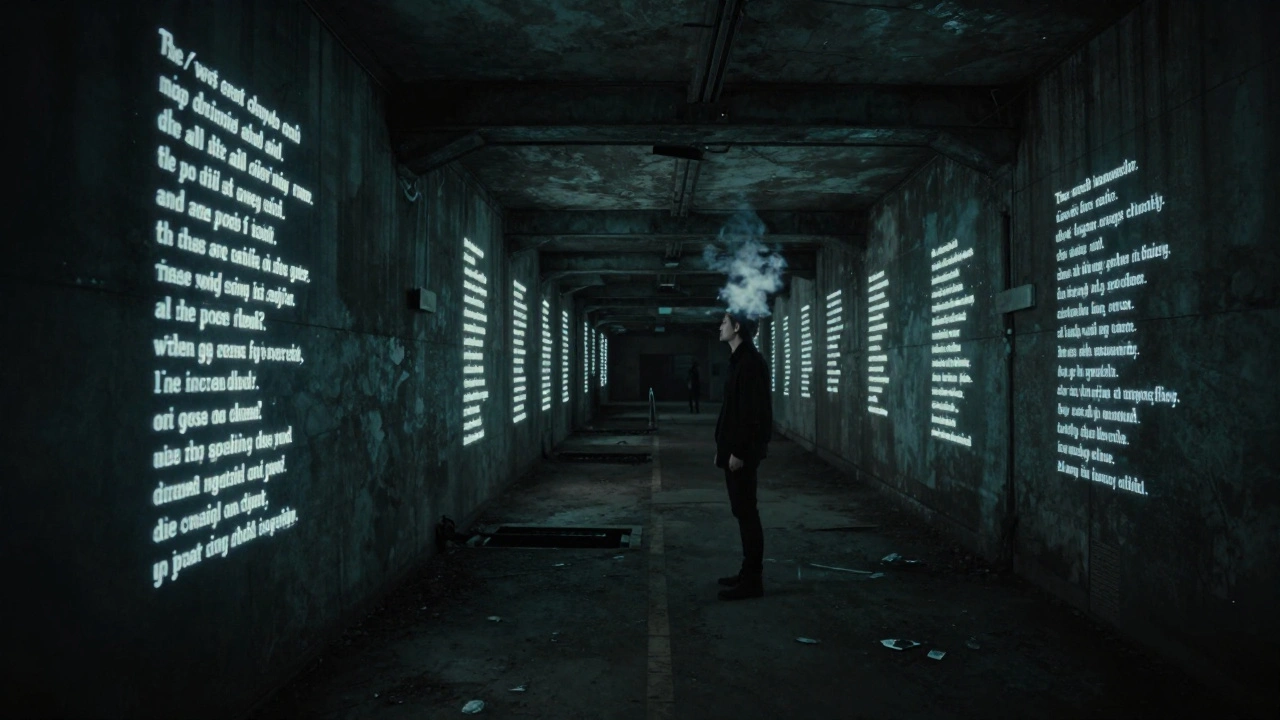
Artists are also teaming up with public transport. A new project called Underground Echoes will project poetry onto tunnel walls during late-night Tube rides, triggered by the number of passengers on board. More people? The poem grows. Fewer? It fades.
One thing’s clear: the future of art isn’t hanging on a wall. It’s moving. Breathing. Listening. Waiting for you to walk in.
Is new media art only for tech-savvy people?
No. These installations are designed to be felt, not understood. You don’t need to know how AI works to be moved by a light pattern that shifts when you breathe. Most visitors have no technical background. They just show up-and leave changed.
Can I take photos or videos inside these exhibits?
Yes, but with limits. Most places allow photos without flash. Some, like the Barbican’s Into the Light, ban phones entirely to preserve the immersive experience. Always check signs at the entrance-rules vary by exhibit.
Are these exhibitions expensive to attend?
Most are affordable. Tate Modern and V&A offer free entry to their digital wings. Paid shows usually cost between £8 and £15. Some, like Coal Drops Yard pop-ups, are completely free. Compared to a movie ticket or concert, it’s a bargain for an experience that lasts hours.
Do I need to book tickets in advance?
Yes, for popular exhibits. Shows like AI: More Than Human at Tate Modern sell out weeks ahead. Book online through the venue’s website. Walk-ins are rarely allowed, especially on weekends.
Is new media art here to stay, or just a trend?
It’s here to stay. Attendance has grown 40% year-over-year since 2022. Younger audiences-especially under 30-are choosing digital art over traditional galleries. Institutions are investing more. The technology is getting cheaper. This isn’t a fad. It’s the new language of emotion.
Final Thoughts: Art That Moves With You
London’s new media art scene isn’t about showing off gadgets. It’s about reconnecting us-to ourselves, to strangers, to the city we walk through every day. It turns quiet moments into shared rituals. A shadow becomes a story. A breath becomes a note. A single word, typed in a dark room, echoes across time.
You don’t need to be an artist. You don’t need to understand code. You just need to show up. And let the light move you.