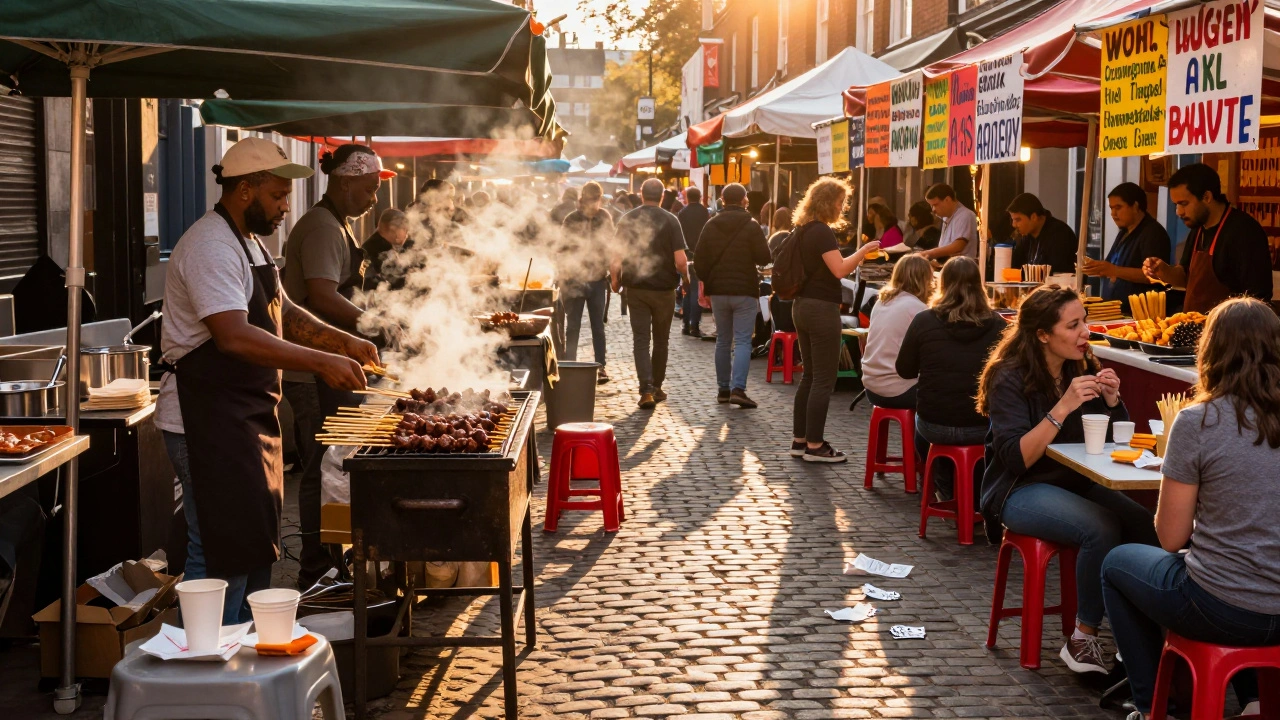
London’s streets are a global buffet
Walk down any busy lane in London and you’ll smell curry from Bangladesh, sizzle from Mexico, and smoke from Lebanon-all in the same block. This isn’t a tourist brochure. This is real life. Every day, over 200,000 people eat street food in London, drawn not by fancy restaurants, but by the raw, unfiltered taste of the world on a stick. From Brixton to Borough Market, from Peckham to Camden, the city’s food stalls are where cultures collide and flavors fuse. You don’t need a passport. You just need an empty stomach.
What makes London’s street food different?
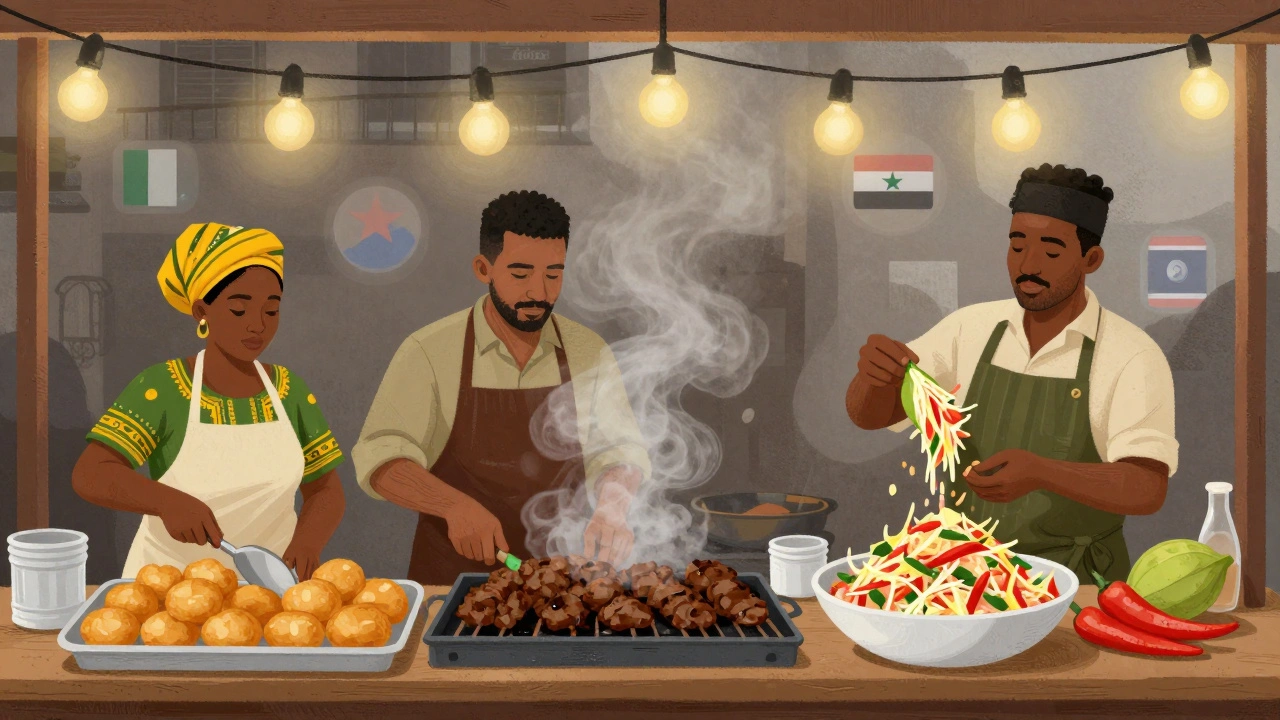
It’s not just variety. It’s authenticity. Most vendors aren’t just selling food-they’re cooking the meals their grandparents made back home. A Nigerian woman from Peckham makes suya with the same spice blend her mother taught her. A Syrian family in Dalston grills kafta the way they did in Aleppo before the war. These aren’t adaptations. They’re heirlooms on a cart.
Unlike food halls with curated menus, London’s street food scenes are messy, loud, and alive. You’ll find stalls that open at 5 a.m. for construction workers and stay open until midnight for clubbers. There’s no corporate branding. No plastic menus. Just handwritten signs, metal trays, and the smell of garlic frying in real oil.
Top five spots for global street food
- Borough Market: The OG. Over 100 vendors, but the real gems are the small ones tucked behind the cheese stalls. Try the Peruvian anticuchos (grilled beef heart skewers) from the stall run by a family from Lima. Or the Japanese takoyaki-crispy balls filled with octopus and drizzled with bonito flakes.
- Brick Lane: Bengali curry houses here have been feeding Londoners since the 1970s. But now, the alleyways are lined with Thai papaya salad, Ethiopian injera with lentil stews, and Polish pierogi fried fresh on the spot.
- Camden Market: It’s touristy, sure, but don’t skip it. The Philippine adobo pork from a stall called Manila on a Stick is better than most restaurants in the city. And the Argentinian empanadas with chimichurri? They’re handmade daily by a mother-daughter team who moved here in 2020.
- Walthamstow Market: A hidden gem. This is where you’ll find Nigerian puff-puff (fried dough balls dipped in honey), Senegalese thieboudienne (fish and rice with tomato sauce), and Korean corn dogs coated in panko and served with sweet chili.
- Richmond Night Market: Open only on weekends, this one’s all about Southeast Asia. The Malaysian satay here uses a coconut milk marinade passed down for three generations. The Vietnamese banh mi is so fresh, the bread still steams when you bite into it.
The flavors you won’t find anywhere else
London’s street food has its own signature dishes now-not because they’re invented here, but because they’ve been perfected here.
Take the London-style biryani wrap. It started in Southall when a Pakistani chef wrapped leftover biryani in a naan with pickled onions and mint yogurt. Now it’s sold at 12 stalls across the city. Or the Spice Route Burger: a beef patty with harissa mayo, pickled cabbage, and a fried plantain slice. It was created by a Ghanaian cook in Peckham who mixed West African flavors with American fast food. Both are now local staples.
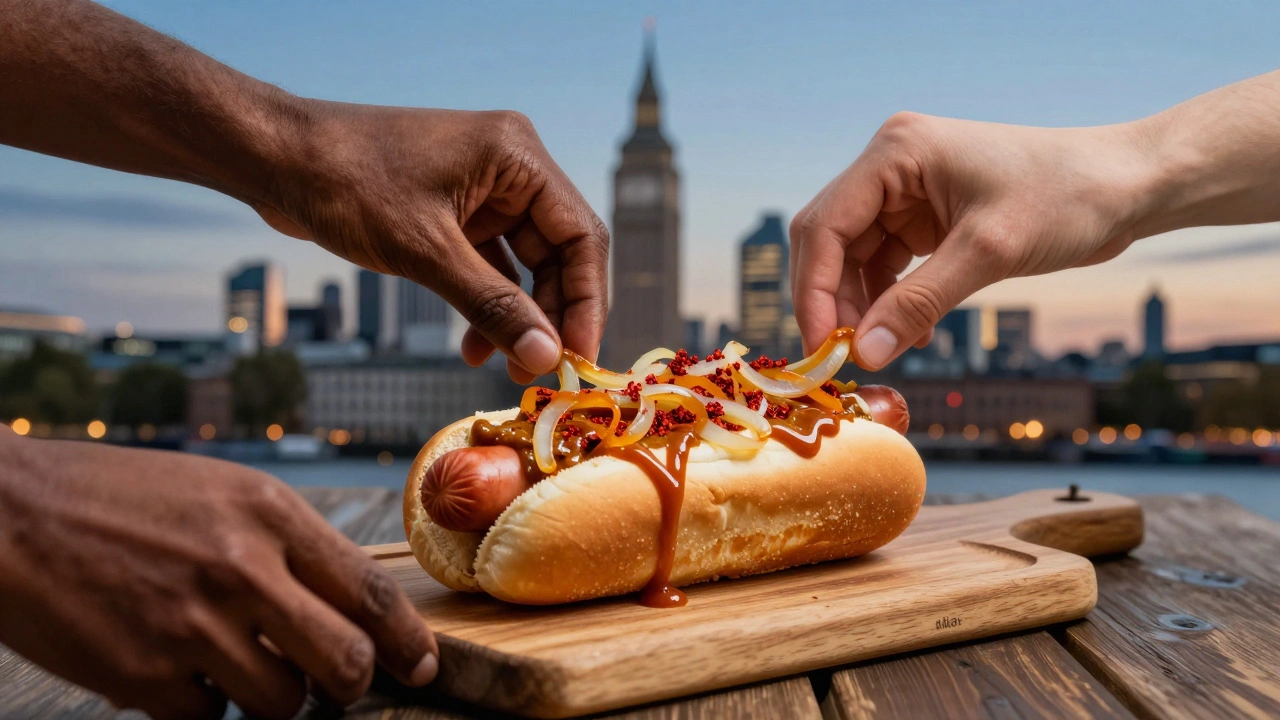
And then there’s the London hot dog. Not the American kind. This one’s a grilled frankfurter in a soft bun, topped with British curry sauce, caramelized onions, and a sprinkle of paprika. It’s been around since the 1980s, born from Caribbean immigrants who wanted to sell something familiar to British workers. Today, it’s a cult favorite.
Why this matters beyond taste
Street food in London isn’t just about eating. It’s about survival. For many vendors, it’s their first step into a new country. A Syrian refugee starts with a single stall selling hummus. A Ukrainian mother sells varenyky to pay for her daughter’s school fees. A Somali grandmother runs a tea cart to keep her family together.
These stalls are community hubs. People come for the food, but they stay for the stories. You’ll hear Swahili, Mandarin, Arabic, and Punjabi spoken in line. You’ll see grandmas teaching kids how to eat with their hands. You’ll meet people who’ve never left London but have tasted more of the world than most travelers.
It’s also changing how London eats. A 2025 survey by the London Food Board found that 68% of residents now prefer street food over sit-down restaurants for lunch. Why? Because it’s faster, cheaper, and tastes better. The average street food meal costs £5.50. A fast-food burger? £7.20. And the street food? Made with real ingredients, not preservatives.
How to eat like a local
- Go hungry. Don’t try to sample everything. Pick one stall, one flavor, one culture. Stick with it.
- Ask questions. “What’s your favorite thing to eat here?” Most vendors will smile and tell you their story.
- Bring cash. Many stalls still don’t take cards. £10 in small bills will get you two meals and a drink.
- Follow the queues. If 10 people are standing in line, it’s worth it. If no one’s there, walk away.
- Visit on a weekday. Weekends are packed. Tuesday and Wednesday are quiet, and vendors are more likely to give you a free extra piece.
What’s next for London’s street food?
The scene is evolving. New regulations in 2025 forced some stalls to upgrade their equipment, but most stayed open. The city now supports a “Street Food Hub” program that helps vendors get grants, training, and legal permits. Over 300 new stalls have opened since 2023, with more than half run by women and refugees.
And the flavors? They’re getting bolder. A Korean-Mexican fusion taco stall in Shoreditch just won a national award. A Nigerian chef opened a pop-up serving jollof rice with plantain chips and smoked paprika butter. A team of Syrian bakers now make baklava with dates and rosewater, sold at 15 markets across the city.
London’s street food isn’t just surviving. It’s thriving because it’s not trying to be anything but itself-real, raw, and rich with stories.
Where to find the best street food in London
- Monday: Walthamstow Market (9 a.m.-5 p.m.)
- Tuesday: Brick Lane (11 a.m.-10 p.m.)
- Wednesday: Brixton Village (12 p.m.-9 p.m.)
- Thursday: Maltby Street Market (11 a.m.-6 p.m.)
- Friday: Borough Market (10 a.m.-5 p.m.)
- Saturday: Camden Market (10 a.m.-11 p.m.)
- Sunday: Richmond Night Market (12 p.m.-8 p.m.)
What to try next
If you’ve tried the classics, look for these emerging dishes:
- Eritrean tibs (spiced lamb stir-fry with injera)
- Georgian khinkali (juicy dumplings filled with broth and meat)
- Indonesian nasi goreng with fried egg and krupuk
- Chilean completo (hot dog loaded with avocado, sauerkraut, and mayonnaise)
- Uzbek plov (rice cooked with lamb, carrots, and cumin)
Is street food in London safe to eat?
Yes. Every street food vendor in London must pass a hygiene inspection and display their rating. You’ll see a green sticker on their stall-this means they scored 5 out of 5. Most do. If you don’t see one, ask. Vendors are proud of their ratings and happy to show you.
Can I find vegetarian or vegan street food in London?
Absolutely. Over 40% of London’s street food stalls now offer at least one vegan option. Try the vegan jollof rice from Lagos Eats, the jackfruit tacos from Tacos del Sur, or the chickpea falafel wraps at Brick Lane. Many vendors even label their dishes with a green leaf icon.
What’s the most popular street food in London right now?
The London hot dog is still the top seller, but Thai papaya salad and Korean corn dogs are catching up fast. In 2025, sales of Asian street food jumped 32% year-over-year. It’s not just about spice-it’s about texture, crunch, and balance.
Are street food markets open year-round?
Most are. Some close in winter, but the big ones like Borough Market and Camden stay open 365 days a year. Even in January, you’ll find someone grilling kebabs or frying doughnuts. The city’s cold doesn’t stop the heat of the grills.
How do I support these vendors?
Buy from them. Leave a tip. Share their stall on social media. Ask for their name. Say thank you. Many vendors don’t have websites or Instagram pages. Word of mouth keeps them alive. Your presence matters more than you think.