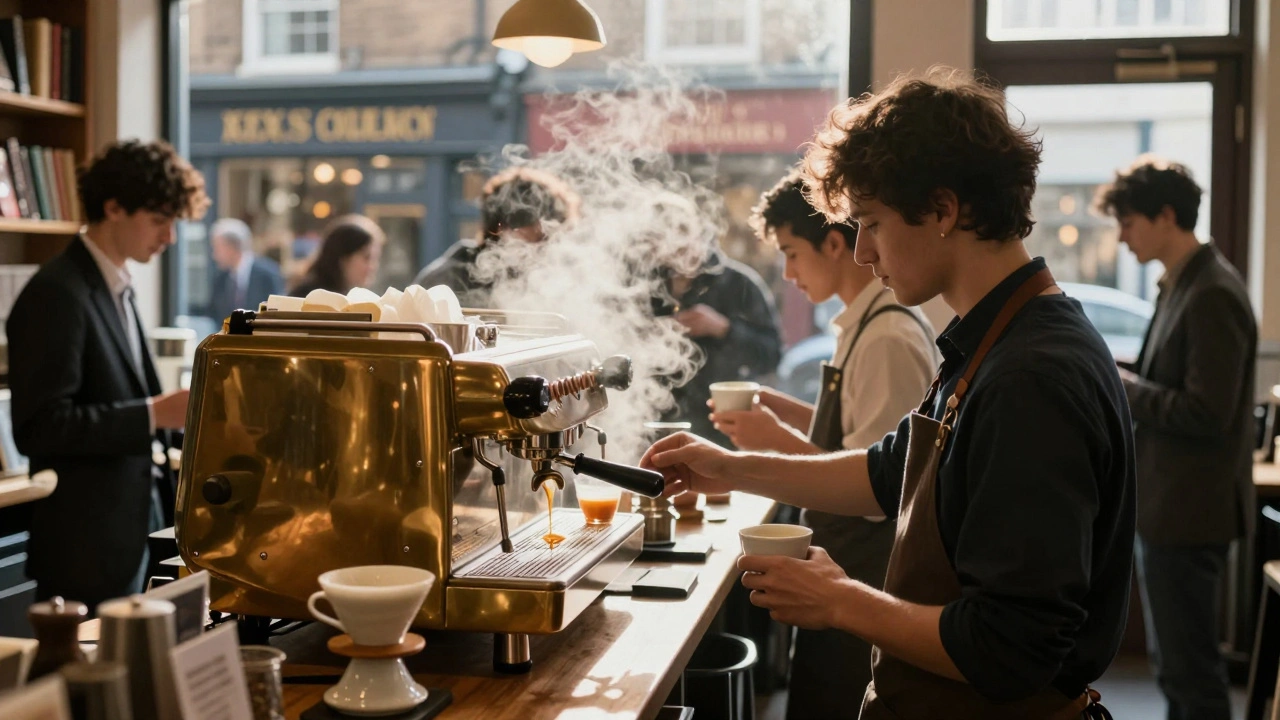
Walk into any corner shop in London and you’ll see it: a row of espresso machines hissing like steam dragons, next to a French press sitting quietly on the counter, untouched. It’s not just a coffee choice-it’s a cultural signal. In London, filter coffee and espresso aren’t just brewing methods. They’re lifestyles. One whispers quiet mornings and slow Sundays. The other shouts rush hour, business meetings, and 3 p.m. pick-me-ups. So where does each one truly shine? And why do Londoners keep both on the menu?
Espresso: The Pulse of the City
Espresso in London isn’t just a drink. It’s a rhythm. You find it in the narrow alleys of Soho, tucked between vintage bookshops and record stores. It’s in the steam-filled windows of cafés in Shoreditch, where freelancers tap away on laptops with a double shot beside them. It’s in the hands of baristas who pull shots with the precision of a watchmaker.
London’s espresso culture didn’t arrive overnight. It grew from the 1990s wave of Italian immigrants who opened tiny bars with marble counters and brass espresso machines. Places like The Espresso Room in Notting Hill and Purcell & Co in Camden still serve shots with a 1:2 ratio-18 grams of coffee, 36 grams of liquid-in under 30 seconds. That’s not tradition. That’s science.
Why does it work here? Because London runs on speed. The Tube doesn’t wait. Meetings start on the dot. And espresso? It’s the original fast food. A single shot delivers 60-80 mg of caffeine in under two minutes. No brewing time. No waiting. Just pure, concentrated energy. In a city where 42% of workers commute over 30 minutes each way, espresso is the fuel that keeps the wheels turning.
And it’s not just about caffeine. The crema-the golden foam on top-is a badge of quality. Baristas in London’s top spots test their espresso with a simple rule: if the crema lasts less than 20 seconds, they toss the shot. That’s how seriously they take it.
Filter Coffee: The Quiet Rebel
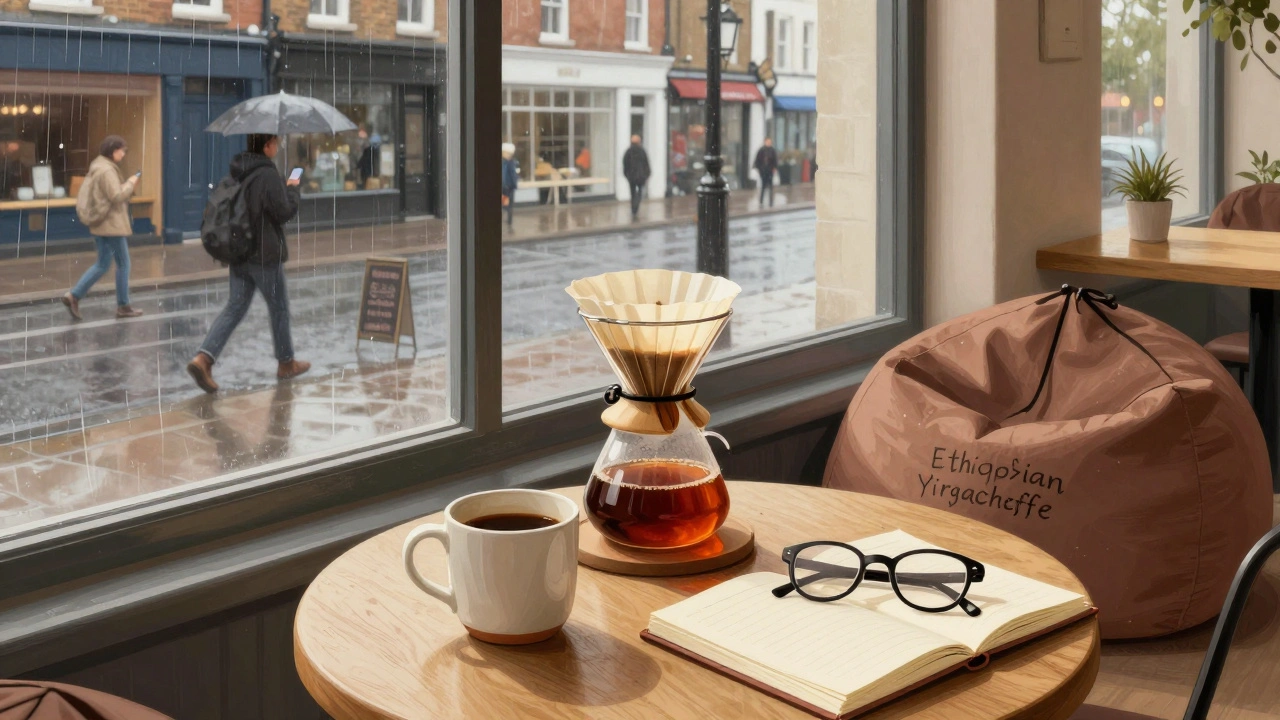
Now walk into a café in Peckham or Hackney and you’ll see something different. A Chemex on the counter. A Hario V60 dripping slowly. A Aeropress beside a pile of bean bags labeled “Ethiopian Yirgacheffe” or “Guatemalan Antigua.” This is filter coffee. And it’s not just trendy. It’s intentional.
Filter coffee in London is the antidote to espresso’s rush. It’s the drink of people who want to taste the origin. Who care about altitude, roast date, and water temperature. It’s not about speed. It’s about patience. A pour-over takes 3 to 4 minutes. That’s long enough to watch the light change through the window. Long enough to hear the rain tap on the pavement.
London’s filter scene exploded after 2015, when specialty roasters like Square Mile Coffee Roasters and Folgers & Co started training baristas in the Nordic method-low flow, even saturation, precise timing. They don’t just serve coffee. They serve stories. Each cup tells you where the beans were grown, how they were processed, and how long they’ve been roasted.
And it’s not just for hipsters. A 2024 survey by the London Coffee Guild found that 31% of residents under 35 now prefer filter coffee over espresso on weekends. Why? Because it tastes different. Filter coffee has 20-30% more flavor compounds than espresso. It’s lighter, cleaner, brighter. Think citrus, floral notes, tea-like body-not the bold, bitter punch of a shot.
Where Each One Wins
Let’s cut through the noise. Where does each style actually belong?
Espresso wins in:
- Business districts - Canary Wharf, the City, and Marylebone. A quick double before a meeting? Espresso. No hesitation.
- Early mornings - 7 a.m. on a weekday. You’re tired. You need it fast. Espresso delivers.
- Italian-run cafés - If the counter has a marble top and a sign that says “Caffè Nero,” you’re in espresso territory.
- After-dinner drinks - A small, hot espresso after a meal? Classic. It cuts through richness. It’s the British version of a digestif.
Filter coffee wins in:
- Weekend brunch spots - Try The Gate in Brixton or Café Oto in Peckham. Their filter brews are slow, rich, and served in ceramic mugs.
- Specialty roasteries - Places like Ona Coffee in Notting Hill or Barista & Co in Greenwich. They roast their own beans. They brew them slowly. They don’t rush.
- Home brewing - More Londoners are buying grinders and gooseneck kettles. Filter coffee is the gateway drug to coffee obsession.
- Hot weather - When it’s 25°C in July, no one wants a scalding espresso. Iced filter? That’s the move.
The Real Difference: Taste, Not Technique
Here’s what most people miss: it’s not about the machine. It’s about the beans.
Espresso in London is usually made from dark-roasted Arabica beans-often blended. The roast masks imperfections. It adds body. It’s designed to be bold, even when under-extracted. That’s why you’ll find espresso blends with 20% Robusta in them. It’s not a flaw. It’s a feature. Robusta adds crema and caffeine. It’s the espresso equivalent of a power chord.
Filter coffee? It’s all about single-origin, light to medium roast. The goal is clarity. You want to taste the blueberry notes from Rwanda, the jasmine from Ethiopia, the caramel from Colombia. The brewing method doesn’t change the bean-it reveals it.
That’s why you can’t swap them. Pouring a dark roast espresso into a Chemex? You’ll get a muddy, over-extracted mess. Brewing a light roast as espresso? You’ll get sour, acidic shots that taste like lemon peel.
Londoners know this. That’s why the best cafés have two grinders. One for espresso. One for filter. One for speed. One for soul.
What You Should Order
Here’s the simple guide:
- If you’re in a hurry - go espresso. Double, no milk. You’ll be done in 90 seconds.
- If you’re settling in - ask for a pour-over. Tell the barista your preference: “I like citrus, not chocolate.” They’ll pick a bean for you.
- If you’re on a budget - filter coffee is often cheaper. A single-origin pour-over costs £4.50. A double espresso? £3.80. But the filter cup lasts longer. You sip it. You don’t gulp it.
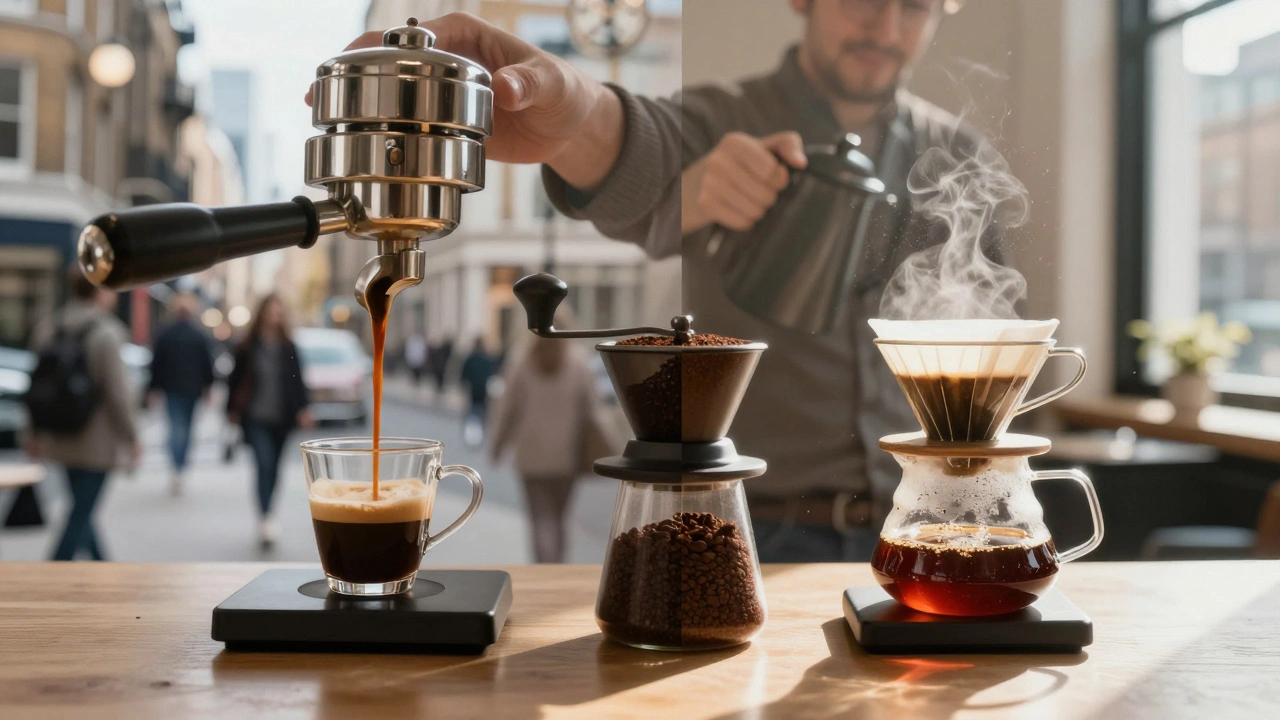
- If you’re trying something new - order an espresso with a side of cold brew. Taste them side by side. You’ll feel the difference in your tongue.
Why London Loves Both
London doesn’t pick a side. It holds both. That’s what makes it unique.
In Paris, coffee is espresso. In New York, it’s drip. In Tokyo, it’s siphon. But in London? It’s whatever you need in that moment. The city doesn’t force you to choose. It gives you space to change your mind.
Maybe you start your day with espresso. Then, on Saturday, you linger over a filter coffee while reading a book. Maybe you’re a student who needs the caffeine rush during exams. Then, after graduation, you switch to filter because you’ve got time to breathe.
There’s no right answer. Just two ways to drink coffee. One for the city’s pulse. One for its quiet corners.
So next time you’re in London, ask yourself: are you rushing? Or are you resting? The coffee will tell you the answer.
Is filter coffee stronger than espresso in London?
No. Espresso has more caffeine per ounce. A single shot (30 ml) has about 60-80 mg of caffeine. A typical 300 ml filter cup has 80-120 mg total-but spread out over time. So espresso hits faster. Filter coffee lasts longer. It’s not about strength. It’s about delivery.
Can you get espresso made with light roast beans in London?
Yes, but it’s rare. Most espresso blends use dark roast because it’s easier to extract evenly and creates more crema. However, places like Ona Coffee and The Attendant in Notting Hill now offer light-roast espresso. It’s brighter, more acidic, and requires precise brewing. Not for everyone-but worth trying if you like tea-like coffee.
Why is filter coffee more expensive in London?
Because it’s made from higher-quality beans and takes more time. Filter coffee uses single-origin, freshly roasted beans that cost more. Plus, it’s brewed by hand, one cup at a time. Espresso machines can brew 10 shots in a minute. A pour-over takes 4 minutes per cup. Labor and ingredients both add up.
Is espresso the only way to get a good coffee in London?
No. While espresso dominates the fast-paced areas, filter coffee has become just as respected. Many of London’s top-rated cafés now score higher on review sites for their filter options than their espresso. The city’s coffee scene is no longer binary. It’s layered.
Which coffee style do locals actually drink daily?
Most Londoners switch. Weekdays? Espresso. Weekends? Filter. A 2025 survey by the London Coffee Guild showed 68% of regular coffee drinkers use both styles, depending on time of day and mood. Only 12% stick to one. The rest? They adapt.