Walk through any corner of London and you’ll likely spot a mural that stops you in your tracks. Bold colors, surreal faces, hidden stories - these aren’t just graffiti. They’re the work of Dan Kitchener, one of the most influential street artists in the UK. Unlike artists who rely on anonymity, Kitchener’s name is everywhere - on the walls, in interviews, and even in museum collections. But who is he, really?
From Manchester to London’s Walls
Dan Kitchener didn’t start in London. He grew up in Manchester, where he first picked up spray cans at 15. His early work was messy, rebellious, and fast - typical of a kid trying to leave his mark. But by his early 20s, he was already thinking differently. He didn’t just want to tag buildings. He wanted to change how people saw them.
In 2012, he moved to London. The city’s mix of historic architecture and gritty alleyways became his canvas. He didn’t wait for permission. He didn’t ask for permits. He just started painting. Within a year, his work appeared in Shoreditch, Peckham, and even under the arches of London Bridge. People began to recognize his style: large-scale portraits with half-real, half-abstract faces, often staring directly at the viewer. No smiles. No filters. Just raw, unfiltered humanity.
What Makes His Art Stand Out
Most street artists focus on political messages or abstract patterns. Kitchener focuses on people. Real people. He spends weeks talking to strangers - buskers, baristas, security guards - before painting them. His murals aren’t idealized. They show tired eyes, cracked lips, scars, and quiet strength.
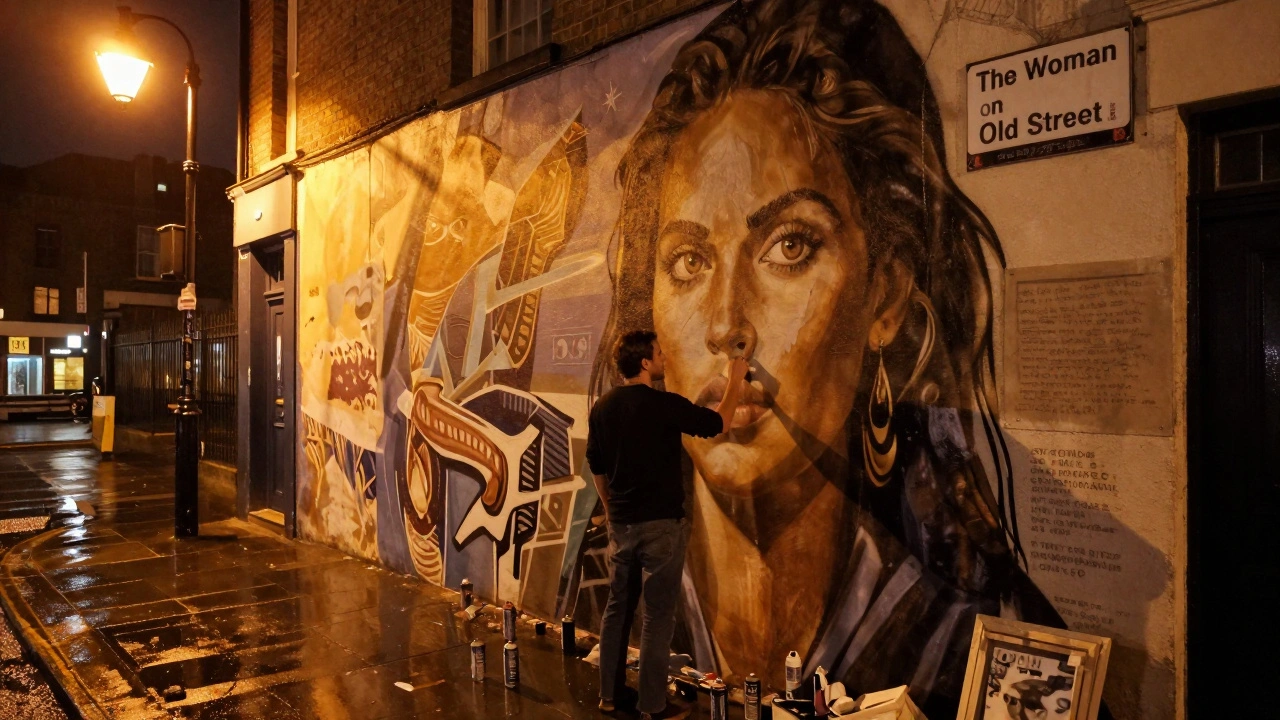
One of his most famous pieces, "The Woman on Old Street", was painted in 2016 after he spent three nights listening to a homeless woman tell him about her life in the NHS. The mural shows her face, half-faded, as if she’s slipping away. But her eyes? Sharp. Alive. It went viral after a passerby posted a photo with the caption: "She’s still here. We just stopped looking."
His technique is unusual too. He doesn’t use stencils. He layers spray paint by hand, blending tones slowly. He works mostly at night, under streetlights, with a small crew of trusted assistants. No drones. No social media hype. Just paint, patience, and presence.
The Legal Gray Zone
Street art in London exists in a legal gray zone. Some murals are commissioned. Others are painted overnight and removed within days. Kitchener’s work falls somewhere in between. He’s been fined twice. Once, he spent 14 hours painting over his own mural after a city official threatened to charge him. But here’s the twist: the city later asked him to paint another one - this time, officially.
Today, the London Borough of Southwark has a formal partnership with him. He’s one of only two street artists in the UK with a municipal contract. His murals now appear on council-owned walls, public housing blocks, and even the side of a library in Peckham. The city doesn’t just tolerate his work - it funds it.
From Walls to Museums
His art has moved beyond the streets. In 2021, the Victoria and Albert Museum included three of his pieces in its permanent collection. The exhibit, titled "Urban Portraits: Faces of Modern London," ran for six months and drew over 200,000 visitors. Critics called it "the most human exhibit the V&A has ever hosted."
He’s also worked with the Tate Modern on public workshops, teaching teens how to paint portraits that tell stories, not slogans. "Art isn’t about being pretty," he told a group of students in 2023. "It’s about being seen."
Why His Work Matters Now
In a city where housing prices keep rising and communities keep fracturing, Kitchener’s murals act as quiet anchors. They remind people that someone lived here. Someone worked here. Someone loved here. His art doesn’t shout. It whispers - and people lean in to listen.
He’s not rich. He doesn’t sell prints online. He doesn’t do merch. He lives in a small flat in Hackney, shares a studio with two other artists, and still paints on weekends for free. "If I start charging, I lose the connection," he says. "The walls are the gallery. The people are the audience."
Where to Find His Work Today
Here are a few spots in London where you can still see his murals - as of early 2026:
- Old Street Station, Exit 3 - "The Woman on Old Street" (still intact, protected by a clear coating)
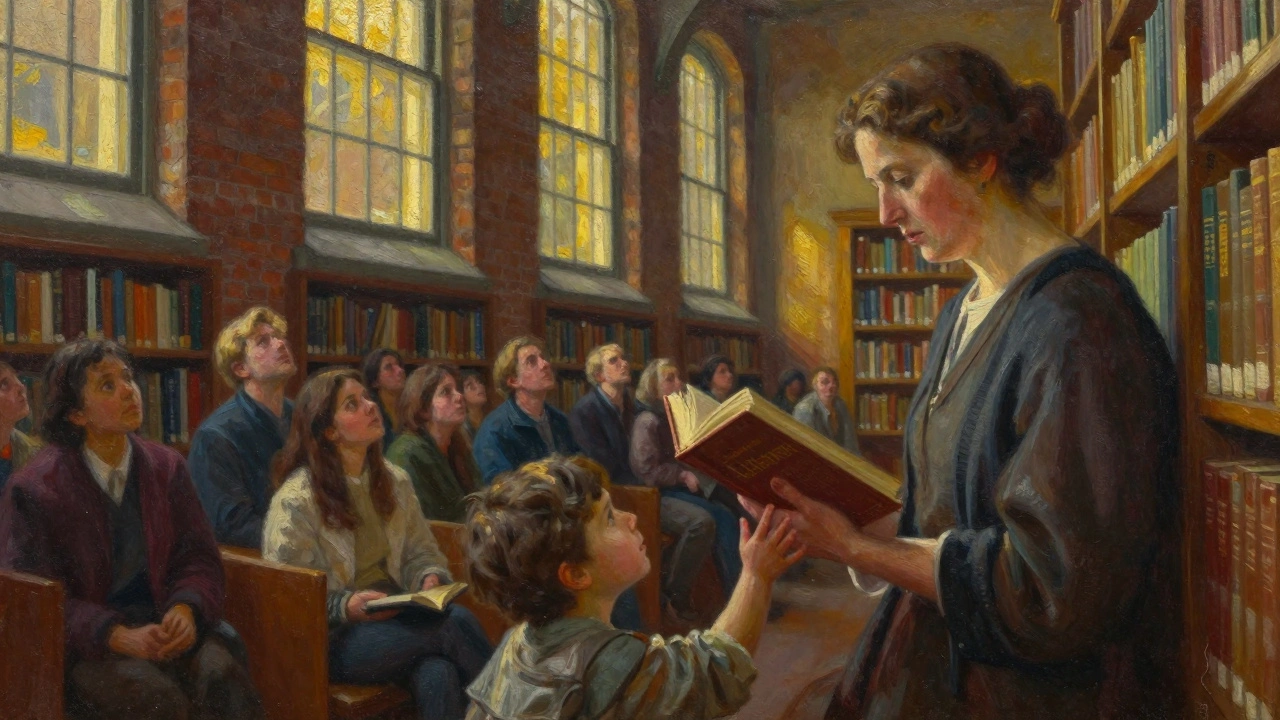
- Peckham Library Wall - "The Librarian," painted in 2022, showing a woman holding a book with a child’s hand reaching for it
- Shoreditch High Street, near Boxpark - "The Clockmaker," a portrait of an elderly man with gears for eyes
- St. Katharine Docks - "The Fishmonger," painted in 2024, featuring a woman with fish scales on her cheeks
- Camden Lock Market - "The Busker," a recent piece from late 2025, painted on a former storage unit
He adds new pieces every few months. No announcements. No hashtags. Just a freshly painted wall and a quiet crowd gathering the next morning.
What’s Next for Dan Kitchener?
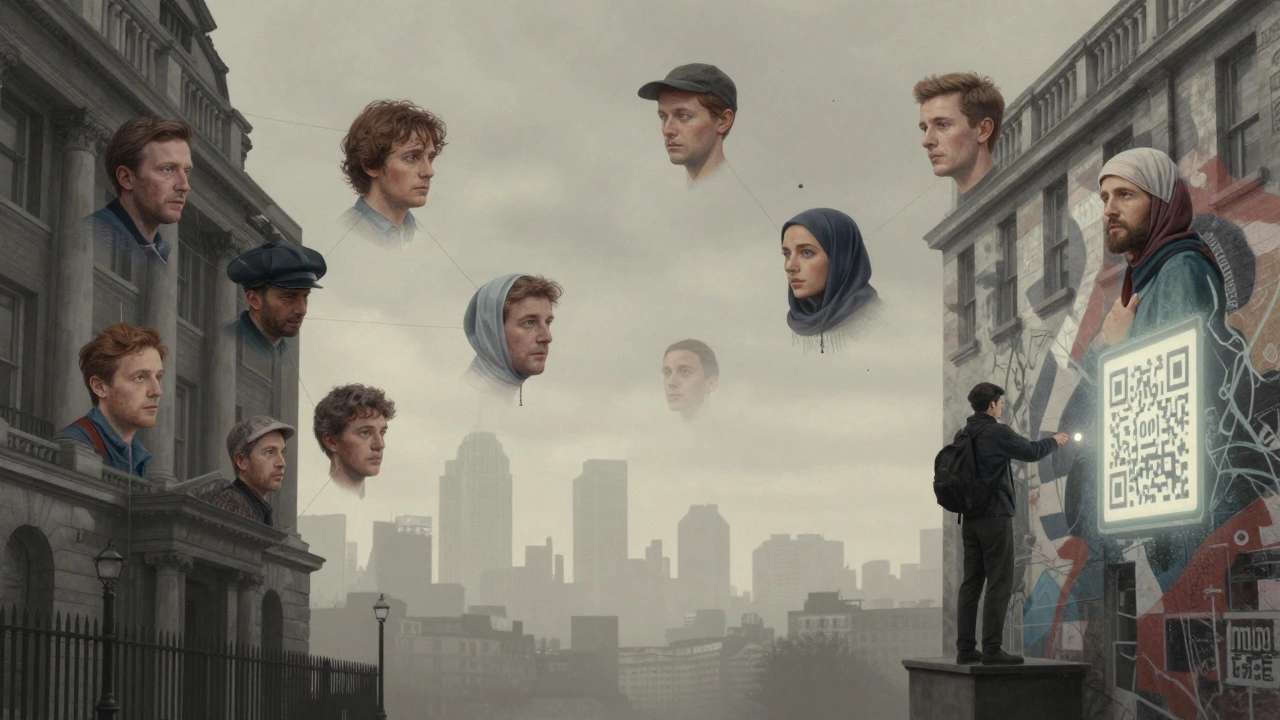
He’s working on a long-term project called "100 Faces of London." It’s not a gallery. Not a book. Just 100 murals, one in each borough, painted over the next three years. He’s already completed 37. Each one includes a QR code - not to sell art, but to link to a short audio story recorded by the subject. You can hear a 72-year-old taxi driver talk about driving through the Blitz. Or a 19-year-old refugee describe her first taste of English tea.
He’s also training a new generation. His apprenticeship program, launched in 2024, takes in five young artists each year - no experience needed, just willingness to listen. "You don’t learn to paint by watching videos," he says. "You learn by sitting next to someone who’s been through something."
He doesn’t have a website. No Instagram. No TikTok. If you want to know where he’s painting next, you have to walk the streets. Look up. And wait.
Is Dan Kitchener still active in London?
Yes. As of early 2026, Dan Kitchener is actively painting new murals across London. He completes at least one major piece every two months and is currently working on his "100 Faces of London" project, which aims to place a portrait in every borough. His work is always unannounced, so the best way to find it is to explore neighborhoods like Peckham, Shoreditch, and Camden.
Can you buy prints or merchandise of Dan Kitchener’s art?
No. Dan Kitchener refuses to sell prints, posters, or merchandise. He believes his art belongs on the streets, where it’s seen by the people who inspired it. He occasionally gives away small, hand-painted sketches to the subjects of his murals, but he does not profit from his work. Any official prints or products online are unauthorized.
Are Kitchener’s murals legal?
Some are, some aren’t. Early in his career, most of his work was unauthorized. Today, he has formal agreements with several London boroughs, including Southwark and Camden, which commission and protect his murals. However, he still paints on abandoned walls without permission - and sometimes removes his own work if it’s threatened with demolition. His approach is flexible: legality matters less than impact.
How does Dan Kitchener choose his subjects?
He finds them through conversation. He spends hours talking to strangers - often in cafes, shelters, or markets - asking them to share a story from their life. He picks people who’ve been overlooked: cleaners, bus drivers, single parents, retirees. He doesn’t choose based on looks or fame. He chooses based on presence. The person who speaks quietly but leaves a mark.
Has Dan Kitchener ever been arrested?
Yes. He was fined twice for unauthorized painting in 2014 and 2017. On both occasions, he cooperated fully and even offered to repaint a public wall as restitution. Those incidents led to his first official commissions. Today, he’s recognized by the city as a cultural contributor. He’s never been arrested since 2018.
Dan Kitchener doesn’t need fame. He doesn’t need followers. He just needs walls - and people willing to look up.