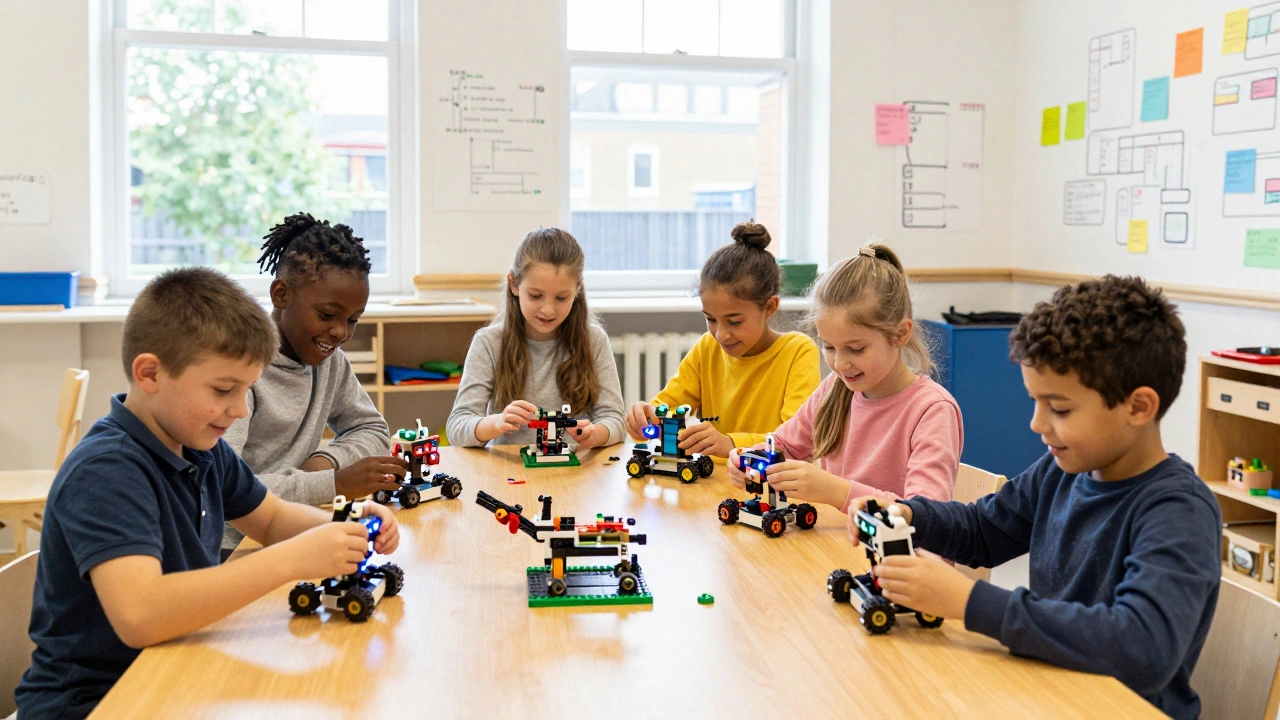
London is full of kids who can code before they can tie their shoes. Not because they’re geniuses, but because there are more places to learn programming than there are ice cream shops in Notting Hill. In 2026, if your child is in London and shows even a tiny bit of curiosity about screens, buttons, or games - there’s a STEM club or coding camp ready for them. No experience needed. No expensive gear. Just curiosity and a willingness to break things - and fix them.
Why coding for kids in London isn’t just another hobby
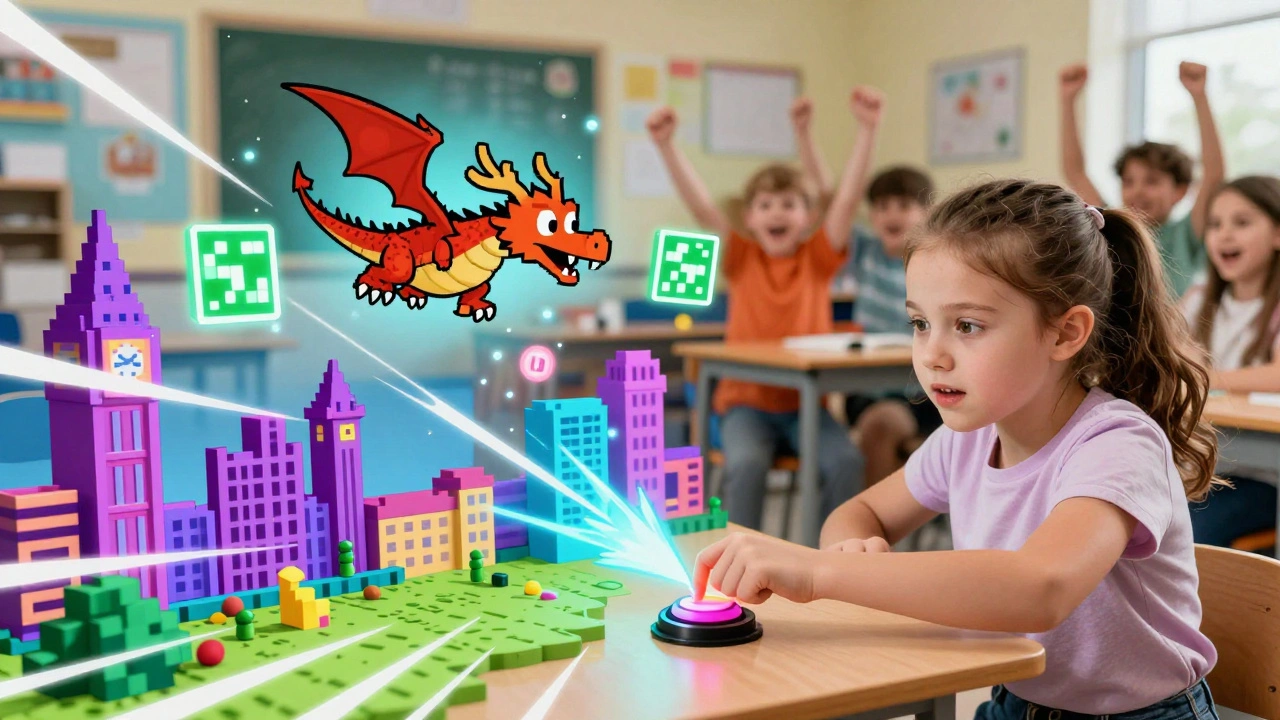
It’s not about turning every child into a software engineer. It’s about teaching them how to think. Coding teaches problem-solving in a way math class never does. When a 9-year-old builds a game where a character jumps over a dragon, they’re not just typing commands. They’re learning cause and effect, debugging logic, and testing ideas - all while laughing. That’s real learning.
A 2025 survey by the London Education Trust found that kids who joined regular coding clubs improved their math scores by an average of 22% over six months. Not because they memorized formulas, but because they started seeing numbers as tools, not problems. Schools don’t always teach that. Outside programs do.
Top STEM clubs in London for beginners (2026)
Not all clubs are created equal. Some feel like school with extra screens. Others feel like playtime with a side of genius. Here are the ones that actually work for kids who’ve never touched code before.
- CodeKids London (Brixton, Hackney, Ealing): Uses Scratch and Blockly to let kids build animations and simple games. No typing required at first. Kids drag blocks together like puzzle pieces. Over 1,200 children joined last year. Most walk in not knowing what ‘variable’ means. They leave making their own animated stories.
- Little Coders (Islington, Richmond, Wandsworth): Focuses on physical computing. Kids program tiny robots using buttons and sensors. One popular project? Making a robot that follows a line drawn on paper. It sounds simple. It’s actually teaching loop logic, sensors, and spatial reasoning.
- TechTots (South Kensington, Clapham, Greenwich): Designed for ages 5-8. Uses LEGO Education SPIKE Prime kits. Kids build a robot, then write code to make it dance, avoid obstacles, or light up. Parents report kids asking to ‘do robot homework’ on weekends.
These clubs run weekly after school. Most cost £12-£18 per session. Some offer bursaries if you ask. Don’t assume you can’t afford it - ask first.
Coding camps that actually keep kids engaged
Weekend camps are where the magic happens. A five-day camp can do what months of school lessons can’t: turn hesitation into excitement.
- CodeCamps London (Victoria, Stratford, Canary Wharf): Week-long summer and half-term camps. Kids pick a theme: build a game, design a website, or control a drone. No two projects are the same. One 10-year-old built a game where you rescue a lost robot by solving math puzzles. His mum said he spent three days explaining it to his grandparents.
- FutureMakers (Hammersmith, Camden, Lewisham): Focuses on real-world problems. Last winter, kids coded apps to help local libraries track book returns. One group made a simple website where you could see which books were out. The library still uses it.
- RoboKids London (Wembley, Croydon, Enfield): For kids who love robots. Uses Arduino and Raspberry Pi. Kids build weather stations, motion-sensor alarms, or even a robot that feeds pets. One 12-year-old built a device that alerts her when her dog’s water bowl is empty. Her parents didn’t know she’d coded it until the phone rang at 3 a.m.
Camps cost between £150-£250 for a week. That’s less than a weekend break at a hotel. And the return? A kid who thinks they can build anything.
What to look for (and what to avoid)
Not every ‘coding for kids’ program is worth your time. Here’s how to spot the good ones.
- Do look for: Projects that end in something you can touch - a game, a robot, a website. If the class just shows videos or drills syntax, walk away.
- Do look for: Small groups. Five to eight kids per instructor is ideal. More than that and the child gets lost.
- Do look for: A showcase day. The best programs end with a mini exhibition where kids present their work. That’s when confidence clicks.
- Avoid: Programs that say ‘learn Python in 3 weeks’ for 7-year-olds. That’s not learning. That’s pressure.
- Avoid: Places that sell expensive gadgets. Real coding starts with free tools like Scratch or Thonny. If they push you to buy a £200 kit, they’re selling gear, not skills.
How to get started this month
You don’t need to plan a year ahead. Here’s how to find a club or camp in the next 30 days.
- Go to London Youth’s website. They list all registered STEM clubs in every borough. Filter by age, day, and price.
- Check your local library. Many run free coding workshops on Saturdays. The Camden Library has a weekly ‘Code & Create’ session for ages 8-12. No sign-up needed.
- Ask at your child’s school. Teachers often know about local clubs. Some even run after-school groups.
- Try a one-day taster. CodeCamps London and TechTots offer £10 trial sessions. No commitment.
Most clubs have waiting lists. But if you call and say, ‘I’m flexible on days,’ you’ll often get in faster. Don’t wait for the ‘perfect’ time. Start now.
What happens after the first project?
The biggest mistake parents make? Stopping after one camp. Coding is like learning to ride a bike. You don’t stop after one try. You keep going.
Kids who stick with it for a year start creating things that surprise even adults. One 11-year-old in Hackney coded a website that lets people donate old books to refugee families. Another in Lewisham built a voice-controlled light switch for their grandma.
By age 13, many of these kids are mentoring younger ones. That’s when the real learning kicks in - teaching is the deepest form of understanding.
And here’s the quiet truth: the kids who learn to code young aren’t just getting ahead in tech. They’re getting ahead in life. They learn how to fail, try again, and make something that matters. That’s not a skill you learn in a textbook.
Resources you can use at home - for free
You don’t need to spend a penny. Here are the best free tools London parents are using right now.
- Scratch (scratch.mit.edu): The go-to for beginners. Lets kids make games and stories with drag-and-drop blocks.
- Code.org: Has themed lessons - Star Wars, Minecraft, Frozen. Kids don’t even realize they’re learning logic.
- Thonny: A simple Python editor made for kids. No command lines. Just a clean screen and a run button.
- YouTube channels: ‘The Coding Train’ (for older kids) and ‘Code with Anna’ (for ages 7-11) are both free and ad-free.
Put one of these on a tablet after dinner. Ten minutes a day. That’s all it takes to spark a habit.
What’s next for coding in London?
By 2027, every primary school in London will have at least one coding hour per week. That’s good. But it’s not enough. Schools are busy. Clubs fill the gap.
More clubs are popping up in outer boroughs - places like Barking, Havering, and Sutton. That means access is spreading. It’s no longer just a West London thing.
And the tech companies? They’re stepping in. Google, Meta, and local startups sponsor free workshops. You don’t need to be rich to get top-tier teaching.
London’s not just a city of museums and parks. It’s becoming a city of young builders. Kids who don’t just consume tech - they make it.
Is coding for kids in London expensive?
Not necessarily. Many clubs cost £12-£18 per session, and some are free. Libraries, community centres, and charities run low-cost or no-cost programs. Look for bursaries - most clubs offer them if you ask. Avoid places that push you to buy expensive kits. Real coding starts with free tools like Scratch.
What age should my child start coding?
Kids as young as 5 can start with visual tools like Scratch or LEGO SPIKE. There’s no rush. The goal isn’t to make them experts at 8 - it’s to spark curiosity. If your child enjoys puzzles, games, or building things, they’re ready. Waiting until they’re ‘old enough’ often means missing the window where play and learning blend naturally.
Do I need to know how to code to help my child?
No. Most parents don’t. The best thing you can do is sit with them while they work, ask questions like ‘How did that work?’ or ‘What happened when you changed that block?’ and celebrate their wins - even small ones. Your curiosity matters more than your knowledge.
Are coding camps worth it?
Yes - if they focus on projects, not lectures. A good camp ends with something the child made: a game, a robot, a website. Look for camps that let kids choose their project. Avoid ones that force everyone to follow the same steps. The magic happens when they solve their own problem.
How do I find a club near me?
Start with London Youth’s website - they list every registered STEM club by borough. Also check your local library’s events calendar. Many run free Saturday sessions. Don’t wait for the perfect club. Try a £10 trial first. Most offer them.