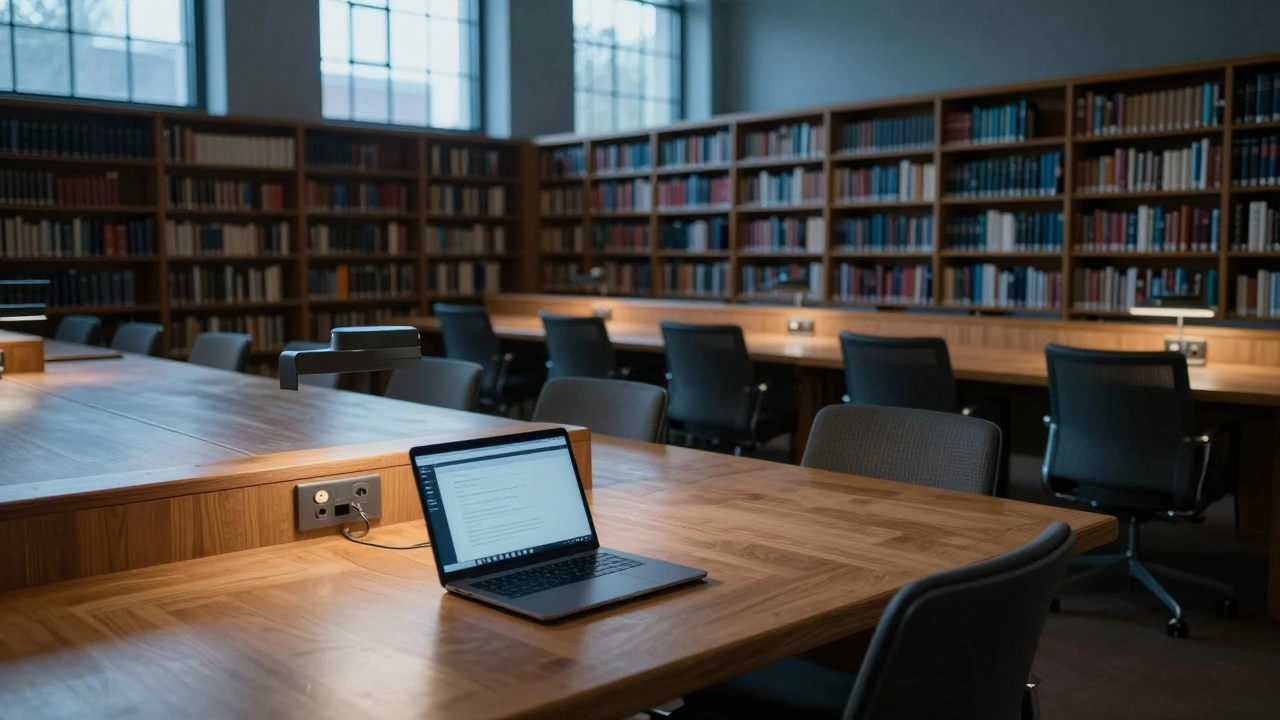
If you’ve ever sat in a noisy coffee shop with your laptop open, hoping the hum of espresso machines and chatter will somehow turn into productivity, you know how hard it is to focus in London. The city’s energy is electric-but that doesn’t mean every corner is good for deep work. The truth is, finding a real quiet spot to study here isn’t luck. It’s about knowing where to go. And it’s not just about silence. It’s about atmosphere, seating, power outlets, and whether you can actually get a coffee without being asked if you want a second croissant.
British Library: The Ultimate Study Sanctuary
The British Library in St Pancras isn’t just a building with books-it’s a full ecosystem built for concentration. Open to anyone with a free Reader Pass (which you can get in under 10 minutes), it has over 170 million items, including everything from medieval manuscripts to modern patents. But you don’t need to read a single page to benefit from it.
The Study Reading Rooms are designed like silent libraries of old: long wooden tables, soft lighting, and zero phone calls allowed. There are over 1,200 study seats spread across three floors, and every single one has a power outlet. The air is cool, the chairs are ergonomic, and the silence is so thick you can hear your own thoughts. It’s the closest thing to a private study room in a public space.
Pro tip: Go on a weekday morning. By 11 a.m., the main reading rooms fill up fast. Bring your own laptop-there’s no public computer access. And yes, you can bring food, but no hot meals. Stick to snacks. The café downstairs is great for breaks, but once you’re in the reading room, the silence rule is strict. Violate it once, and you’ll get a quiet but firm warning. Twice, and you’re out.
Senate House Library: University Quiet, No Student ID Needed
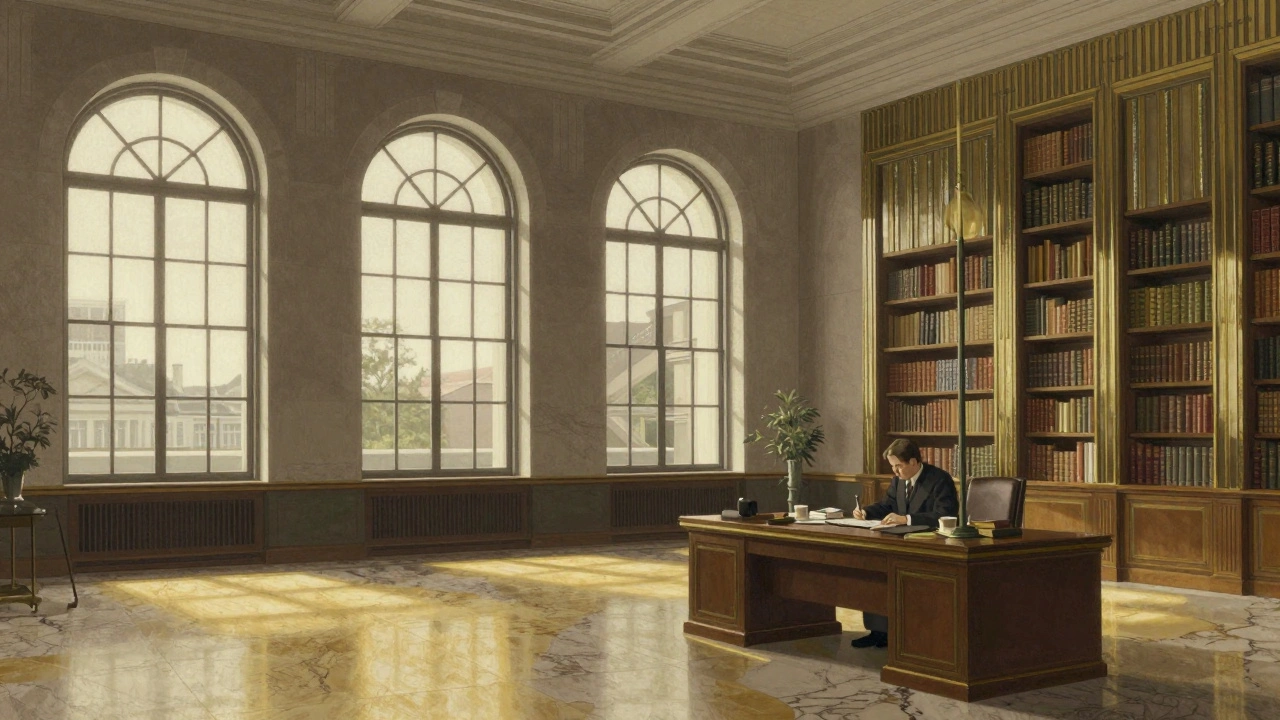
Located in the heart of Bloomsbury, Senate House Library is part of the University of London. But you don’t need to be a student to use it. The public can access the main reading rooms with a free day pass. It’s smaller than the British Library, but that’s part of the charm. The building itself is a 1930s Art Deco masterpiece-high ceilings, marble floors, and large windows that let in natural light without glare.
The Reading Room on the 7th floor is the star. It’s long, quiet, and rarely crowded before noon. There are plenty of outlets, and the staff are helpful if you need to borrow a book or find a reference. Unlike some university libraries, this one doesn’t lock its doors to outsiders. You can sit here for eight hours straight, and no one will ask you to leave.
It’s also one of the few places in central London where you can get a decent cup of coffee for under £3.50. The café on the ground floor doesn’t play music, and the seating is simple but comfortable. It’s not a spot to socialize-it’s a spot to sit, think, and write.
Camden Public Library: Hidden Gem with Free Parking
Most people think of Camden as music, markets, and noise. But tucked away behind the bustling high street is one of the most underrated study spots in North London: Camden Public Library. It’s not fancy, but it’s functional. The study area on the second floor has 15 quiet desks, each with a lamp, a power outlet, and a view of the garden below.
What makes this place special? It’s almost always empty. On a Tuesday afternoon, you might have the entire floor to yourself. There’s no pressure to buy anything. No one will rush you. And if you need to take a break, the nearby Regent’s Canal is a five-minute walk away-perfect for a quick walk to reset your brain.
The library also offers free Wi-Fi, printing services, and a small but well-curated selection of academic books. It’s not a research hub like the British Library, but for writing essays, reviewing notes, or reading non-fiction, it’s perfect. And if you’re driving, free parking is available on nearby streets after 6:30 p.m. and all day on weekends.
The Library Café (Fitzrovia): Coffee That Doesn’t Distract
Not everyone wants to sit in a library. Sometimes you need the smell of coffee, the sound of a grinder, and the warmth of a ceramic mug. That’s where The Library Café in Fitzrovia comes in. It’s not called that because it’s a library-it’s called that because it behaves like one.
No loud music. No group chats. No one taking video calls. The staff enforce quiet with a smile, not a frown. The seating is mostly long wooden tables, perfect for spreading out books or a laptop. There are enough outlets to go around, and the baristas know the rhythm of regulars-they’ll refill your water without asking.
Their house blend is smooth, not bitter, and the pastries are baked in-house. You can sit here for hours without feeling like a customer who’s overstayed. They don’t have a time limit. They don’t ask you to order again. You pay once at the start and stay as long as you need. It’s rare. And it’s exactly what students and freelancers in London need.
John Smith’s Bookshop & Café (Islington): Bookish Vibes, Zero Pressure
John Smith’s isn’t a chain. It’s a small, independent bookshop with a café tucked in the back. Located on Upper Street in Islington, it’s the kind of place where the owner remembers your name and what you last read. The café side has about 12 seats, all near windows with natural light. There’s no Wi-Fi password-it’s free, and it’s fast.
What sets it apart? The silence isn’t enforced. It’s natural. People come here to read, not to post on Instagram. The background noise is the turning of pages, the clink of a spoon, and the occasional sigh of someone finally understanding a dense paragraph.
They serve single-origin coffee and tea from small British roasters. The seating is cozy but not cramped. You can bring your own food. And if you need a book for your next reading list, you can pick one up for £8 and return it if you don’t like it. No questions asked.
Queen Mary University Library (Mile End): Free Access for Non-Students
Many university libraries in London restrict access to enrolled students. Queen Mary is an exception. The Mile End campus library welcomes the public for free. It’s not in the center, but if you’re in East London or work remotely from the area, it’s worth the trip.
The library has three floors of quiet study zones, a dedicated silent floor (Level 3), and 300+ study seats. All have power outlets. The lighting is LED, the tables are wide, and the air conditioning is set just right-not too cold, not too warm. There’s even a small kitchenette where you can heat up your lunch.
It’s rarely busy before 10 a.m. or after 4 p.m. on weekdays. Weekends are quiet too. You can get a coffee for £2.80 from the vending machine, or bring your own. The best part? No ID needed. Just walk in. No registration. No waiting.
Why These Places Work (And Most Don’t)
Not every quiet café is actually quiet. Some play jazz. Some have open mic nights. Some have staff who think “cozy” means chatting with customers. The places that work for studying share three things:
- They don’t treat you like a customer. You’re not there to buy the most expensive latte. You’re there to work.
- They have power outlets. A lot of places in London have one outlet per table. These have at least two.
- They don’t rush you. No “table turnover” policies. No “we’re closing in 15 minutes” announcements.
Also, avoid places that advertise “remote work friendly.” That’s code for “we have Wi-Fi and a few chairs.” It doesn’t mean it’s quiet. It doesn’t mean it’s comfortable. It doesn’t mean you’ll be left alone.

What to Bring
- Headphones (even if it’s quiet, they help block out the occasional cough or door slam)
- A portable charger (you never know when an outlet will be taken)
- A notebook and pen (sometimes writing by hand helps you remember better)
- A water bottle (most places let you refill for free)
- A light jacket (libraries are always cold)
When to Go
Timing matters more than location. The best hours are:
- Monday-Thursday: 8 a.m.-11 a.m. - Quietest, least crowded
- Friday: 9 a.m.-1 p.m. - Good for last-minute work before the weekend
- Weekends: 10 a.m.-3 p.m. - Libraries are open, cafés are calm
Avoid lunchtime (12:30-2 p.m.) and after 5 p.m. on weekdays. That’s when the crowds come in-and the noise follows.
Final Tip: Try One New Spot Every Week
Don’t stick to just one place. Your brain gets used to environments. Switching locations every few days helps reset your focus. Try the British Library on Monday. The Library Café on Wednesday. Camden Library on Friday. You’ll find that your productivity isn’t just about the space-it’s about the change.
London isn’t the easiest city to study in. But it’s one of the best-if you know where to look.
Can I use the British Library without a student ID?
Yes. Anyone can get a free Reader Pass at the British Library by showing a photo ID and proof of address. The process takes less than 10 minutes, and you can use the reading rooms immediately after. No student status is required.
Are there any study spaces in London that allow food?
Yes. Most public libraries and quiet cafés allow light snacks and drinks. Hot meals are usually restricted in libraries like the British Library and Senate House. Cafés like The Library Café and John Smith’s encourage you to bring your own food. Always check the posted rules, but generally, if it’s not smelly or messy, it’s fine.
Do any of these places have free Wi-Fi?
All of them do. The British Library, Senate House, Queen Mary, Camden Library, and the cafés mentioned all offer free, reliable Wi-Fi. No passwords are needed at most locations. Connection speeds are typically fast enough for video calls and research.
Is it okay to study all day at a café?
At the right cafés-like The Library Café or John Smith’s-yes. They don’t enforce time limits or pressure you to buy more. But avoid places that are busy or loud. If you’re the only person with a laptop, and others are socializing, you’re probably in the wrong spot. Look for places where people are reading, not just drinking coffee.
Which is better: a library or a café for studying?
It depends on your work style. Libraries are better for deep focus, research, and long sessions. Cafés are better for lighter tasks, creative writing, or if you need the energy of a low-key environment. Many people alternate between the two. Use the library for reading and writing, and the café for reviewing notes or brainstorming.